Young sociologist Stanislas Previne is writing a thesis on criminal women, so he visits Camille Bliss in prison for an interview. Accused of murdering her husband and her lover, Camille recounts her life and love affairs.
Arguing that advertising not only sells things, but also ideas about the world, media scholar Sut Jhally offers a blistering analysis of commercial culture's inability to let go of reactionary gender representations. Jhally's starting point is the breakthrough work of the late sociologist Erving Goffman, whose 1959 book The Presentation of the Self in Everyday Life prefigured the growing field of performance studies. Jhally applies Goffman's analysis of the body in print advertising to hundreds of print ads today, uncovering an astonishing pattern of regressive and destructive gender codes. By looking beyond advertising as a medium that simply sells products, and beyond analyses of gender that tend to focus on either biology or objectification, The Codes of Gender offers important insights into the social construction of masculinity and femininity, the relationship between gender and power, and the everyday performance of cultural norms.
Why is social trust breaking down, and how do we find it again? This is the question at the heart of Leviathan. Directed and produced by Alexander Beiner, it draws on sociology, myth, psychology, economics and systems theory to delve into the deep code of culture and make sense of the times we live in. It’s a journey that invites the viewer to confront the shadows lurking at the heart of our systems, and points the way toward hope, healing and action.
A stranger in the city asks questions no one has asked before. Known only by his initials, the man's innocent questions and childlike curiosity take him on a journey of love, laughter and letting go.
Tokyo. Kazu and Tatsu are two salary men in their thirties. One night, after work, they get drunk and decide to tell each other their deepest secrets to seal the friendship. Tatsu admits being still a virgin. Kazu reveals that every time he eats an egg sandwich, his body transforms, turning him into a woman. Tatsu doesn’t believe his friend and asks him to prove it...
Mia is thirty and getting divorced. She moves into a studio apartment in a low-income housing project. As a former swimming champion, she now finds herself giving swimming lessons to the other inhabitants... Without a pool...
A lonely young suburban housewife participates in a radio interview survey while simultaneously engaging in an extramarital affair.
Director Drew Stone’s The New York Hardcore Chronicles Film is an incredible journey through the community and culture of the iconic New York hardcore scene. Not the typical history of a local music scene but so much more. Shot in an episodic format, the film contains over 60 interviews, never before seen footage, photos and a blazing soundtrack. With appearances by Roger Miret & Vinnie Stigma (Agnostic Front), Lou Koller, Craig Setari (Sick Of It All), Ray Cappo (Youth Of Today), Billy Graziadei (Biohazard), Billy Milano (S.O.D. / M.O.D.) and Mike Judge (Judge). The film addresses the community, culture, straight edge and DIY ethic of the hardcore scene in the greatest city in the world that is still vibrant, relevant and going strong to this day.
Fred, George, Doug and Howie are quickly reaching middle-age. Three of them are married, only Fred is still a bachelor. They want something different than their ordinary marriages, children and TV-dinners. In secret, they get themselves an apartment with a beautiful young woman, Kathy, for romantic rendezvous. But Kathy does not tell them that she is a sociology student researching the sexual life of the white middle-class male.
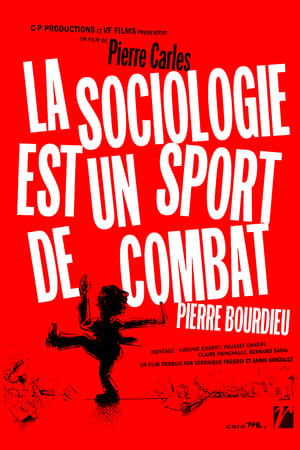
"I often say sociology is a martial art, a means of self-defence. Basically, you use it to defend yourself, without having the right to use it for unfair attacks." (Pierre Bourdieu) The world has witnesses who speak out loud what others keep to themselves. They are neither gurus, nor masters, but those who consider that the city and the world can be thought out. The sociologist, Pierre Bourdieu is one such witness." Over a three- year period, Pierre Carles' camera followed him through different situations: a short conversation with Günter Grass, a lively conference with the inhabitants of a working-class suburb, his relations with his students and colleagues and his plea that sociology be part of the life of the city. His thinking has a sort of familiarity, which means it is always within our reach. It is the thinking of a French intellectual who has chosen to think his times.
Adam Pearson - who has neurofibromatosis type 1 - is on a mission to explore disability hate crime: to find out why it goes under-reported, under-recorded and under people's radar.
Artificial Intelligence (AI) is possibly the most powerful technology of our time. It has the potential to solve humanity’s biggest challenges yet some fear AI will be our downfall. iHUMAN follows pioneers at the frontline of the race to develop the ever more sophisticated AI to find the questions we need to ask at this crucial point in history.
An old lady’s house is full of boxes filled with memories. Every Wednesday, along with her cockroach friends, she tells her granddaughter wonderful stories. But as the little girl grows bigger, they start running out of space inside the house.
In today's climate debate, there is only one factor that cannot be calculated in climate models - humans. How can we nevertheless understand our role in the climate system and manage the crisis? Climate change is a complex global problem. Increasingly extreme weather events, rising sea levels, and more difficult living conditions - including for us humans - are already the order of the day. Global society has never faced such a complex challenge. For young people in particular, the frightening climate scenarios will be a reality in the future. For the global south, it is already today. To overcome this crisis, different perspectives are needed. "THE UNPREDICTABLE FACTOR" goes back to the origins of the German environmental movement, accompanies today's activists in the Rhineland in their fight against the coal industry and gives a voice to scientists from climate research, ethnology and psychology.
Ivory Coast, the Democratic Republic of Congo, and Senegal – when it comes to love and sex, these African countries are caught between tradition and modernity.
The suburbs are often portrayed as dull, conformist and hermetic. But with over 80% of the UK population calling these areas home, this playful yet empathetic short film challenges enduring stereotypes by centring the experiences and eccentricities of their numerous residents. The development of these spaces, and the narratives surrounding them, has been captured over the past 100 years by early filmmakers, citizen journalists, amateur documentarians and, most recently, a growing charge of online moving image creators – all brought together here to reveal the multiple identities and realities underneath the cultural image.
A director feels he is about to lose himself to the market forces and thinks that the only way he can protest is by making a political film. He contacts Thomas Hylland Eriksen, who will become his mouthpiece and articulate what is wrong. But along the way the director becomes distracted by another person, a young, fumbling girl reminiscent of himself.
As we wait to see whether Rupert Murdoch will fall from power and lose control of News International, Every Day is Like Sunday tells the forgotten story of the dramatic downfall of Cecil King—the newspaper mogul who used to dominate British media in the 1960s, before Rupert Murdoch arrived.
A group of teenagers, three cleaning staff, and a young married couple confront a social contract when they meet in the elevator queue of a middle-class apartment building.
Steve, a 25-year-old Black man from the Paris suburbs, seeks to escape the violence of his immediate surroundings by training to become an actor at one of France’s most prestigious drama schools. But soon he discovers that the theater world is only interested in having him inhabit “Black” roles.