Peter Snow presents highlights from today's three deep-sea dives around the world. In 2002 BBC organized three concurrent dives , first in Monterey Bay where unmanned submersible is lowered into underwater canyon which is over mile deep. Second dive is in Grand Cayman where submersible Atlantis will explore life at the spectacular Cayman Wall , Kate Humble reports . During the dive, the crew used bait to attract a deep-water giant, the six-gill shark. Third dive takes place in middle of the Atlantic 1200 miles west of Portugal, which is also deepest of the three dives, divers will descent in Russian submersible Mir from research vessel Keldish and the Mir will dive in the bottom of the ocean in 2300 metres .
A contemplation of art and adventure in the southern wilds of New Zealand by both a landscape photographer and an adventure filmmaker. This film is the unexpected result of their two unique perspectives.
We get to know a few inhabitants of central European rivers.
The Filomena snowstorm in central Spain was undoubtedly exceptional. Its return period in many places exceeded half a century, particularly in Madrid. Despite accurate weather forecasts, Filomena brought roads, public transport, health centers, and other basic services in Madrid to a standstill. What went wrong in the management of this weather event?
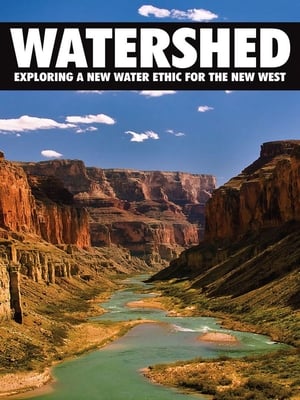
As the most dammed, dibbed, and diverted river in the world struggles to support thirty million people and the peace-keeping agreement known as the Colorado River Pact reaches its limits, WATERSHED introduces hope. Can we meet the needs of a growing population in the face of rising temperatures and lower rainfall in an already arid land? Can we find harmony amongst the competing interests of cities, agriculture, industry, recreation, wildlife, and indigenous communities with rights to the water? Sweeping through seven U.S. and two Mexican states, the Colorado River is a lifeline to expanding populations and booming urban centers that demand water for drinking, sanitation and energy generation. And with 70% of the rivers’ water supporting agriculture, the river already runs dry before it reaches its natural end at the Gulf of California. Unless action is taken, the river will continue its retreat – a potentially catastrophic scenario for the millions who depend on it.
Travel to the East to explore four of the world's most diverse National Parks in the world. Dive into the turquoise waters of Australia's Great Barrier Reef, teeming with brilliant coral, parrot fish, moray eel, sea anemone, starfish. Explore the remote bamboo forest of China's Wo-long National Park and meet an extraordinary community of Giant Pandas. Sail the Pacific Ocean to the magical Galapagos Islands untouched by time and man to see the famous gigantic Galapagos tortoise, lava lizards - wildlife found nowhere else on earth. Finally climb the world's highest mountain, the beautiful and formidable Mount Everest for a view from the top of the world!
Director Mirjam Leuze’s The Whale and The Raven illuminates the many issues that have drawn whale researchers, the Gitga’at First Nation, and the Government of British Columbia into a complex conflict. As the people in the Great Bear Rainforest struggle to protect their territory against the pressure and promise of the gas industry, caught in between are the countless beings that call this place home.
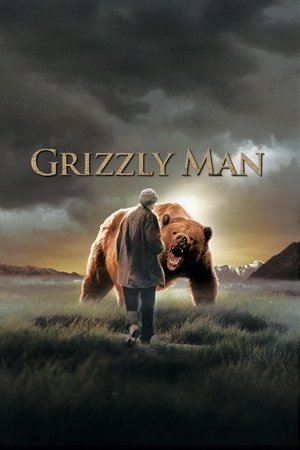
Norman is not just an admirer of nature, he's a part of it. He survives the harshness of the climate and the wildlife by coexisting with it. With his wife Nebraska, they live almost entirely off the land, making money by selling their furs.
Record high oil prices, global warming, and an insatiable demand for energy: these issues define our generation. The film exposes shocking connections between the auto industry, the oil industry, and the government, while exploring alternative energies such as solar, wind, electricity, and non-food-based biofuels.
Im Wald der wilden Bienen
The Smog of the Sea chronicles a 1-week journey through the remote waters of the Sargasso Sea. Marine scientist Marcus Eriksen invited onboard an unusual crew to help him study the sea: renowned surfers Keith & Dan Malloy, musician Jack Johnson, spearfisher woman Kimi Werner, and bodysurfer Mark Cunningham become citizen scientists on a mission to assess the fate of plastics in the world’s oceans. After years of hearing about the famous “garbage patches” in the ocean’s gyres, the crew is stunned to learn that the patches are a myth: the waters stretching to the horizon are clear blue, with no islands of trash in sight. But as the crew sieves the water and sorts through their haul, a more disturbing reality sets in: a fog of microplastics permeates the world’s oceans, trillions of nearly invisible plastic shards making their way up the marine food chain. You can clean up a garbage patch, but how do you stop a fog?
Thanks to sophisticated equipment, marine biologists have managed to capture unprecedented scenes of the intimate life of humpback whales off the Australian coast. A spectacular immersion in the intimate life of this mysterious species. Off the coast of the Kimberley in northwestern Australia is a major breeding ground for humpback whales. Thanks to sophisticated equipment, such as aerial cameras on board quadrotors or innovative night vision technologies, Curt and Micheline Jenner, whale researchers, capture unprecedented scenes revealing the behavior of cetaceans.
o céu diante dos meus olhos nunca é cinza
Changing Landscapes meditates upon the care and carelessness humans brought to bear on the environment in Scotland. Rare archive combines with performances from the BBC Scottish Symphony Orchestra.
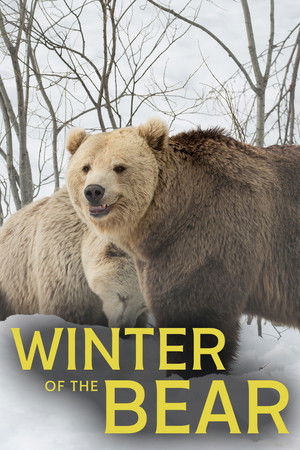
From polar bears in the arctic tundra to black bears in the Northern Rockies, you'll see some of the most spectacular footage ever shot of these enterprising omnivores. Catch salmon with a group of hungry grizzlies on the McNeil River in Alaska. Crawl inside a den with a mother black bear and her cubs. Learn about the challenges facing each of these species as their habitat diminishes.
The highest mountain range in the world, the Himalayan range is far reaching, spanning thousands of miles, and holds within it an exceptionally diverse ecology. Coniferous and subtropical forests, wetlands, and montane grasslands are as much a part of this world as the inhospitable, frozen mountaintops that tower above. The word Himalaya is Sanskrit for abode of snow, fitting for a stretch of land that houses the world’s largest non polar ice masses. Extensive glacial networks feed Asia's major rivers including the Ganges, Indus, and Brahmaputra. More than a billion people rely on these glacier-fed water sources for drinking water and agriculture. The Himalayas are not only a remarkable expanse of natural beauty. They're also crucial for our survival.
This documentary follows various migratory bird species on their long journeys from their summer homes to the equator and back, covering thousands of miles and navigating by the stars. These arduous treks are crucial for survival, seeking hospitable climates and food sources. Birds face numerous challenges, including crossing oceans and evading predators, illness, and injury. Although migrations are undertaken as a community, birds disperse into family units once they reach their destinations, and every continent is affected by these migrations, hosting migratory bird species at least part of the year.
A documentary short that uses fish to explore identity and belonging in a metropolis.
Takes us to locations all around the US and shows us the heavy toll that modern technology is having on humans and the earth. The visual tone poem contains neither dialogue nor a vocalized narration: its tone is set by the juxtaposition of images and the exceptional music by Philip Glass.
Although first glance reveals little more than stones and sand, the desert is alive. Witness moving rocks, spitting mud pots, gorgeous flowers and the never-ending battle for survival between desert creatures of every shape, size and description.