The World According to Monsieur Khiar
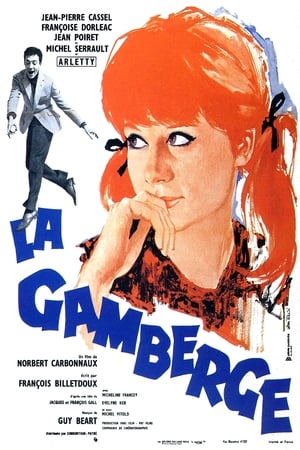
The Dance is a 1962 French comedy film directed by Norbert Carbonnaux and starring Jean-Pierre Cassel, Françoise Dorléac and Arletty. The film is based on the French comic strip 13 rue de l'Espoir.
Elmer takes up wildlife photography but finds his subject, a rabbit, much too rascally.
A former priest has become bored to the point of impotence by the easy availability of beautiful women. He misses the shame of the priesthood which made sex more enjoyable, and this leads to his strange fascination with photographing asses. He gets involved with a sexy married woman, but he is more interested in her virginal maid.
When a disenfranchised, world-famous photographer is interviewed by university students and presented with a portfolio of his life's work he is transported back to his very first photoshoot with a special yet mysterious subject.
Considered the most intimate portrait of life & work of American photographer Nan Goldin. Collaborating with British documentary director Edmund Coulthard, the film also paints a sharp portrait of a generation, reconstructing disquiet from the extraordinary biographical account of the photographer.
Man Ray, the master of experimental and fashion photography was also a painter, a filmmaker, a poet, an essayist, a philosopher, and a leader of American modernism. Known for documenting the cultural elite living in France, Man Ray spent much of his time fighting the formal constraints of the visual arts. Ray’s life and art were always provocative, engaging, and challenging.
A cheerful parking attendant considers it his job to do more than validate parking. He wants to validate the customers themselves, delivering compliments about their appearances and the inner qualities behind them. Everyone who comes up to him with a ticket walks away validated as a worthwhile human being. Soon, the parking attendant becomes so popular that people line up for validation...
Two bumbling photographers are hired for a blackmail job—but their simple gig soon spirals into chaos and danger.
The co-founder of the Gamma press agency, Raymond Depardon, created this documentary of press photographers in Paris and their subjects by following the photographers around for one month, in October, 1980. In-between long hours waiting for a celebrity to emerge from a restaurant or a hotel, boredom immediately switches to fast action as the cameras click and roll when the person appears. The reaction to the gaggle of photographers is as varied as the people they often literally chase all around town. While some of the celebrities, such as Jacques Chirac who was mayor of Paris at the time, are perceived as comical caricatures, others are shown simply going about ordinary pursuits - including Catherine Deneuve, Gene Kelly, and Jean-Luc Godard.
The Bokelberg photographic collection brings to life the Paris of the Belle Époque (1871-1914), an exhibition of workshops and stores with extremely beautiful shop windows before which the owners and their employees proudly pose, hiding behind their eyes the secret history of a great era.
A woman hires a photographer to document her estranged family's last day with their dying matriarch, but her sister is running late.
Legendary photographer and director Anton Corbijn is responsible for many of the most indelible and important images of the past two and a half decades. His recently released book U2 & I is a photographic retrospective of his 25 year collaboration with U2. Later this year, Anton will direct his first feature film, Control, based on the life of the late Joy Division lead singer Ian Curtis.
A handful of prisoners in WWII camps risked their lives to take clandestine photographs and document the hell the Nazis were hiding from the world. In the vestiges of the camps, director Christophe Cognet retraces the footsteps of these courageous men and women in a quest to unearth the circumstances and the stories behind their photographs, composing as such an archeology of images as acts of defiance.
Teenager Olivia Oras has 20,000 Instagram followers. The documentary follows a year of her life.
A tribute to the cameramen of the newsreel companies and the service film units, in the form of a compilation of film of the cameramen themselves, their training and some of their most dramatic film.
Considerations on collage as a cognitive act in artists’ cinema. A pedagogical film adrift: 35mm photographs and other materials collected over the last fifteen years by artist Stefano Miraglia meet a text written by Baptiste Jopeck and the voice of Margaux Guillemard.
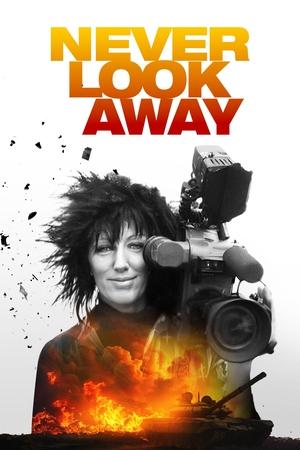
In a field dominated by men, five pioneering camerawomen Mary Rogers, Cynde Strand, Jane Evans, Maria Fleet and Margaret Moth went to the frontlines of wars, revolutions and disasters to bring us the truth. As colorful as accomplished, these brave photojournalists made their mark by capturing some of the most iconic images from Tiananmen Square, to conflicts in Sarajevo, Iraq, Somalia and the Arab Spring uprising. But the world doesn’t know it was these women behind the camera. In the midst of unfolding chaos, the pictures they took for CNN both shocked and informed the world. This feature documentary by director Heather O’Neill tells their remarkable story.
A film centering on the life and work of Ron Galella that examines the nature and effect of paparazzi.
The action is placed in a cramped flat in Warsaw’s district of Ochota. A father and a son, both bedridden, live in a fascinating symbiosis. The son, a well‑known photographer Bernard ben Dobrowolski, is lying in bed because a chronic condition has deformed his body and immobilized him. The father, Dominik, has recently suffered from a stroke. Now they are taking care of each other and crowds of visitors move through their room.