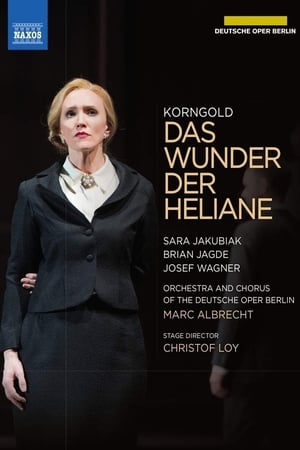
The first-ever audio-visual recording of this opera – directed by Christof Loy, conducted by Marc Albrecht and with Sara Jakubiak, Brian Jagde and Josef Wagner in the leading roles
A look at the entire process of creating and developing Patrice Chéreau’s third staging of "In the Solitude of Cotton Fields" by Bernard Marie Koltès with Pascal Greggory and Chéreau himself. From the first reading around the table through the first contact with the performance space, rehearsals and lighting to opening night, the entire creative process unfurls in front of our eyes. The film shows us the evolving and ongoing dialogue between Greggory and Chéreau, a dialogue full of crises and magical moments of harmony and insight via which the truth, intensity, complexity, mystery and depth of Koltès’ text gradually emerge to form an implicit bond between these two men. The film also shows Chéreau directing rehearsals for Mozart’s "Don Giovanni" in Salzburg, revealing both the unity of and profound differences between his opera and theater work.
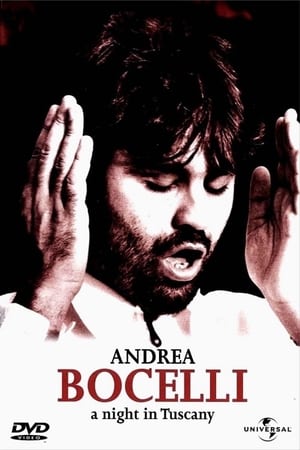
A Night in Tuscany is the first DVD released by Italian singer Andrea Bocelli of a concert held in his native Tuscany, in 1997, highlighting the unique blend of Classical, Pop, and traditional Italian songs that made him a crossover success as an internationally acclaimed tenor. The concert takes place at the Piazza dei Cavalieri in Pisa. Bocelli performs two opera duets with soprano Nuccia Focile during the concert, before singing Miserere with Italian rock star Zucchero, who discovered him, and Time To Say Goodbye with English soprano Sarah Brightman
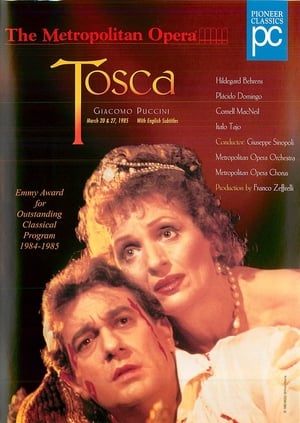
Live Metropolitan Opera performance March, 1985.
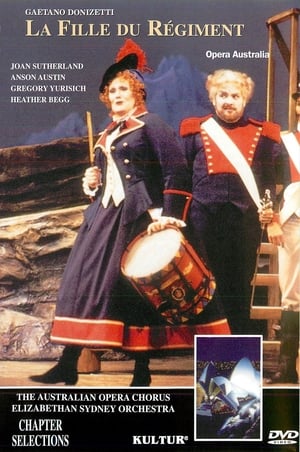
Australian Opera Chorus and Elizabethan Sydney Orchestra production of Donizetti's opera
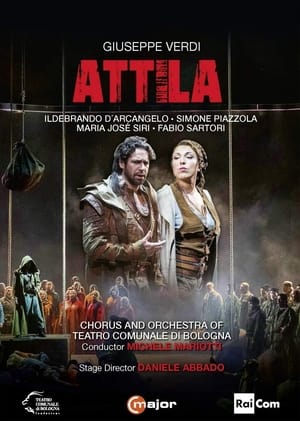
Attila
The Threepenny Opera proclaims itself "an opera for beggars," and it was in fact an attempt both to satirize traditional opera and operetta and to create a new kind of musical theater based on the theories of two young German artists, composer Kurt Weill and poet-playwright Bert Brecht. The show opens with a mock-Baroque overture, a nod to Threepenny's source, The Beggar's Opera, a brilliantly successful parody of Handel's operas written by John Gay in 1728. In a brief prologue following the overture, a shabby figure comes onstage with a barrel organ and launches into a song chronicling the crimes of the notorious bandit and womanizer Macheath, "Mack the Knife." The setting is a fair in Soho (London), just before Queen Victoria's coronation. In this production, Weill champion HK Gruber led the Ensemble Modern in a performance of Weill's complete original score, the first time it had been heard in Germany in many years. This production was broadcast on German television (3sat).
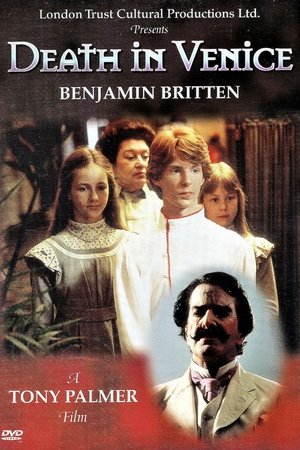
Gustav Von Aschenbach, a passionate composer, arrives in Venice as a result of wanderlust and there meets a young man by whose beauty he becomes obsessed.
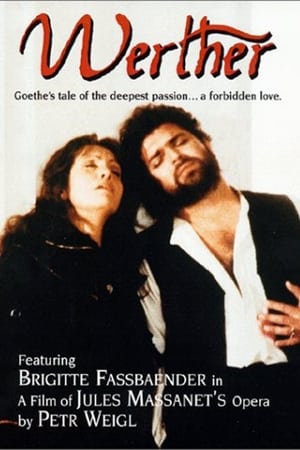
Jules Massanet's lyrical opera is transformed into a superb film production by Petr Weigl, shot on location in Prague, with music conducted by Libor Pesek. First produced by the Vienna Opera in February 1892, "Werther" rapidly confirmed Massanet's position on the French opera scene and achieved enormous popularity outside France, notably in Italy, America and England. The tragic story tells of Werther's intense passion for Charlotte, who has married his best friend, Albert, fulfilling a pledge to her now deceased mother. But Werther's letters of love bring Charlotte to his side when he promises to take his own life.
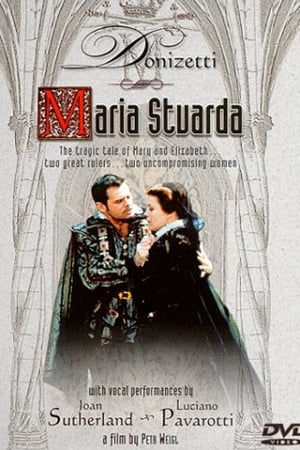
Donizetti's opera as film.
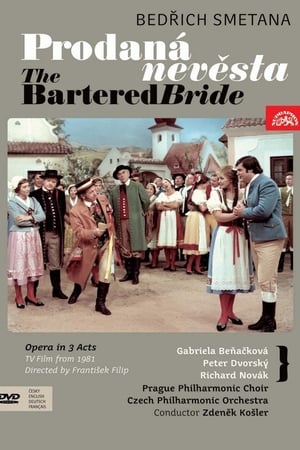
Frantisek Filip film version of the Smetana opera.
In the awe-inspiring Teatro Olimpico,Vicenza, Cecilia Bartoli, recognised as one of the best singers of our time, gives the most outstanding recital of work from a variety of composers such as Caccini, Schubert, Handel, Vivaldi, Bellini, Donizetti,Mozart, Rossini, Viardot and Bizet.
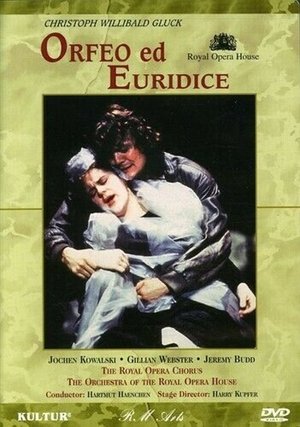
Performed live at the Royal Opera House, Covent Garden, Gluck's opera in three acts is conducted by Hartmut Haenchen. Performers include Jochen Kowalski, Gillian Webster and Jeremy Budd, alongside the Royal Opera Chorus and Orchestra. When Orpheus mourns for his late wife Eurydice, the god Cupid offers him the chance to descend into the underworld and lead her back to the land of the living, on the condition that he does not look at her face. He sets out on his journey, but his path to the Elysian Fields is blocked by the fierce Furies.
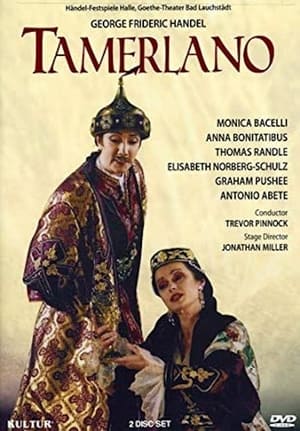
Handel's 1724 opera Tamerlano followed the success of his previous year's Giulio Cesare with another colourful historical costume drama. This time the setting is the court of "Timur the Tartar", who has just defeated the Turkish Sultan Bajazet at the battle of Angora. There are, naturally enough, romantic complications when both Tamerlano and his ally, the Greek Prince Andronico, fall in love with Bajazet's daughter Asteria. She, however, has plans to revenge her father's defeat. This production was directed by Jonathan Miller and staged in the intimate surroundings of the Goethe Theatre of Bad Lauchstadt as part of the 2001 Halle Handel Festival.
Live performance from Cologne Opera. Conlon conducts a skittishly dynamic performance of Don Giovanni. He relies on Thomas Allen’s tough Don to give the work much of its dark menace and on Holle’s terrifying Commendatore to provide the moral outrage – his job is to keep things moving, and he does. The exteriors – blank city spaces reminiscent of the paintings of Giorgio De Chirico – and moodily claustrophobic interiors mirror effectively the anguish of the orphaned Anna and the abandoned Elvira; this is a performance in which the two women victims of the Don function effectively as correctives to his libertine charm. Andrea Rost as Zerlina brings real delicacy to her role, reminding us that “La ci darem la mano” is a duet about her flirtation with Don Giovanni and not just a famous stand-alone moment. This is an admirable presentation of a fine performance.
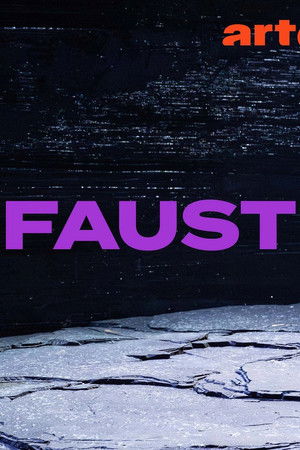
Gounod's Faust at the Bavarian State Opera: Jonathan Tetelman plays Faust, the scholar who makes a pact with Mephistopheles (Kyle Ketelsen) before seducing Marguerite (Olga Kulchynska). The unfortunate woman descends into madness but ultimately achieves redemption. Lotte de Beer directs this production, which marks Nathalie Stutzmann's debut in Munich as conductor.
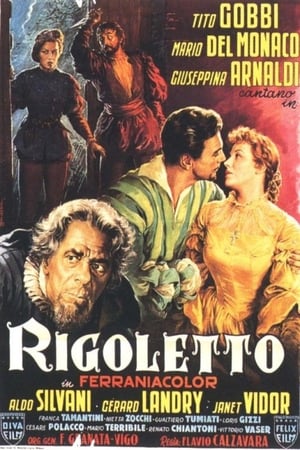
This tragic story revolves around the licentious Duke of Mantua, his hunch-backed court jester Rigoletto, and Rigoletto's beautiful daughter Gilda. The opera's original title, La maledizione (The Curse), refers to the curse placed on both the Duke and Rigoletto by a courtier whose daughter had been seduced by the Duke with Rigoletto's encouragement. The curse comes to fruition when Gilda likewise falls in love with the Duke and eventually sacrifices her life to save him from the assassins hired by her father.
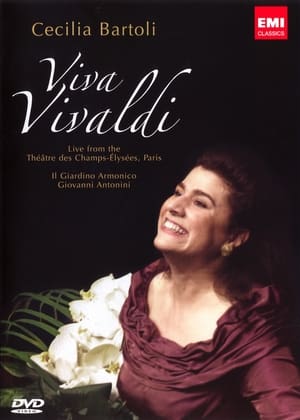
Viva Vivaldi! is a concert by the Italian mezzo-soprano Cecilia Bartoli interspersing arias from the 20 surviving operas of Vivaldi with two concertos. Given with the early music ensemble Il Giardino Armonico before a very appreciative audience in the Théâtre des Champs-Élysées, the performance is part of Bartoli's exploration of the Venetian composer's opera music which also includes The Vivaldi Album. There is a startling dynamic energy, which contrasts powerfully with the more restrained interpretations by singers such as Emma Kirkby. Bartoli's natural Italian and the live atmosphere of Maria Grazia d'Alessio's oboe gives her interpretation of the quietly haunting and melodically rich "Non ti Lusinghi la Crudeltade" from Tito Manlio a particular piquancy. The Flautino Concerto is a most attractive interlude, while the more famous Lute/Violin Concerto beguiles with its exquisite lyricism.
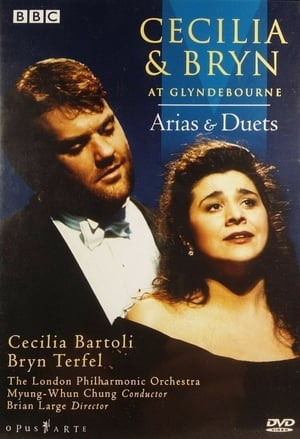
The celebrated mezzo-soprano Cecilia Bartoli joins Bryn Terfel for a recital of arias and duets recorded at Glyndebourne Opera House in 1999. The programme features favourite pieces from Mozart, Rossini and Donizetti, with the London Philharmonic Orchestra conducted by Myung-Whun Chung.
John Eliot Gardiner conducts Gluck’s 1776 French version of “Alceste” at the Théâtre du Châtelet in Paris. Soprano Anne Sofie von Otter takes the title role of Alceste, Queen of Thessaly, who offers to die at the hands of the gods in place of her husband, Admète (Paul Groves), so that the people will not lose their king. Alceste is then saved from the underworld by Hercule (Dietrich Henschel).