La mamie patineuse du lac Baïkal
Wolves divide and fascinate us. 150 years after they were driven to extinction in Central Europe, they are returning slowly but inexorably. Are they dangerous to humans? Is it possible to coexist? Using Switzerland as a point of departure, where wolves have returned in the very recent past, this documentary sheds light on the wolf situation in Austria, eastern Germany, Poland, Bulgaria, and even Minnesota, where freely roaming packs of wolves are more common sight.
As filmmaker Maria Carolina Telles comes to terms with the death of her father, a man who regretted never making it to the frontlines of World War II, she focuses her lens on the life of another man who had his own unique experience as a civilian in the midst of combat: award-winning war photographer André Liohn.
A look at the recently discovered fascinating behind the scenes footage shot by the legendary Hollywood director John Ford at Pearl Harbor in 1942 while filming his popular World War II documentaries December 7th and The Battle of Midway.
United by the same dream, Yves Fagniart and Olivier Larrey, watercolorist and wildlife photographer respectively, set up home in a shack just a few square meters square, in the middle of the no-man's-land between Finland and Russia. Their aim: to document the intimate life of a pack of wolves, presumed to frequent this frozen peat bog landscape.
Free Fish is a short documentary filmed over the course of a year in Gaza, following two brothers — Abu Nagham and Ahmad — separated by war yet connected by the sea. Displaced from their home, Abu Nagham now lives in a tent in the south, fishing with his young nephew Rami, who lost his twin brother. Ahmad remains in the north, fishing amid ruins and occupation. Once a source of livelihood and freedom, the sea has become a battleground — heavily restricted, constantly watched, and always dangerous.
Easy Company, the 2nd Battalion of the 506th Parachute Infantry Regiment of the 101st Airborne Division, fought their way through Europe, liberated concentration camps, and drank a victory toast in April 1945 at Hitler's hideout. Veterans from Easy Company, along with the families of three deceased others, recount their horrors and victories, bonds they made and the friends they lost.
On January 8, 2020, Ukraine International Airlines Flight 752 went down as it was leaving Iranian air space. All 176 people on board were killed, many of them Iranian Canadians. For weeks Iranian authorities vociferously denied responsibility, but foreign governments and agencies were certain the plane was shot down by Iranian military, a fact Iran’s government eventually admitted. There were no answers as to why the plane was fired on or even why it was allowed to take off, since hostilities had broken out in the region in preceding days.
Using unpublished photos taken by Italian war photographer Enrico Sarsini, and the reconstruction of key events, this film examines the battle for a strategically-located church that was defended by Azerbaijani teenager Natig Gasimov. After his surrender and interrogation by Armenian forces, he was never heard of again. This film finds out what happened to Natig and who may be responsible. Filmed over a period of three years, filmmaker Karan Singh spoke to witnesses in Armenia, Azerbaijan, Italy and Russia in his search for the truth.
Asil is a young Syrian refugee awaiting documents in Turkey while processing the trauma of losing her home and family. Her story gives voice to a charming gigantic puppet named Amal, who represents millions of migrant and displaced children in a walk from the Syrian border in Turkey all the way across Europe. Escorted and animated by a group of puppeteers who are themselves refugees, Amal’s epic journey is one of compassion and discovery.
A look inside the Russian assault on Ukraine's second-largest city, Kharkiv, told by displaced families, civilians caught in the fight and first responders.
The war documentary Rivilotta (1943), directed by Turo Karto, was filmed in the winter of 1941-42. The film, produced by the Finnish Defence Forces, presents the goals of the Lotta Svärd organization and the different aspects of the Lotta Svärd's work.
As Russia launches its full-scale invasion of Ukraine, primary schools across Russia’s hinterlands are transformed into recruitment stages for the war. Facing the ethical dilemma of working in a system defined by propaganda and violence, a brave teacher goes undercover to film what’s really happening in his own school.
“Fear AI!” – “ warns Elon Musk back in 2014, joining other opinion leaders like Steve Wozniak, Noam Chomsky and Stephen Hawking in backing a petition against the development of autonomous weapons. As Vladimir Putin stated in 2017, “Whoever leads in AI, rules the world.”
Sixth-graders have many things on their minds. But they are confronted with an important decision: do they continue their education in secondary school A, B, or C, or do they go to grammar school after all? And what even are those things? How do children deal with the hopes and fears associated with this step?
De Bariri Pra Rússia
Triggered by Russia's invasion of Ukraine in early spring of 2022, Ukrainian journalist and writer Ivan Avramov struggles to navigate his fluid identity and the shifting reality around him.
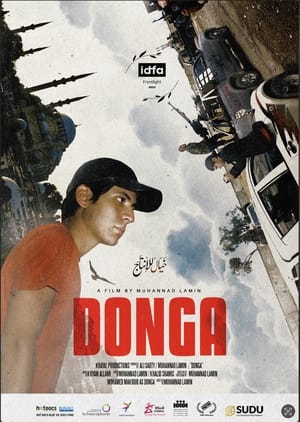
“There was excitement in the air,” says Donga, now in his late twenties, describing his feelings when the uprising against Muammar Gaddafi’s rule broke out in 2011. He was 19, living in Misrata, and boldly went to film the fighting with a friend. A decade later, in a hotel in Istanbul, where he has been living since he was wounded in battle, he looks back on the past ten years through excerpts from his videos. And he reflects on how that period has affected him.
Ils étaient tirailleurs, voix oubliées de la Grande Guerre
He is Khagani Aliyev, a resident of Saricali village of Aghdam. On July 23, 1993, Khagani Aliyev, who heard about another Armenian attack on Aghdam, went home to take his parents who had not left the village to a temporary safe area...