A small suburban town receives a visit from a castaway unfinished science experiment named Edward.
A stressed father, a bride-to-be with a secret, a smitten event planner, and relatives from around the world create much ado about the preparations for an arranged marriage in India.
An anthropological study of a cargo cult in a fictitious self-marginalized commune, which existed next to the Moscow Ring Road - a highway that marks the boundaries of the Russian capital - and survived mainly on roadside trash. Although the road provided for their basic needs, the existence of the commune was extremely precarious and highly dependent on the roadway's fluctuations. This dependency led them to develop a cargo cult of the road.
A young Belgian woman returns to Japan to gain insight and find peace in her past relationship with her Japanese ex-lover. She travels around Japan, observing nature as the seasons change. She is guided by the richness of the Japanese vocabulary, which has many words to describe the transience of nature and emotions that have no equivalent in Dutch or English. If she can accept this transience, she will be able to understand what happened to their love.
One of the most significant cases in European archaeology is the grave of the shaman woman of Bad Dürrenberg, a key finding of the last hunter-gatherer groups. From a time when there were no written records, this site was first researched by the Nazis, who saw a physically strong male warrior from an ‘original Aryan race’ in the buried person. It was, in fact, the most powerful woman of her time. The latest research shows that she was dark-skinned, had physical deformities, and was a spiritual leader. The documentary – using high-end CGI and motion capture – compares the researchers of the Nazi era, who misrepresented and instrumentalised their findings, to today’s researchers, who meticulously compile findings and evidence, and use cross- disciplinary methods to examine and evaluate them. It also substantiates the theory of the powerful roles women played in prehistoric times. The story of this woman, buried with a baby in her arms, still fascinates us 9,000 years after her death.
Delves into the world of makeshift oil refineries and the stark realities of life in war-torn northern Syria,. Mahmood is a prominent figure in these operations, navigating complex working conditions and local dynamics.
In 1935, German scientists dug for bones; in 1943, they murdered to get them. How the German scientific community supported Nazism, distorted history to legitimize a hideous system and was an accomplice to its unspeakable crimes. The story of the Ahnenerbe, a sinister organization created to rewrite the obscure origins of a nation.
A war drama produced only 7 years after the end of World War I. Based on the play by Henry Wallace it chronicles two Englishmen, Dick Chappell (George O'Brien) and Roddy Dunton (Walter McGrail) at the dawn of The Great War. Both men are in love with the same woman, Violet Deering (Margaret Livingston). Chappell, whose proposal has been accepted by Violet, enlists for the war in Europe hoping to distinguish himself and make his fiancé proud of him.
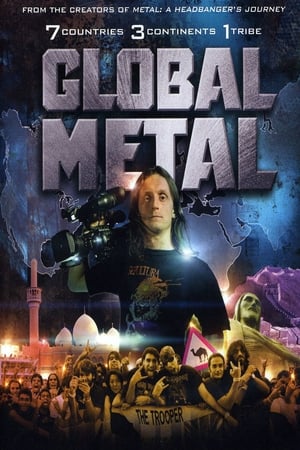
In GLOBAL METAL, directors Scot McFadyen and Sam Dunn set out to discover how the West's most maligned musical genre - heavy metal - has impacted the world's cultures beyond Europe and North America. The film follows metal fan and anthropologist Sam Dunn on a whirlwind journey through Asia, South America and the Middle East as he explores the underbelly of the world's emerging extreme music scenes; from Indonesian death metal to Chinese black metal to Iranian thrash metal. GLOBAL METAL reveals a worldwide community of metalheads who aren't just absorbing metal from the West - they're transforming it - creating a new form of cultural expression in societies dominated by conflict, corruption and mass-consumerism.
After the sudden death of her pregnant partner, a closeted attorney must embrace her sexuality and humanity, as she seeks custody of their newborn.
A young man narrates two conflicting accounts of his life, changing the details and incidents in both, as he slowly approaches madness.
Kesse is a third generation fisherman, living in a small coastal town in Northern Jutland. Life trudges along without surprises, but all this is about to change. The fishing industry is hit by financial crisis and the small fishing boats are swiftly put out of competition by big corporations. In desperation, Kesse tries to find a way out of his hopeless plight and has to resort to dishonest means, on top of having to fire his best friend and lone employee. As if this wasn't enough, he gets an unwelcome guest on-board in the form of marine biologist Gerd from Copenhagen, sent to study the fishing. Søren Balle's debut feature is a funny and touching film about love, friendship and the difficult art of dealing with change.
A woman narrates the thoughts of a world traveler, meditations on time and memory expressed in words and images from places as far-flung as Japan, Guinea-Bissau, Iceland, and San Francisco.
Children and teenagers throw sticks, berries, and leaves at each other from perches in a large baobab tree.
The film discusses the traits and originators of some of metal's many subgenres, including the New Wave of British Heavy Metal, power metal, Nu metal, glam metal, thrash metal, black metal, and death metal. Dunn uses a family-tree-type flowchart to document some of the most popular metal subgenres. The film also explores various aspects of heavy metal culture.
When aimless Manon begins work at À mon seul désir, a strip club that offers high concept performances, she instantly bonds with her fellow strippers, particularly Mia, an aspiring actress with a boyfriend and child. Manon learns that it is “not easy money, but fast money” and when she finds herself falling for Mia, she is forced to question her priorities as she explores her newfound erotic life.
This is a story about going after your first love in the early 2000s.
In this film, shot in Drachhausen/Hochoza in southern Brandenburg, film students from Potsdam reinterpret Schiller's play ‘Die Jungfrau von Orleans’ (The Maid of Orleans) and set it in Lower Lusatia. Johanna, the harvest queen, campaigns for the expansion of a solar park. She is celebrated by many for this, but some are hostile towards her. After the cock plucking/łapanje kokota, a scandal erupts in the ballroom.
Inspired by Steven Blush's book "American Hardcore: A tribal history" Paul Rachman's feature documentary debut is a chronicle of the underground hardcore punk years from 1979 to 1986. Interviews and rare live footage from artists such as Black Flag, Bad Brains, Minor Threat, SS Decontrol and the Dead Kennedys.
Sequel to the "The Waterfowl People". The author interprets the kinship, linguistic and cultural relationships of the Finno-Ugric peoples. Finns, Vepsians, Votes, Setos, Erzya-Mordvinians, Mansi, Hungarians, Sami, Nganasans, and Estonians appear in the film. The film was shot in 1977 on location in northern Finland, Sapmi, Vepsia, Votia, Mordovia, Khantia-Mansia, Hungary, the Taymyr Peninsula, the Setomaa region in Estonia, and on the Estonian islands of Saaremaa and Muhu. Footage was also shot in 1970 in the Nenets Okrug. The second documentary in Lennart Meri's "Encyclopaedia Cinematographica Gentium Fenno - Ugricarum" series.