Arctic Tale is a 2007 documentary film from the National Geographic Society about the life cycle of a walrus and her calf, and a polar bear and her cubs, in a similar vein to the 2005 hit production March of the Penguins, also from National Geographic.
The documentary's title translates as "to be and to have", the two auxiliary verbs in the French language. It is about a primary school in the commune of Saint-Étienne-sur-Usson, Puy-de-Dôme, France, the population of which is just over 200. The school has one small class of mixed ages (from four to twelve years), with a dedicated teacher, Georges Lopez, who shows patience and respect for the children as we follow their story through a single school year.
A series of suburban skies and the feeling of there being something else, intangibly out of reach.
Jason Momoa's story of fatherhood, craftsmanship, and the legacy he'll leave behind.
Chelsea Bledsoe and her husband Graig throw a surprise intervention for her old high school boyfriend, Henry, with a mismatched group of acquaintances from back in the day to fill out the guest list.
A documented introspection written, directed, composed, illustrated, and experienced by Riadh Bakache, serving as a transition into a new era for his YouTube channel. Rich in emotion, this piece reflects on his personal experiences and inner journey, supported by his readings. Riadh explores several philosophical and psychological questions about himself, in an effort to better understand and ultimately accept who he is. Taking a step back from his situation became necessary, leading to the telling of his entire journey in this video.
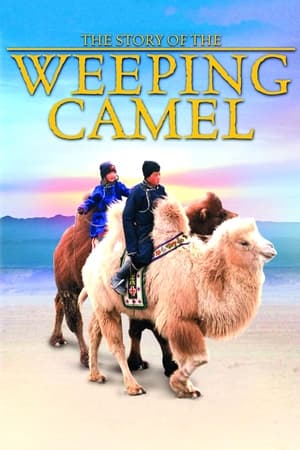
When a Mongolian nomadic family's newest camel colt is rejected by its mother, a musician is needed for a ritual to change her mind.
What would your family reminiscences about dad sound like if he had been an early supporter of Hitler’s, a leader of the notorious SA and the Third Reich’s minister in charge of Slovakia, including its Final Solution? Executed as a war criminal in 1947, Hanns Ludin left behind a grieving widow and six young children, the youngest of whom became a filmmaker. It's a fascinating, maddening, sometimes even humorous look at what the director calls "a typical German story." (Film Forum)
"Emotional memories that had formed the ambiguous boundaries between reality and fantasy began to divide exactly in two, and at the same time there was no emotion left on either side of reality and fantasy." Chang Gyeong is the name of a palace in central Seoul - a palace that was turned into a zoo by the occupying Japanese.
An Oscar nominated documentary about a middle-class American family who is torn apart when the father Arnold and son Jesse are accused of sexually abusing numerous children. Director Jarecki interviews people from different sides of this tragic story and raises the question of whether they were rightfully tried when they claim they were innocent and there was never any evidence against them.
Filmed immediately after the end of the civil war in Angola, Há Sempre Alguém Que Te Ama records the return of Pocas Pascoal to the country where she was born, in an attempt to reconstruct the episode that, in 1975, led to the capture of the director along with her mother and sisters. An intimate documentary about memory and self-(re)construction.
Documentary about the making of ’Spring Break Zombie Massacre.’
Evan, a filmmaker from Mississippi, catches feelings for a gal he meets at a found footage film festival in San Francisco. They decide to make a movie together, exploring the haunted landscapes of Evan’s family history in the swamplands of Florida. Old wounds are reopened and generational trauma reveals itself to be perhaps the scariest part of this attempted mockumentary that ends up being a little too real.
When asked a question on politics, late Palestinian poet Mahmoud Darwish once answered: “I write about love to expose the conditions that don’t allow me to write about love.” In TWO TRAVELERS TO A RIVER Palestinian actress Manal Khader recites such a poem by Mahmoud Darwish: a concise reflection on how things could have been.
In moving interviews, four fathers describe their suffering and efforts to keep contact with their children. A mother justifies the refusal of contact from her point of view. Despite the seriousness of the topic, the film manages to remain entertaining and even delivers an amusing snapshot of German sensitivities and the state of the Republic.
A trip that the author makes to a distant beach trying to find the place where his grandfather made a painting years ago.
In the vast expanse of desert East of Atlas Mountains in Morocco, seasonal rain and snow once supported livestock, but now the drought seems to never end. Hardly a blade of grass can be seen, and families travel miles on foot to get water from a muddy hole in the ground. Yet the children willingly ride donkeys and bicycles or walk for miles across rocks to a "school of hope" built of clay. Following both the students and the teachers in the Oulad Boukais Tribe's community school for over three years, SCHOOL OF HOPE shows students Mohamed, Miloud, Fatima, and their classmates, responding with childish glee to the school's altruistic young teacher, Mohamed. Each child faces individual obstacles - supporting their aging parents; avoiding restrictions from relatives based on traditional gender roles - while their young teacher makes do in a house with no electricity or water.
One day, in Savigny, an 18-year-old boy left his house in the middle of the war, saying: "I'm leaving, I'm going to kill Hitler." His name was Joseph, he was Jewish, he was my great-uncle. He disappeared during the night of the Occupation, and his existence became a family secret. He disappeared from history, the small as well as the big: he is not on any deportation list, and the only archive where he appears is a family photo of him as a child. It disappeared like a stone at the bottom of the water, instead of going up in smoke in the sky of Poland. What did he become? And why didn't anyone mention his name anymore?
A ritual of grids, reflections and chasms; a complete state of entropy; a space that devours itself; a vertigo that destroys the gravity of the Earth; a trap that captures us inside the voids of the screen of light: «That blank arena wherein converge at once the hundred spaces» (Hollis Frampton).
Documentary examining the medieval myth of the Philosopher's Stone, a Holy Grail-type relic which supposedly held the key to alchemy and immortality. Many noted alchemists and adventurers searched obsessively for the artifact hoping to learn its powerful secrets, a quest which allegedly drove some to madness and others to celestial encounters.