A dying man in his forties recalls his childhood, his mother, the war and personal moments that tell of and juxtapose pivotal moments in Soviet history with daily life.
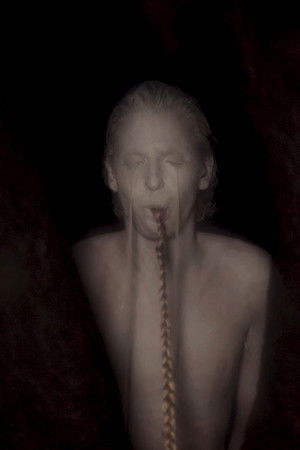
Begotten is the creation myth brought to life, the story of no less than the violent death of God and the (re)birth of nature on a barren earth.
Dreamy days and nights in the head of an introverted and isolated teenager who is swallowed in the depths of his imagination.
A woman on the run from the mob is reluctantly accepted in a small Colorado community in exchange for labor, but when a search visits the town, she learns that their support has a price.
In SUNSPOTS, several 16mm shots of the sun are layered and superimposed, paired with a soundscape consisting of volcanos, fire, plastic and the audible solar sounds recorded by the Solar and Heliospheric Observatory (SOHO).
An unknown girl breaks out of her daily grind by undergoing an intense audio-visual trip.
Parallax
After his mother's death, a young man edits the family's home videos to bring back her image. As he delves into the occult he begins to reveal the paradoxical magic of memories and cinema.
In the 60's and into the 70's, Kazuo Ohno himself produced three 16mm films. His many performances at the "Teatro Fonte" in Yokohama have been preserved with high quality Beta cameras. In addition, the television station NHK has made recordings of many of his theater performances since the premiere of "The Dead Sea" in 1985. Together, the Kazuo Ohno Dance Studio and NHK own over one hundred hours of footage. This is complemented by a 1994 film by Daniel Schmid and new 16mm footage of Kazuo Ohno filmed especially for this project in October of 2000. From these resources, this 111 minute Video/DVD was assembled. "Beauty and Strength" includes dance performances, film excerpts and interviews, examples of Ohno's drawings and writings, as well as biographical information, creating a comprehensive look into the world of Kazuo Ohno's dance.
Writes Ando, "Oh! My Mother was the first work I made using a newly bought 16mm camera I had purchased with the writer Shuji Terayama in Paris. This piece was selected for the Oberhausen International Film Festival. In 1969, there were, of course, no video cameras like ones we see now, and color TVs were only found at broadcast television studios. I had just been employed at the TBS (Tokyo Broadcasting System), and I often snuck into the studios after hours to experiment with the equipment. Oh! My Mother was made using the feedback effect, which is produced by infinitely expanding the image by looping the video."
Comprising historic archive footage and texts this DVD box enlightens us greatly about Yoshito Ohno's here and now. Butoh has a distinct starting point, namely, in 1959, with Kinjiki , a duet featuring Tatsumi Hijikata and Yoshito Ohno. His father, the legendary Kazuo Ohno created another epoch-making opus in 1977 Admiring La Argentina, with Yoshito Ohno as production manager. These links are no mere coincidence. To date, we've tended to overlook Yoshito Ohno, barely granting him the recognition he merits. Just as dance requires a lengthy gestation period in which to evolve, his dance has finally come into our field of vision, in all its freshness and stark-nakedness, linking Butoh's origins to its zenith, to a point where he now stands at a crossroads.
A man is given a letter by a stranger which causes an extreme sense of urgency to get to a very particular location. This is an experimental film that is entirely up to interpretation. The films concept was constructed by all members of the cast and crew.
A aspiring novelist operates a tiny neighborhood bookstore. His wife is a talented painter. Their marriage is disintegrating, and they are about to sign their divorce papers. Meanwhile, the legendary Casanova and his lover Lavinia are characters trapped inside of a 17th-century children's book. The tragedy of the impending divorce triggers the release of Casanova and Lavinia from the confines of the children's pop-up book.
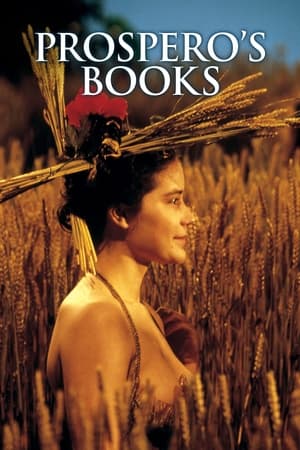
A comic study of 20th-century history, reconstructing the life of writer, creator and professional prisoner Tulse Luper. Born in 1911 Newport and last heard of in 1989, Luper’s life is pieced together from the evidence found in 92 suitcases scattered across the globe. In the first of three parts, we follow Luper through three distinct episodes: as a child during the First World War; as an explorer in Mormon Utah; and as a writer in Belgium during the rise of fascism.
TATTERY TATTERY TATTERY TATTERY TATTERY. TATTERY TATTERY TATTERY TATTERY TATTERY TATTERY TATTERY TATTERY TATTERY TATTERY TATTERY TATTERY TATTERY.
Cartas de Arapuca
Solitude d'adolescence
Body and Landscape is the exploration of the world of a dancer, who finds in her body the best way to experience the world. Above all, the short film alludes to the cycle of life, where there is a beginning, a middle and an indication of the end. The construction of the film's visual and sound landscape is developed from two narratives, which communicate simultaneously. One that starts with the dancer, who uses dance as the main means of expression and that follows a chronologically organized direction in the narrative and another that starts from visual plans based on nature, without obeying a temporal logic, and that refer to the story by Hans Christian Anderson.
Stop-motion experimental short where two men communicate with one another, talk on the telephone, smoke cigarettes, and contort themselves. Produced 1987 and released in 1988 on the VHS compilation Fat of the Land, released via Factory Records video imprint IKON. "Here is the first tape of a new British cinema which should be seen by everyone who loves film. The official British cinema is truly dead, alive only in admens bought dreams. This is the way to go."- Derek Jarman
Filmed on location in Vignaccio, Grosseto, Italy.