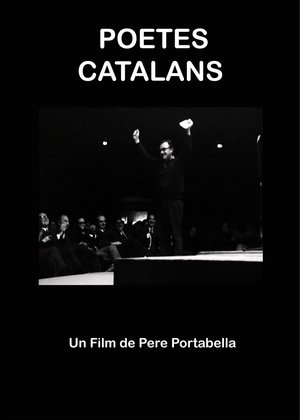
At underground film of the 1st Popular Festival of Catalan Poetry filmed in the Proce Theater in Barcelona on May 25, 1970, in solidarity with political prisoners. The participating poets were: Agustí Bartra, Joan Oliver (Pere IV), Salvador Espriu, Joan Brossa, Francesc Vallverdú and Gabriel Ferrater.
Perdus entre deux rives, les Chibanis oubliés
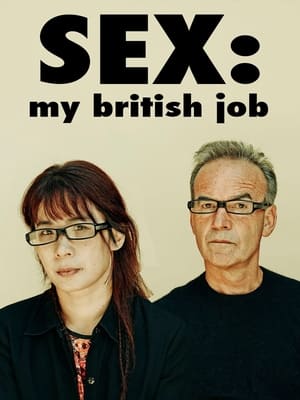
Nick Broomfield met Hsiao Hung Pai, a journalist who was working for the Guardian, when making his feature film 'Ghosts' (about the Morecambe Bay Chinese Cockle Pickers). As an experiment and using the latest in undercover technology, Nick worked with Hsiao to make a Undercover film set in a Chinese brothel in Finchley. There are over 2000 'illegal' brothels in London, largely ignored by the police and the authorities, which employ 80% foreign nationals, mostly illegal, that are easily exploited by the brothel owners.
Folding towels, straightening out sheets, taking bathrobes out of the dryer, stripping beds, cleaning up vomit. Fluffing pillows—making a dent for elegantly turned-up corners—and endless scrubbing, cleaning and clearing up messes. Behind the scenes of a hotel in the Italian Dolomites, the staff do everything they can to serve the guests and prevent complaints. The hotel has four stars, and a fifth is in sight.
In an attempt to represent reality, the boundary between life and art blurs between fragmentary images of someone and the praxis of an essay film.
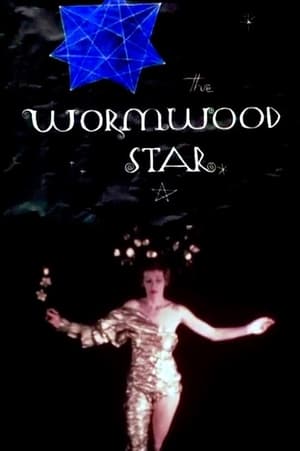
A portrait of artist, actress, poet and occultist Marjorie Cameron, it shows images of her paintings and recitations of her poems. Preserved by the Academy Film Archive in 2006.
A fascinating exploration of the literary — The Tragedy of Othello, the Moor of Venice, by English playwright William Shakespeare (1604) — and lyrical — Othello, by Italian opera composer Giuseppe Verdi (1887) — myth of Othello, the desperately tragic story of a Moorish general in the army of the Venetian Republic whose absurd jealousy poisons his love for his wife Desdemona.
In southern Italy, stateless migrants pick the tomatoes the rest of the world will taste. But what about these workers’ European dreams? Will they be ground to a pulp? Our canned tomatoes are picked by migrant workers who have come to southern Italy to realise their dream of Europe. However, they never get beyond the tomato fields. This documentary shows how the tomato broaches a broader issue. Will the pickers keep believing in their dream, or fight against a Europe where others reap the sweet rewards of their disillusion?
Iin Marlina
Nous les ouvriers
This short documentary features poet N Rengarajan, a migrant worker from Pudukkottai, India who sustains a practice of poetry as a way of life while working in the construction sector in Singapore. The film, structured around three of his poems, seeks to visually mirror the rhythm and tone of his writing. Together, verse and visuals strive to draw attention to the poet's acute illuminations of the realities of migrant life.
In 1791, in Haiti, Dutty Boukman presided over a Vodou ritual in Bois-Caïman that led to the creation of the first Black republic. Since then, rituals of transformation and artistic expression have been at the core of a thriving culture as the country faces oppression, poverty, and natural disasters. "Kite Zo A” (Leave the Bones) is a sensorial film about rituals in Haiti, from ancient to modern, made in collaboration with poets, dancers, musicians, fishermen, daredevil rollerbladers, and Vodou priests, set to poetry by Haitian author Wood-Jerry Gabriel.
Since its opening in 1882, the Paris Bourse du Travail (Labor Exchange) has remained a nerve center of the labor movement. Once a hotbed of revolutionary syndicalism, and now a meeting place for the main labor federations, history is etched into the walls of the Bourse. It is from the rooms bearing the names of illustrious figures—Eugène Varlin, Fernand Pelloutier, Jean Jaurès, Léon Jouhaux—that historians (Jean Bruhat, Bernard Georges, Jacques Julliard, Jean Maitron, Madeleine Reberioux, Denise Trintant) and the Bourse's general secretary, Jean Braire, have sought to bring to life a century of social history. The general secretaries of the five major labor federations (André Bergeron, Jean Bornard, Edmond Maire, Jacques Pommateau, Georges Seguy) discuss the origins of the Bourses du Travail, but also address the present and the future.
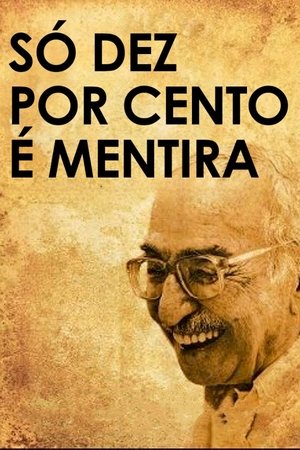
The life and literature of Mato Grosso do Sul poet Manoel de Barros. Alternating sequences of interviews with the poet, verses from his poetry, and statements of connoisseurs of his literature, the film portrays a revealing panel of the author's language. Manoel de Barros, age 91, with some 20 books published, lives in Campo Grande. Acknowledged, the winner of several literary prizes, he is the Brazilian writer who accounts for the greatest sale in poetry in Brazil.
This film was shot between 2014 and 2019 in the town of Zhili, a district of Huzhou City in Zhejiang province, China. Zhili is home to over 18,000 privately-run workshops producing children's clothes, mostly for the domestic market, but some also for export. The workshops employ around 300,000 migrant workers, chiefly from the rural provinces of Yunnan, Guizhou, Anhui, Jiangxi, Henan and Jiangsu.
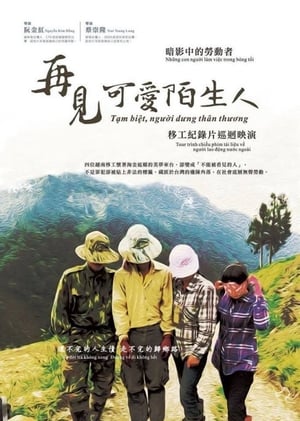
Follows Vietnamese migrant workers, to examine the reasons behind their numerous escapes and to trace the family situations of those who were deported from Taiwan.
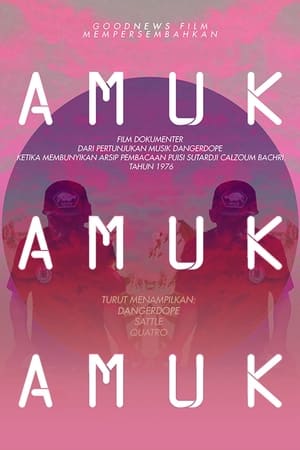
In 1976, Indonesian contemporary poet, Sutardji Calzoum Bachri, reads his poetry collection titled 'Amuk'. After 37 years, the sound record archive of that event is found in Jakarta Art Council. Using the archive, Rencong a.k.a DANGERDOPE, a hip-hop DJ from Aceh staged a music show.
This film is dedicated to Mas-Félipe Delavouët, the poet discovered by Lawrence Durrell, who wrote 14,000 verses in Provençal over a period of thirty years, and who died on November 18, 1990. "The sky, history and Mediterranean and Provençal myths are the inexhaustable wellspring of this man rooted down there, near Salon-de-Provence" (J.-D. Pollet). "Mas-Félipe Delavouët wrote five books in Provençal, 14,000 verses. A sort of "Odyssey". Of myths. What is stunning in him is that he always talks of disappearances. Cities, works, men, writings, television, etc., everything has to disappear. In order to be reborn. No pain. A sort of hand-to-hand of man and nature. During the filming, I would simply throw out some words... For example, one time I said "creation" and he said: "creation doesn't exist..., creation is before me..., I can only read creation"; this sentence describes Delavouët perfectly (J.-D. Pollet, 1989 and 1993).
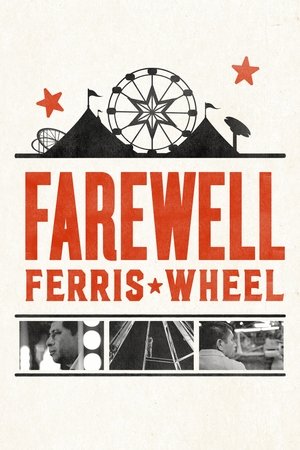
Farewell Ferris Wheel explores how the U.S. Carnival industry fights to keep itself alive by legally employing Mexican migrant workers with the controversial H-2B guestworker visa.
A documentary about migrants in the Netherlands, living, working, and dreaming of home.