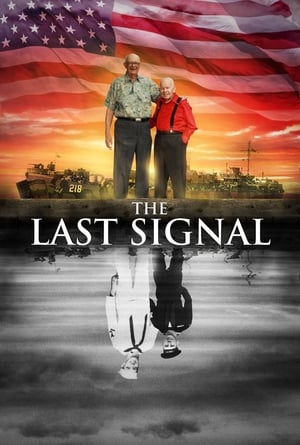
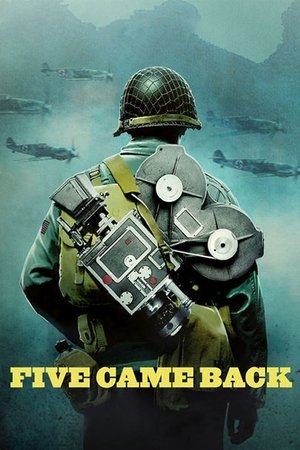
Despite his horrible experience as a prisoner of war during WWII, Frank Maselskis stays in the military and goes on to fight in Korea, where he participates in the brutal battle of the Chosin Reservoir. Upon returning home, Frank struggles to live a normal life while raising his daughters.
The Black Book, drafted during World War II, gathers numerous unique historical testimonies, in an effort to document Nazi abuses against Jews in the USSR . Initially supported by the regime and aimed at providing evidence during the executioners’ trials in the post-war era, the Black Book was eventually banned and most of its authors executed on Stalin’s order. Told through the voices of its most famous instigators, soviet intellectuals Vassilli Grossman, Ilya Ehrenburg and Solomon Mikhoels, the documentary, provides a detailed account of the tragic destiny of this cursed book and puts the Holocaust and Stalinism in a new light.
The incredible story of the Avro Lancaster, one of the finest bombers of the Second World War, which played a crucial role in the long and savage campaign to defeat Hitler's Third Reich. This documentary features interviews with surviving veterans of Bomber Command, who share frank personal accounts of their part in an aerial battle of attrition which claimed the lives of 55'000 aircrew.
Part of the Canada Carries On series, this short film portrays the First Division of the Canadian Active Service Force in Aldershot, England. Using an intimate letter home as a narrative device, this film reveals how the troops were received, what their living conditions were like, how they would get along with their English allies and how they spent their leisure time.
Explore how one man's relentless drive and invention of the atomic bomb changed the nature of war forever, led to the deaths of hundreds of thousands of people and unleashed mass hysteria.
When World War II broke out, John Ford, in his forties, commissioned in the Naval Reserve, was put in charge of the Field Photographic Unit by Bill Donavan, director of the soon-to-be-OSS. During the war, Field Photo made at least 87 documentaries, many with Ford's signature attention to heroism and loss, and many from the point of view of the fighting soldier and sailor. Talking heads discuss Ford's life and personality, the ways that the war gave him fulfillment, and the ways that his war films embodied the same values and conflicts that his Hollywood films did. Among the films profiled are "Battle of Midway," "Torpedo Squadron," "Sexual Hygiene," and "December 7."
When Italy capitulated 1943 and joined the allied forces, some soldiers from the German Wehrmacht also changed sides and joined the Italians in their fight to liberate the country. This film tells the story of Rudolf Jacobs, Walter Fischer and Heinz Brauers, three of the ‘Good Germans’ remembered in Italy for their efforts in fighting the Nazis.
39-45 L'histoire des bases sous-marines
Documentary about the sinking of the Britannic during the First World War, examining how she ultimately came to suffer the same fate as her sister ship, the Titanic. The Titanic sank in April 1912, and her sister ship, the Britannic, ultimately suffered the fate, sinking in 1916 due to an explosion caused by an underwater mine. In the wake of the Titanic disaster, Britannic was re-engineered to be even stronger. And yet she sank in just 55 minutes - three times faster than Titanic. It's one of Britain's greatest untold disaster stories. Now on the 100th anniversary, presenters Kate Humble and Andy Torbet piece together exactly what happened in those 55 minutes. While Andy makes a dangerous dive to the wreck, Kate speaks to descendants of the survivors. The characters she uncovers include Violet 'Miss Unsinkable' Jessops, who survived both Titanic and Britannic, Captain 'Iceberg Charlie' Bartlett and lookout Archie Jewell, who miraculously survived while those around him died.
Big Rig (2008) is a documentary film by Doug Pray about long-haul truck drivers. The film consists of a series of interviews with different drivers, focusing on both their personal life stories and also the life and culture of truck drivers in the United States.
In May 1943, Ernst Kaltenbrunner, the new head of the Reich Central Security Office, gave Hitler a report describing in detail the organization of the French Resistance. Indeed, during the Second World War, most of the Resistance networks had been infiltrated by traitors, the "V Man" (trusted men) in the service of the occupier. The Germans had established treason as a system and recruiting Frenchmen ready to inform on them was one of their priorities. It was these Frenchmen, whose number is estimated at between 20,000 and 30,000, who dealt terrible blows to the Resistance.
This chilling, vitally important documentary was produced to mark the 40th anniversary of the liberation of Auschwitz Concentration Camp. The film contains unedited, previously unavailable film footage of Auschwitz shot by the Soviet military forces between January 27 and February 28, 1945 and includes an interview with Alexander Voronsov, the cameraman who shot the footage. The horrifying images include: survivors; camp visit by Soviet investigation commission; criminal experiments; forced laborers; evacuation of ill and weak prisoners with the aid of Russian and Polish volunteers; aerial photos of the IG Farben Works in Monowitz; and pictures of local people cleaning up the camp under Soviet supervision. - Written by National Center for Jewish Film
The Soviet occupation of Bulgaria (1944-1947) causing the greatest political, financial and moral turning point in the new Bulgarian history.
Power and Paranoia of the Third Reich
Starting with a long and lyrical overture, evoking the origins of the Olympic Games in ancient Greece, Riefenstahl covers twenty-one athletic events in the first half of this two-part love letter to the human body and spirit, culminating with the marathon, where Jesse Owens became the first track and field athlete to win four gold medals in a single Olympics.
Part two of Leni Riefenstahl's monumental examination of the 1938 Olympic Games, the cameras leave the main stadium and venture into the many halls and fields deployed for such sports as fencing, polo, cycling, and the modern pentathlon, which was won by American Glenn Morris.
Ralph Rush, a Scout in General George S. Patton's World War II Intelligence & Reconnaisance Platoons went from digging up German mines to being the first American to enter the Ohrdruf Concentration Camp; the first concentration camp liberated by the Allies.
Within hours of the Japanese attack on Pearl Harbor, bombs rained down on U.S. and Filipino forces in the Philippines. After months of vicious fighting, Allied forces surrendered on the island only to be met with a brutal march to P.O.W. camps dotted across the islands. Thousands died on the marches, before reaching the P.O.W. camps where countless more died. The surrender of the Philippines, now almost forgotten in U.S. history, is commemorated in the Philippines every year.
Filmmaker Alain Resnais documents the atrocities behind the walls of Hitler's concentration camps.
Le Bataillon du Pacifique