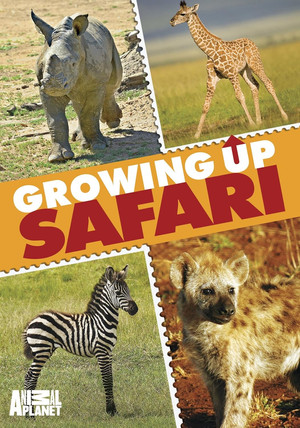
A Wildlife Safari through Africa.
Every year, thousands of Antarctica's emperor penguins make an astonishing journey to breed their young. They walk, marching day and night in single file 70 miles into the darkest, driest and coldest continent on Earth. This amazing, true-life tale is touched with humour and alive with thrills. Breathtaking photography captures the transcendent beauty and staggering drama of devoted parent penguins who, in the fierce polar winter, take turns guarding their egg and trekking to the ocean in search of food. Predators hunt them, storms lash them. But the safety of their adorable chicks makes it all worthwhile. So follow the leader... to adventure!!
A 45 minute account of the life of a humble logger, named Vince Shute, who made one decision that would ultimately affect the black bear and the attitudes that people have of this often misunderstood animal. This short film goes into great detail about the history of The American Bear Association and the formation of the Vince Shute Wildlife Sanctuary.
A fascinating new look at the biblical, historical, and scientific evidence for Creation and the Flood. Learn from more than a dozen scientists and scholars as they explore the world around us in light of Genesis. Dr. Del Tackett, creator of The Truth Project, hikes through canyons, climbs up mountains, and dives below the sea in an exploration of two competing views... one compelling truth.
Directed by award winning filmmaker Ben Masters, Deep in the Heart is a visually stunning celebration of Texas’ diverse landscapes and remarkable wildlife found nowhere else. Told through the eyes of wildlife species ranging from the mysterious blind catfish to the elusive mountain lion, the film follows our ever-changing relationship with the natural world and how we affect it. Narrated by beloved Texan, Matthew McConaughey, the film aims to safeguard our remaining wild places and to recognize the importance of Texas’ conservation on a continental scale.
Coral reefs are the nursery for all life in the oceans, a remarkable ecosystem that sustains us. Yet with carbon emissions warming the seas, a phenomenon called “coral bleaching”—a sign of mass coral death—has been accelerating around the world, and the public has no idea of the scale or implication of the catastrophe silently raging underwater.
Follow ocean legend Sylvia Earle, renowned underwater National Geographic photographer Brian Skerry, writer Max Kennedy and their crew of teenage aquanauts on a year-long quest to deploy science and photography to inspire President Obama to establish new Blue Parks to protect essential habitats across an unseen American Wilderness.
As the largest island in the Caribbean, Cuba is host to spectacular wildlife found nowhere else on the planet: from the jumping crocodiles of the Zapata swamp to the world's tiniest hummingbird, from thousands of migrating crabs to giant, bat-eating boas that lie in wait for easy prey. Decades of a socialist, conservation-minded government, American embargoes and minimal development have left the island virtually unchanged for 50 years. As international relations ease, what will become of this wildlife sanctuary?
Florida is home to beaches, coral reefs, pine forests and the famous Everglades wetland, but a growing human population and abandoned exotic pets like pythons are threatening this wild paradise. Can Florida’s ecosystems continue to weather the storm?
American horses are icons. Mustang. Appaloosa. Morgan. Quarter Horse. Each breed has a unique story to tell, and each story is a deep part of the American experience. Grounded in historical moments and charismatic people, American Horses traces the emergence of these remarkable horses and introduces contemporary trainers who are continuing in the long tradition of caring for them.
Follows the story of "Grizzly Man" Timothy Treadwell and what the thirteen summers in a National Park in Alaska were like in his attempt to protect the grizzly bears. The film is full of unique images and a look into the spirit of a man who sacrificed himself for nature.
Sir David Attenborough narrates a documentary about the Kea, the world's only alpine parrot. Playful and destructive, it attacks cars, starts landslides and terrorises New Zealand ski resorts but behind the bad behaviour there's a sharp mind at work. David tries to play chess with a kea and discovers how its cheeky character is the key to its survival.
This pioneering documentary film depicts the lives of the indigenous Inuit people of Canada's northern Quebec region. Although the production contains some fictional elements, it vividly shows how its resourceful subjects survive in such a harsh climate, revealing how they construct their igloo homes and find food by hunting and fishing. The film also captures the beautiful, if unforgiving, frozen landscape of the Great White North, far removed from conventional civilization.
Join the big cats as we get up close and personal with their journeys through growing pains, adulthood, survival struggles and unfamiliar territories. These seven films follow the lives of some of the most formidable feline predators - lions, leopards, tigers and cheetahs in intimate detail.
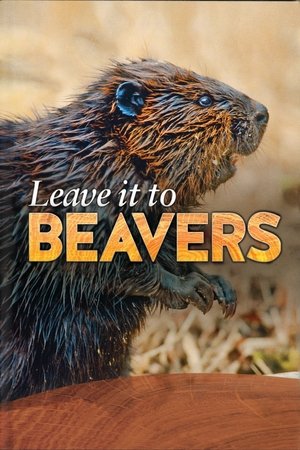
In 1940 twenty Canadian Beavers were brought to 'Tierra del Fuego' island in southern Patagonia for commercial fur production. However, beavers having no natural predators, quickly spread throughout the island, causing massive destruction of trees threatening the entire Patagonian forests rivers and species. Why wildlife conservationist are convinced that 150.000 beavers must be killed? Why some of the most recognized specialist are convinced that an eradication is not possible? Meanwhile truism is capitalizing on the situation: a man dressed as a beaver passes out flyers promoting a famous sky resort: 'Cerro Castor' - Beaver Hill. Hunters claim for subsidies, scientists are researching, rangers do what they can and restaurants tray to offer beaver meat to tourist.
Translated literally as "Animals in Love," the French-language documentary Animaux Amoreux depicts various species of the animal kingdom in courting, mating and reproduction activities. Laurent Charbonnier directs.
The Alps – wild mountains, extreme lives, but also a magical world. This majestic mountain range connects eight countries and reaches heights of up to 4,000 metres above sea level. At a length of 1,200 kilometres, the Alps form both a connecting bridge between western and eastern Europe and a high barrier between southern and central Europe. The mountains act as a mighty water reservoir and continental watershed, feeding innumerable rivers that flow into three different oceans. Their highest peak, Mont Blanc, is surrounded by long, soaring mountains with ice-covered slopes. These great summits are just one reason the so-called “Roof of Europe” continues to fascinate – across the continent and around the world. The incredible diversity of landscapes, flora and fauna makes the Alps a unique natural treasure at the heart of Europe.
Two hundred years after Charles Darwin set foot on the shores of the Galápagos Islands, David Attenborough travels to this wild and mysterious archipelago. Amongst the flora and fauna of these enchanted volcanic islands, Darwin formulated his groundbreaking theories on evolution. Journey with Attenborough to explore how life on the islands has continued to evolve in biological isolation, and how the ever-changing volcanic landscape has given birth to species and sub-species that exist nowhere else in the world. Encompassing treacherous journeys, life-forms that forge unlikely companionships, and survival against all odds, Galápagos tells the story of an evolutionary melting pot in which anything and everything is possible.
The endless expanses of the Indian Ocean are home to the last natural paradises: Remote atolls surrounded by coral reefs in crystal clear water. Whole regions of this ocean are still unexplored, many reefs are not marked on any map. The departure of the research vessel Agulhas II from the island of La Réunion marks the beginning of one of the greatest scientific adventures of our time. The expedition, initiated by Monaco Explorations with the support of the Prince Albert II of Monaco Foundation, lasted six weeks and led into the Western Indian Ocean along the Mascarene Plateau.
The Arctic is accessible to man only because of ice dogs. As hunters, haulers, and guardians, they have been our vital link to nature for thousands of years. Dogs led the Sarqaq people out of Siberia and, a millennium later, led explorers to the North Pole. As the light returns to Greenland, we arrive in Scoresbysund with a troop of the only companions worth having in this harsh environment.