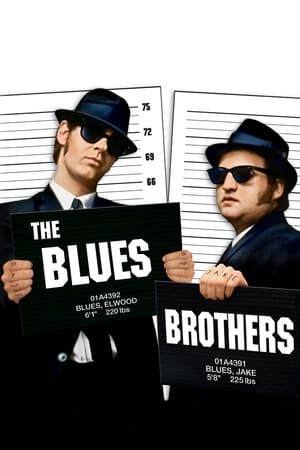
Finally released from prison, Elwood Blues is once again enlisted by Sister Mary Stigmata in her latest crusade to raise funds for a children's hospital. Hitting the road to re-unite the band and win the big prize at the New Orleans Battle of the Bands, Elwood is pursued cross-country by the cops.
In the 1930s, jazz guitarist Emmet Ray idolizes Django Reinhardt, faces gangsters and falls in love with a mute woman.
Delve into the musical influences of iconic rockers Led Zeppelin, whose epic brand of arena rock grew out of a deep love of the blues, the skiffle and folk rock. Music historians and authors join producers Joe Boyd and Larry Cohn, as well as performers John Renbourn, Chas McDevitt and Davey Graham, in their analysis of the band's musical roots. An enthralling section also explores Zeppelin's fascination with the occult.
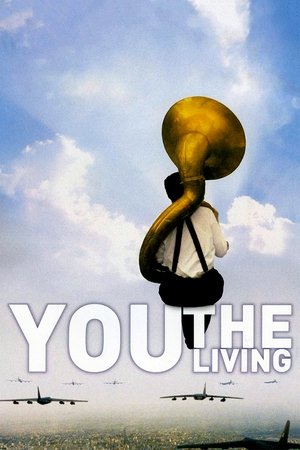
Danny 'Sweet Touch' Caputo is a young sax player on the verge of crowning his life's dream, to play in the festival that will send him to the top amongst the jazz greats. With just 50 minutes standing between him and his consecration, as he runs over his last simple question more to pass time than anything else. Danny tries to answer, but instead finds himself projected into another world, one populated by the sensual and very real ghosts of his past...
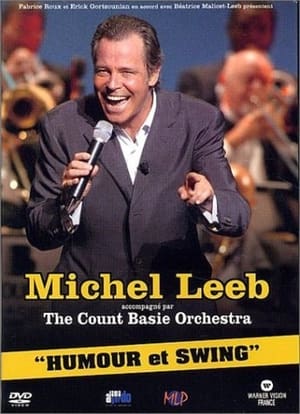
The two musical masters swing out.
Oscar Peterson is accompanied by the stellar duo of bassist Ray Brown and drummer Ed Thigpen for each concert performance. This is the classic Oscar Peterson Trio, considered by many to be the best Oscar Peterson Band ever. Oscar and the trio collaborate with trumpeters Clark Terry (Finland'65) and Roy Eldridge (Sweden'63) and re-create some of the excitement and fun of the Jazz at the Philharmonic (JATP) tours. Among the many highlights in this collection are the Oscar and vocalist-trumpeter Clark Terry collaboration on the ever-popular Mumbles ,and for the first time on commercial video, an Oscar Peterson Trio rendition of Tonight from his award-winning West Side Story album.
Inside the Blue Note nightclub one night in 1959 Paris, an aged, ailing jazzman coaxes an eloquent wail from his tenor sax. Outside, a young Parisian too broke to buy a glass of wine strains to hear those notes. Soon they will form a friendship that sparks a final burst of genius.
Stop for Bud is Jørgen Leth's first film and the first in his long collaboration with Ole John. […] they wanted to "blow up cinematic conventions and invent cinematic language from scratch". The jazz pianist Bud Powell moves around Copenhagen -- through King's Garden, along the quay at Kalkbrænderihavnen, across a waste dump. […] Bud is alone, accompanied only by his music. […] Image and sound are two different things -- that's Leth's and John's principle. Dexter Gordon, the narrator, tells stories about Powell's famous left hand. In an obituary for Powell, dated 3 August 1966, Leth wrote: "He quite willingly, or better still, unresistingly, mechanically, let himself be directed. The film attempts to depict his strange duality about his surroundings. His touch on the keys was like he was burning his fingers -- that's what it looked like, and that's how it sounded. But outside his playing, and often right in the middle of it, too, he was simply gone, not there."
Sting : My Songs au château de Chambord
Crazy is the story of a legendary guitar player who emerged from Nashville in the 1950s. Blessed with incomparable, natural talent, Hank Garland quickly established his reputation as the finest sessions player in Nashville.
In 1955, on his report, a medical examiner wrote in the box: age, “about 53 years”. Charlie Parker nicknamed Bird just died, at 34. His death will be the ransom of a life that was not denied to the excesses or the consuming flame of genius. His wildest improvisations will open the door to future jazzmen. Between shadow and light this film will pay tribute to one of the greatest musicians of the 20th century.
Doug Sahm a/k/a Sir Doug was both a Texas rock & roll legend and pioneer. True, there were others before him (Buddy Holly and Roy Orbison come to mind), but the Sir Douglas Quintet counterattacked the British invasion of the mid 1960's with their own brand of Chicano-influenced rock that they had been playing around their hometown of San Antonio. This performance, recorded October 14, 1975, came after Doug had temporarily retired the Sir Douglas name, but features original member Augie Meyer along with musical compadres Martin Steitle, John Barber, Steve McDaniels and Harry Hess.
Chart-topping jazz trumpeter Chris Botti and special guests performed two star-studded concerts at the historic Boston Symphony Hall with Keith Lockhart and the Boston Pops on September 18 and 19, 2008. Special guests include Josh Groban, Yo-Yo Me, John Mayer, Katharine McPhee, Lucia Micarelli, Sting and Steven Tyler.
Eric Clapton is widely considered one of the greatest blues guitarists of all time. He played with The Yardbirds, a seminal 60s blues-rock band that would go on to become Led Zeppelin, before recording an album that is known as one of the greatest blues-rock albums ever made, with John Mayall and the Bluesbreakers. He went on to form three supergroups in quick succession. This film features his live performance at Budokan in Tokyo, Japan on February 25, 2009.
Vipal Monga's first feature-length documentary chronicles an unprecedented series of concerts performed in February 2005 by the legendary jazz composer Lawrence D. Butch Morris. The concerts were in celebration of the 20th anniversary of Conduction, Butch's revolutionary technique for live music-making. Butch put on 44 performances in 28 days with 85 musicians pulled from all across New York's musical community. Along with footage from these remarkable concerts that span a full range of musical styles from big band jazz to funk to electronic and symphonic works. The documentary features some of the leading lights of the New York creative-music community, including Henry Threadgill, JD Allen, Brandon Ross, Graham Haynes, Howard Mandel, and Greg Tate. Although the film provides unique insight into New York's vibrant avant-garde music scene,
Jack DeJohnette - Drums, Herbie Hancock - Keyboards, Dave Holland - Bass, Pat Metheney - Guitars. For the first time, these four masterful musicians come together to form a jazz group most people would never expect to see happen. Taking their collaborations around the world, they toured Canada, Europe, Japan, and the United States, performing concerts and festivals to sold out audiences and rave reviews. On June 23, 1990, this extraordinary group performed two concerts at the Mellon Jazz Festival at the Philadelphia Academy of music. Both shows were filmed and have been carefully edited to create a technically flawless video of a truly "once in a lifetime" event. All of the songs were selected with great care, as might be expected from a band of this caliber.
track list: 1.Sometimes I Just Freak Out 2.All Or Nothing At All 3.Stop This World 4.The Girl In The Other Room 5.Abandoned Masquerade 6.I'm Coming Through 7.Temptation 8.East Of The Sun (And West Of The Moon) 9.Devil May Care 10.Black Crow 11.Narrow Daylight 12.Love Me Like A Man 13.Departure Bay 14.Narrow Daylight
Utilizing the 1920s jazz vocals of Annette Hanshaw, the epic Indian tale of exiled prince Ramayana and his bride Sita is mirrored by a spurned woman's contemporary personal life, and light-hearted but knowledgeable discussion of historical background by a trio of Indian shadow puppets.
Taken from shows in Belfast and Dublin during the December '84 Irish Tour, filmed and produced by NFL Film's Phil Tuckett, Emerald Aisles captures Gary Moore and his band at their 1980s very best. Also features the 'Out In The Fields' promo video.
Taken from the European tours organised for American blues musicians between 1962 and 1969, this release features performances by several popular blues artists, including: Big Mama Thornton, Roosevelt Sykes, Buddy Guy, Dr. Isaiah Ross, Big Joe Turner, Skip James, Bukka White, Son House, Hound Dog Taylor and Little Walter, Koko Taylor and Little Walter, Sonny Terry and Brownie McGhee, Helen Humes, Earl Hooker, and Muddy Waters.