A teen with autism unlocks a joyous world of self-expression as she shares her voice for the first time using a letter board.
A movie that portrays a reflection about sense of being self, to love and to be loved.
A utopia of a post-war city that launches a rewilding. The program is an attempt to create a new society where the aims of people do not stand in the way of the aims of other people, trees, rivers, chipmunks, mushrooms…
From a secret lab to hidden codes, this special reveals the inner workings of Greggs, the iconic bakery known for its delectable sausage rolls.
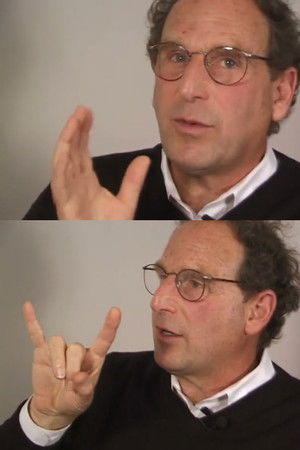
In his contribution to the On Art and Artists interview series, Nathaniel Dorsky (b.1943) begins by discussing his childhood love of the John Ford film Stagecoach and its influence upon his decision to make films while attending Antioch College. Describing the affinity he developed for work operating at the intersection of film materiality and personal language, Dorsky explains how he developed his philosophy of the “devotional film” and the “microcosmic viewer.” Dorsky likens his practice to Buddhist sculpture, referring to himself as a “Japanese poet continuing aspects of the ethos of the Marxist revolution.” In the interview, the artist describes his use of the screen as an “altarpiece for the image” and emphasizes his use of editing to create works which “harmoniously coalesce.” Interview conducted by Jeffrey Skoller in May 2000, edited in 2014.
This short documentary offers a look at the life forms on the Queen Elizabeth Islands within the Arctic Circle. Even in this frigid zone of icebergs and glaciers a surprising variety of wildlife and vegetation is seen. Writings from the logbooks of early explorers provide vivid descriptions of scenes as arresting to them in their century as to today's explorer. Note: Originally produced for the television series Perspective, this film was distributed separately on 16mm for schools and libraries, qualifying it as a standalone documentary.
Juskatla weaves together perspectives of the people who live on the islands of Haida Gwaii-an archipelago on Canada's Northwest coast, and the ancestral territories of the Haida Nation. From industrial loggers who harvest trees from ancient forests, to Sphenia Jones, a Haida matriarch who bears an intimate knowledge of her People's territories, Juskatla meditates on the divergent ways of being that shape the islands and its people.
X-hale
An in-depth documentary on the behind-the-scenes of the 1990 Canuck cult classic The Final Sacrifice.
For twenty years, male members of a fraternity at a major state university and their female guests have been celebrating the end of the school year by capturing and eating live salamanders. Is the "salamander-eating contest" staged by these students a fad or a tradition? A rite of passage for college men and women? Or an inhumane and senseless act? The film documents the ritual in cinema verité fashion and permits viewers to decide for themselves. Provided without narration - this short film primarily features obnoxious, loud and brawling youngsters, and develops into a competition among coeds that has strong sexual overtones.
A special behind-the-scenes look at the making of the audiobook edition of "d'ILLUSION: The Houdini Musical" and how it did its part in helping keep theater and the arts alive during the COVID-19 pandemic.
Stan Brakhage is a film maker whose work is shown mainly at film festivals. His work has been likened to poetry. Brakhage explains his techniques and his motivation.
It’s the second semester of junior year for Pierce “Sparni” Sparnroft, a gifted jazz vibraphonist studying at Montclair State University in New Jersey. Sparni’s prospects on the vibes were rejuvenated by their new professor, the world-renowned Steve Nelson, and are to be showcased during a student-driven recital in May 2023. But all the while, Sparni must face a crisis within.
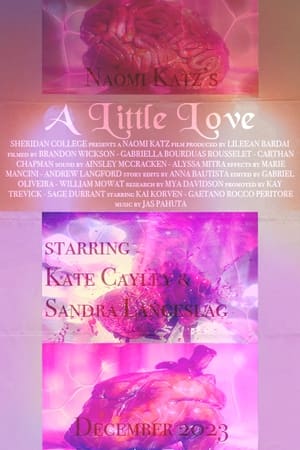
Through interspersed conversation and prose, this experimental documentary follows a poet and a neuroscientist as they explore the definition of love, what it means, and why it matters.
One call for help ignites a nationwide fight to end human trafficking. A Way Out follows Safe House Project as they confront the reality of human trafficking in the United States and build a clear path to safety for survivors. The documentary centers on a simple turning point: a survivor makes a call for help. From there, the film tracks what happens behind the scenes as Safe House Project coordinates a rapid response, connects with survivor advocates, and works alongside law enforcement and trusted partners to move someone from immediate danger toward safety and justice. As the story unfolds, viewers see how a single call can set a nationwide network in motion, and how clarity, coordination, and courage can change the outcome for someone who feels trapped. The film balances the gravity of the issue with a strong sense of hope, showing ordinary people stepping into an extraordinary mission to make a way out. —Clay Vaughan
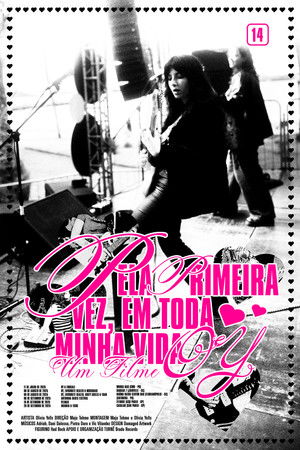
The first tour of rising artist Olivia Yells, held in 2025, passed through the Brazilian states of Paraná, Santa Catarina, and São Paulo – where six shows were performed and became a milestone in the singer/songwriter's career.
The life of the inhabitants in the snow-covered Black Forest region.
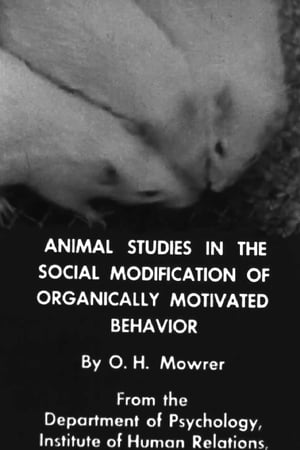
A record-instructional film showing a few of the many ways in which the behaviour of hungry rats can be modified according to the nature of the prevailing social situation.
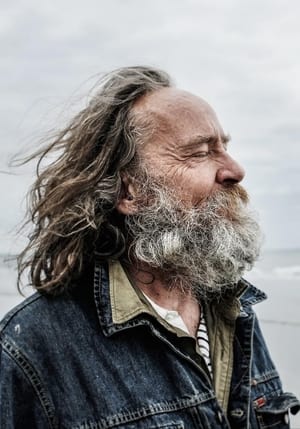
Documentary film about Martin Park, a homeless man living in Dublin, and his friendship with photographer and filmmaker Donal Moloney.
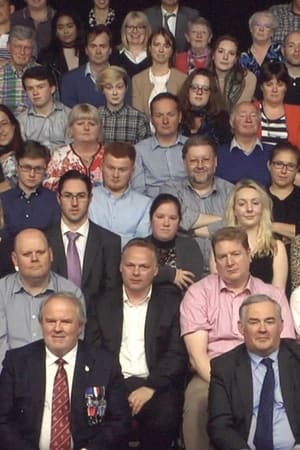
On the 23rd of June 2016 Britain voted to leave the European Union. Who Are We? is a re-working of material from a BBC television debate transmitted a few weeks earlier.”The most provocative of the bunch is John Smith’s Who Are We?. Leading up to the Brexit vote, BBC’s Question Time became ever more vicious and confrontational. Who Are We? is a manipulation of one of those broadcasts, with David Dimbleby prompting “you, sir, up there on the far right” repeatedly.“Get our identity back – vote leave!” one audience member shouts, while another declares himself a veteran, followed by a swift manipulated cut to rapturous applause. It’s a heavily edited and remixed edition of Question Time, but by highlighting those in the audience with attitudes ranging from nationalistic to xenophobic, Smith’s short film shows the now normalised extremism within our society and our political discourse.” Scott Wilson, Common Space magazine, April 2017