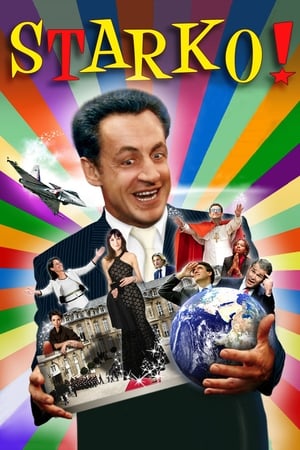
Learn more about Nicolas Sarkozy's presidential campaign, his personal life and more through this documentary.
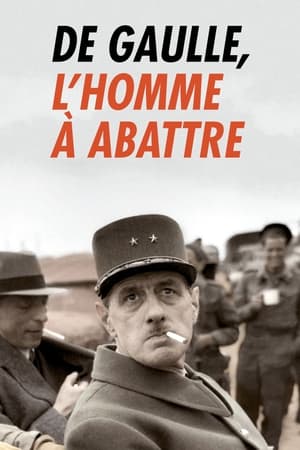
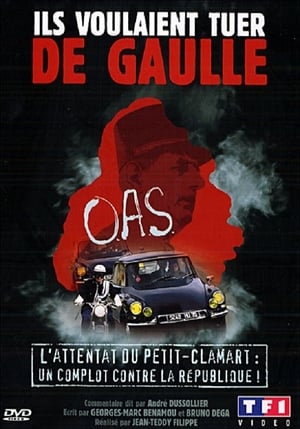
De Gaulle, l'homme à abattre
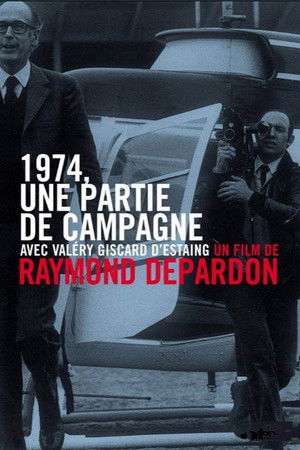
Following the 1974 French presidential campaign with Valéry Giscard d’Estaing.
Based on the model of documentary fiction (alternating period films, interviews and re-enactments with actors), the film begins on September 8, 1961 with the failure of the Pont-sur-Seine attack on a road convoy carrying Charles de Gaulle, then President of the Republic, and continues with the slow preparation, the occurrence and the consequences of the Petit-Clamart attack on August 22, 1962.
La Révolte des vieux
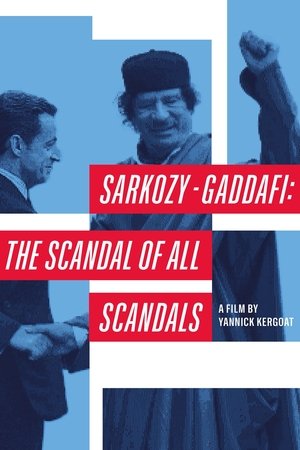
A democracy and a dictatorship. A presidential campaign and dirty money. War and death. When Nicolas Sarkozy affirmed in the press that “No one can make sense of it”, he was trying to discredit the investigation into his ties with Muammar Gaddafi, portraying it as a bunch of gibberish. As Sarkozy and his many accomplices go on trial in the Libyan campaign financing affair, here’s the film that will finally explain all of the ins and outs of one of the most remarkable French political scandals in decades.
In 2002, serial killer Patrice Alègre was sentenced to life imprisonment for five murders. Gendarme Roussel, the main investigator of this case, believes that he will make him confess to other unsolved crimes in Toulouse. Two ex-prostitutes give a series of names of presumed accomplices of the killer, among them Dominique Baudis, then president of the CSA. He decides to face the case alone. Around him, it is silence: not an official support of his political family. Almost twenty years later, we return to the Baudis affair to try to understand it, with the testimonies of Pierre and Benjamin Baudis, his sons, François Hollande, Camille Pascal and the main protagonists.
In 1973 Alister Barry joined the crew of a protest boat (The Fri) to Mururoa Atoll, where the French Government were testing nuclear weapons. Barry records the assembly of the crew, the long journey from Northland, and their reception in the test zone; when The Fri was boarded and impounded by French military he had to hide his camera in a barrel of oranges.
Chronicling the search for truth and peace in post-genocide Rwanda. Director Deborah Scranton explores issues of peace, retribution, accountability and justice, ultimately discovering a blueprint for ending the cycle of violence. Examining the personal and political repercussions of the deadly conflict in this east African country.
In May 1974, Valéry Giscard d'Estaing became President of the Republic and wanted to bring about a new era of modernity. One of his first decisions was to break up the ORTF with the creation of three new television channels: TF1, Antenne 2 and FR3. Three new public channels but autonomous and competing. It is a race for the audience which is engaged then, and from now on the channels will make the war! This competition will give birth to a real golden age for television programs, with variety shows in the forefront. The stars of the song are going to invade the living rooms of the French for their biggest pleasure. This unedited documentary tells the story of the metamorphosis of this television of the early 1970s, between freedom of tone, scandals, political intrigues and programs that have become mythical.
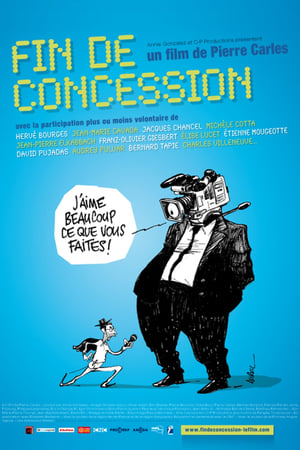
Pierre Carles, the dispenser of justice seen in “Pas vu, pas pris,” is back in the saddle. After attacking French television star reporters, his new target is television critics as represented by Daniel Schneidermann, host of the "Arrêt sur images" show. “Enfin pris ?” analyzes censure at work in television. It is also a thought-provoking look at how power changes people and the intimate forces between ambition and loyalty. A cruel, biting comedy from which no one really comes out unscathed.
In the summer of 1963, François Mitterrand was going through a deep existential crisis. His political career was at a standstill and, after 19 years of marriage, the couple had grown apart. It was at this point that François Mitterrand met the woman who was to give new meaning to his life. Anne Pingeot, aged 19, was to become the companion of a lifetime, a woman who would be with him throughout his rise to power and who would remain by his side until his last breath. For the first time, Anne Pingeot has agreed to allow the fragments of this passionate love story — hundreds of letters and a diary — to be shown on television, before being donated to the National Library.
A documentary tracking the life and career of the model-musician turned first lady of France.
The Rainbow Warrior was a Greenpeace ship that was bombed by operatives of the French government, in New Zealand in 1985, while heading to a protest against nuclear testing, tragically taking the life of photographer Fernando Pereira. Edward McGurn’s enlightening and exciting documentary uncovers a tangled tale of nuclear weapons, geopolitical coverups, and attempts to take action against impending environmental collapse. Was Pereira’s death an accident or part of a larger political plot?
The Revenge of Bernadette Chirac
De Charles de Gaulle à Emmanuel Macron, les gardiens de l'empire
In France’s last presidential election, Marine Le Pen, a right-wing candidate, won over 30 per cent of the vote after an attempt to rebrand a party long associated with her controversial father, Jean-Marie Le Pen. See how three of her supporters faced similar obstacles in changing the narrative.
Bernard Tapie, le spectacle permanent
Le président et le dictateur
They call each other Emmanuel and Vladimir - but despite the informal tone, a fateful negotiation is taking place. During France's presidency of the EU, President Macron takes on the task of negotiating with President Putin in an attempt to prevent an invasion of Ukraine. For the first time, we get to follow the diplomatic game behind the scenes and hear parts of their phone conversations.