In trouble with the local authorities, Mabel Simmons, notoriously known as Madea, is on the run from the law. With no place to turn, she moves in with her friend Bam who is recovering from surgery. Unbeknownst to Bam however, Madea is only using the "concerned friend" gag as a way to hide out from the police.
While writing an adaptation of the play "4.48 Psychosis", by English playwright Sarah Kane. Luisa (Ingrid Trigueiro) travels to a desert beach with her family. Immersed in the text, Luisa finds the work's impulses increasingly immersed into her own reality, driving her to the threshold of adaptation and delirium. Between theater, sketch, archival images, and complex memories and family relationships, Arthur Lins uses different staging references to compose a small tropical tale about complex creation process.
La cárcel de cristal
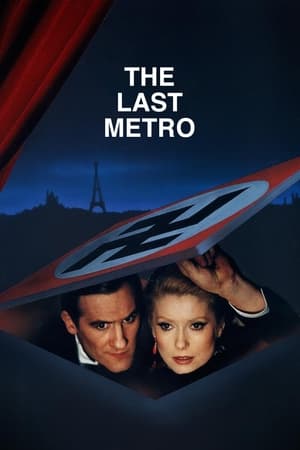
In occupied Paris, an actress wed to a Jewish theater owner must keep him hidden from the Nazis while doing both of their jobs.
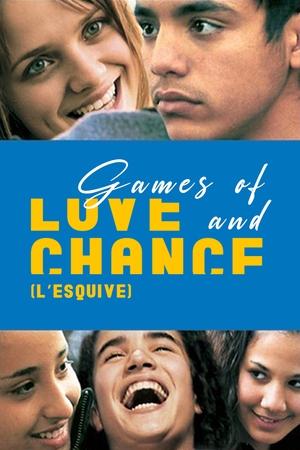
A group of teenagers living in a housing project in the outskirts of Paris rehearse a scene from Marivaux's play of the same name. Krimo is determined not to take part, but after developing feelings for Lydia, he quickly assumes the main role and love interest in the play.
Gabriela Preissová wrote her two most famous dramas, Gazdina roba and Její pastorkyňa, when she was not yet thirty. Both were set to music and became famous. The first opera, entitled Eva, was written by J. B. Foerster, and the second by Leoš Janáček. The fame of Janáček's work greatly overshadowed the original. On the other hand, "Gazdina roba," the author's debut work, is still performed on Czech stages, regardless of the era. That is how powerful and impressive this drama is. The production by director Zdeněk Kaloč premiered at the Vinohrady Theater in May 1992. Dagmar Veškrnová endowed the title role of Eva the seamstress with warmth, temperament, pride, and tragic shadows.
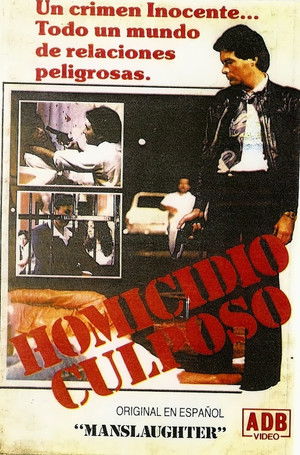
After accidentally killing her lecherous producer, a famous actress tries to hide her guilt.
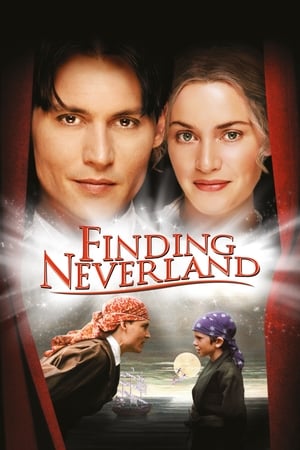
During a writing slump, playwright J.M. Barrie meets a widow and her four children, all young boys—who soon become an important part of Barrie’s life and the inspiration that lead him to create his masterpiece. Peter Pan.
Marie Stuartovna
Nadan is the story of a popular drama troupe owned by Devadas Sargavedi (Jayaram), which was previously possessed by his father and grandfather in the past, and speaks about the problems faced by the owner and his survival. The revival of this mighty art through the sustained effort of the talented theatre artists forms the crux of the narrative.
Based on the short story by Anton Chekhov, Kama Ginkas’ astounding reimagining highlights and builds off of the Chekhovian tension between the beauty of life and the tragedy of how it is lived. The story tells the the tale of philosophy student Andrey Vasil'ich Kovrin. On the verge of a nervous breakdown, Kovrin decides to visit his childhood friend Tanya Pesotsky at the estate of her father. As he and Tanya develop a relationship and eventually marry, a black monk of legend begins appearing to Kovrin in visions. Though these hallucinations at first imbue the young man with joy and energy, they eventually lead to his ruin.
Amol, a child, is confined to his adoptive uncle's home by an incurable disease. He stands in the courtyard and talks to passers-by and inquires about the places they go to. The construction of a new post office nearby prompts the imaginative Amol to fantasise about receiving a letter from the King or being his postman.
Orgon and his mother swear by Tartuffe, the self-styled devout who lives off them. The other members of the family, scandalized by the clergyman's hold over them, will do anything to expose his hypocrisy. Michel Bouquet plays an almost monstrous Tartuffe, whose only weakness lies in his feelings for Elmire.
Les Filles Aux Mains Jaunes
The life story of Marta Kubišová as a musical, broadcast live from the Summer Stage of the Kampa Museum in Prague, based on real events in the life of Marta Kubišová. On stage, we meet not only the two remaining Golden Kids, but also Jan Němec, Jan Moravec, Alexander Dubček, and Václav Havel.
King Lear has three daughters, but no sons. Boldly he makes a decision to divide his kingdom among his children, but fails to anticipate the consequences of his actions. His generosity is cruelly repaid and Lear finds himself adrift, wandering homeless and destitute. As he comes to realize the false values by which he has lived, he finally encounters his own humanity.
Britain is in crisis. An ineffectual Queen Cymbeline rules over a divided dystopian Britain. Consumed with grief at the death of two of her children, Cymbeline's judgment is clouded. When Innogen, the only living heir, marries her sweetheart Posthumus in secret, an enraged Cymbeline banishes him. Behind the throne, a power-hungry figure plots to seize power by murdering them both. In exile Innogen's husband is tricked into believing she has been unfaithful to him and in an act of impulsive jealousy begins a scheme to have her murdered. Warned of the danger, Innogen runs away from court in disguise and begins a journey fraught with danger that will eventually reunite Cymbeline with a long-lost heir and reconcile the young lovers.
A boy who was once a perpetual outcast finds friends in a new boarding school. United with his new peers, he gets involved in a heated rivalry with a group of students from a neighboring school.
Witty, playful and utterly magical, the story is a compelling romantic adventure in which Rosalind and Orlando's celebrated courtship is played out against a backdrop of political rivalry, banishment and exile in the Forest of Arden - set in 19th-century Japan.
In their songs, comedy and exuberant music, a travelling theatre company give a fiercely polemic account of Scottish history, from the aftermath of Culloden to the oil boom. Their production before a live audience is intercut with filmed reconstructions of the Highland Clearances and the Victorian obsession with hunting stags.