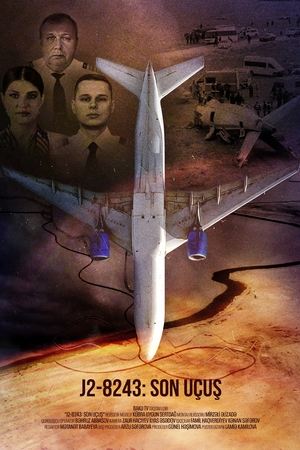
The film tells the story of Larisa Savitskaya, who survived after falling from a height of more than 5,000 meters as a result of a plane crash in 1981.
Analysis of the impact of natural gas - more specifically, the Ukrainian and European dependence on Russian gas - on European politics in the wake of Euromaidan. Featuring interviews with high-level government officials, journalists and industry analysts from several countries, the film argues that a generation after its break from the USSR, Ukraine is independent in name only. To bring the country to its knees, all Russia has to do to is turn off the gas, as it did briefly in the winters of 2005 and 2009.
Ukraine : Des femmes dans la guerre
Pussy Riot make a comeback after a long absence to stand with Ukraine. Their story and their struggle are told through archival footage and interviews with the group’s members.
The Kremlin's strategy consists of infiltrating positions of power throughout Europe and securing the services of individuals who are more or less aware of what is going on. The first part of this investigation looks at how European decision-makers fell headlong into the trap that had been set for them.
Gulag: infierno en las cárceles de Putin
By invading this "state fiction" that is, according to him, Ukraine, Vladimir Putin takes up the motto of the tsars: "sovereign of all Russia, the great, the small and the white". The first would have Moscow as its capital, the second, kyiv, and the last, Minsk.
We get to know a few inhabitants of central European rivers.
Located on the shores of the Baltic Sea, between Poland and Lithuania, Kaliningrad is a piece of Russia in the heart of Europe. A curious territory, isolated from Moscow after the fall of the USSR, today transformed into a military fortress facing NATO. In Kaliningrad, headquarters of the Russian Baltic fleet, there are 30,000 soldiers, hypersonic missiles and nuclear capability.
Cartas de Arapuca
In 2008, Natasha, a newly rich woman, decides to open an independent TV station in Russia and builds an open-minded team of outcasts. By 2020, Natasha has lost everything to Russia's war between Propaganda and Truth.
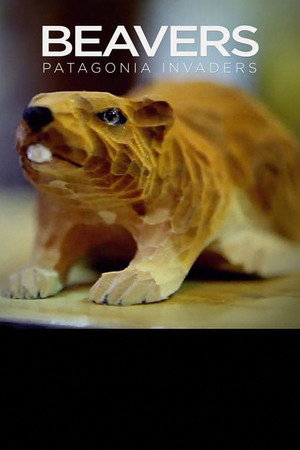
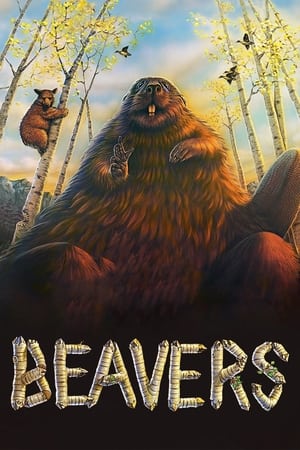
In 1940 twenty Canadian Beavers were brought to 'Tierra del Fuego' island in southern Patagonia for commercial fur production. However, beavers having no natural predators, quickly spread throughout the island, causing massive destruction of trees threatening the entire Patagonian forests rivers and species. Why wildlife conservationist are convinced that 150.000 beavers must be killed? Why some of the most recognized specialist are convinced that an eradication is not possible? Meanwhile truism is capitalizing on the situation: a man dressed as a beaver passes out flyers promoting a famous sky resort: 'Cerro Castor' - Beaver Hill. Hunters claim for subsidies, scientists are researching, rangers do what they can and restaurants tray to offer beaver meat to tourist.
A portrait of the great theatre actor Evgeniy Lebedev.
From PBS - The fascinating story of beavers in North America - their history, their near extinction, and their current comeback, as a growing number of scientists, conservationists and grass-roots environmentalists have come to regard beavers as overlooked tools when it comes to reversing the disastrous effects of global warming and world-wide water shortages. Once valued for their fur or hunted as pests, these industrious rodents are seen in a new light through the eyes of this novel assembly of beaver enthusiasts and "employers" who reveal the ways in which the presence of beavers can transform and revive landscapes. Using their skills as natural builders and brilliant hydro-engineers, beavers are being recruited to accomplish everything from re-establishing water sources in bone-dry deserts to supporting whole communities of wildlife drawn to the revitalizing aquatic ecosystems their ponds provide.
As Russia launches its full-scale invasion of Ukraine, primary schools across Russia’s hinterlands are transformed into recruitment stages for the war. Facing the ethical dilemma of working in a system defined by propaganda and violence, a brave teacher goes undercover to film what’s really happening in his own school.
Kirill can never see his hometown again: he fled Russia when Ukraine was attacked. His friend, Daniel, makes the journey and “cans Moscow” for him. Kirill discovers his “reconfigured” apartment; his bicycle hanging on the wall watches over his remaining comrades. In snowy Moscow, the lights are shining for the holidays. Kirill looks at the images: engulfed passers-by, war posters: “This is not my city”.
Koursk, au cœur de la contre-offensive russe
In Russia, criticizing the war in Ukraine or Vladimir Putin’s regime has become a crime. Thousands of ordinary citizens are being arrested, tried, and imprisoned. They are called “Politzek”: political prisoners. Filmed clandestinely over the course of more than a year, Politzek gives a platform to those who, despite the fear, continue to speak out against Putin’s repressive Russia. Through the intersecting stories of a teenager sentenced to five years in prison for criticizing the government on social media, a young artist jailed for placing anti-war stickers, a human rights activist, and two theater directors facing Kafkaesque trials, the film unveils the machinery of state repression in Russia. With rare footage, broken yet unyielding voices, this is a story of silenced resistance.
A look inside the Russian assault on Ukraine's second-largest city, Kharkiv, told by displaced families, civilians caught in the fight and first responders.
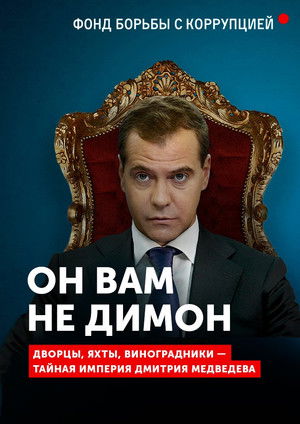
Don't Call Him Dimon is a 2017 Russian documentary film about the corrupt affairs of Prime Minister of Russia Dmitry Medvedev. According to the film, Dmitry Medvedev has stolen property estimated to be worth about $1.2 billion.