Beerput Nederland
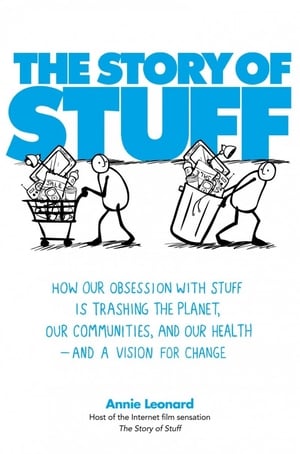
For most of the world, consumption has been the unquestioned duty of every individual. Then garbage activist Annie Leonard brought her two-hour lecture to Free Range who helped her turn it into a 20-minute animated revolution. Shown in thousands of classrooms, endlessly blasted by Fox News, viewed more than 10 million times, The Store of Stuff finally opens the door to a serious cultural dialog about the costs of consumption.
“Discard Records [is] a cumulative work responding to my experience as the Artist in Residence at the NY Department of Sanitation. Coupling my experiential research in the agency and my revitalization of their TV studio, this film is a very personal response to a treasure trove of historical material about waste in our current era of the climate crisis. It is not only the preservation of a long lost archive but a contemporary activation that is to be shared as a public artwork in this moment of ecological awareness. Adapting the aesthetics and recycling the materials of the sanitation department, Discard Records is a remixed historical film that is intended to spark new conversations that explore the intimate but often ignored relationship between the public and their waste.” - sTo Len, Director
A man blinded in a childhood accident fights crime using his superhumanly-elevated remaining senses.
After the dumping of waste in their area causes the death of many due to mosquitoes and unknown viruses, a brave individual steps up to fight against the system and incite a change for the well-being of his people.
A real estate agent must clean a property before his client arrives.
A military convoy is transporting something apparently for disposal. They pass by Sheriff Abel Marsh's town and they are passing by property that's owned by Amy Franklin who is the girlfriend of Abel's deputy, Malcolm. Before they know it, everything around the property is uninhabitable. The army returns to clean things up and make restitution. But there is one nagging question, was this an accident or was it deliberate? That is something Abel is most interested in finding out.
Many people have negative opinions about their managers. A survey by the Geva Institute in Munich found that 88% of German workers have issues with their superiors, with 20% admitting to hating them. Consequently, nearly 70% find little pleasure in their work, 18% have withdrawn, and only 12% are motivated. The film explores these issues by critiquing neoliberalism, highlighting its flaws in promoting free market expansion and endless growth, even if harmful. It features interviews with scientists, psychologists, and CEOs like Paul Bulcke from Nestlé.
These are strange times indeed. While they continue to command so much attention in the mainstream media, the 'battles' between old and new modes of distribution, between the pirate and the institution of copyright, seem to many of us already lost and won. We know who the victors are. Why then say any more?
Steal This Film focuses on Pirate Bay founders Gottfrid Svartholm, Fredrik Neij and Peter Sunde, prominent members of the Swedish filesharing community. The makers claimed that 'Old Media' documentary crews couldn't understand the internet culture that filesharers took part in, and that they saw peer-to-peer organization as a threat to their livelihoods. Because of that, they were determined to accurately represent the filesharing community from within. Notably, Steal This Film was released and distributed, free of charge, through the same filesharing networks that the film documents.
A look at the first years of Pixar Animation Studios - from the success of "Toy Story" and Pixar's promotion of talented people, to the building of its East Bay campus, the company's relationship with Disney, and its remarkable initial string of eight hits. The contributions of John Lasseter, Ed Catmull and Steve Jobs are profiled. The decline of two-dimensional animation is chronicled as three-dimensional animation rises. Hard work and creativity seem to share the screen in equal proportions.
A pilot for a documentary film capturing life at the Chelsea Hotel in the early 1970s. The film was never finished due to budget issues. 'A regrettable folly of my youth,' said the director, Albert Scopin.
In the cobalt mining areas of Katanga in the Democratic Republic of the Congo (DRC), babies are being born with horrific birth defects. Scientists and doctors are finding increasing evidence of environmental pollution from industrial mining which, they believe, may be the cause of a range of malformations from cleft palate to some so serious the baby is stillborn. More than 60% of the world’s reserves of cobalt are in the DRC and this mineral is essential for the production of electric car batteries, which may be the key to reducing carbon emissions and to slowing climate change. In The Cost of Cobalt we meet the doctors treating the children affected and the scientists who are measuring the pollution. Cobalt may be part of the global solution to climate change, but is it right that Congo’s next generation pay the price with their health? Many are hoping that the more the world understands their plight, the more pressure will be put on the industry here to clean up its act.
Documentary about filmmaker Shirley Clarke which originally aired on the French television series “Cinéastes de notre temps”.
A “Cinéastes de notre temps” series episode directed by french film critic and filmmaker Alexandre Astruc, originally aired sometime around 1970.
ASMR: A feeling that disappears because it’s too subtle to notice, leaving a trace of a soft tingling sensation behind.
In January 1972, during General Lanusse's dictatorship in Argentina, a group of revolutionary activists occupied the National Development Bank, just meters from the Government House, expropriating 450 million pesos (approximately 10 million dollars today) for their cause. This was made possible by Oscar Serrano and Ángel Abus—activists and bank employees—who spent two years preparing what would become the biggest blow to the dictatorship's finances. Forty years later, Oscar and Ángel, along with a group of actors, recreate those events that changed their lives. In this dialogue between generations, the young people transform their perspective on activism and commitment during those years. Narrated through several cinematic layers, Seré Millones (I Will Be Millions) offers an innovative story that blends humor, rigorous historical research, and the epic spirit of the era.
Filmmaker Shauna Garr finds the founder of the once successful hip hop group, The Pharcyde, homeless and addicted to drugs.
Centering on the ABC Loan Co., a twenty-five year old pawnshop/checkcashing outlet, No Loans Today documents daily life in the African-American community of South Central Los Angeles in the aftermath of the 1992 riots.
Drawing on rare and classic performances, exclusive interviews, lengthy contributions from friends, colleagues, journalists and experts, and a host of other features, this is a unique insight into the music, career and life of a cultural icon.