A conceptual live concert by Diamanda Galás, "Plague Mass" continues the themes of the suffering and misery of the infected found in her "Masque of the Red Death" trilogy.
Creeping from the halls of the maze brain, corruption and terror is woven by devils born from the denied errors of mankind.
Short experimental 16mm film.
A former circus artist escapes from a mental hospital to rejoin his armless, cult leader mother, and is forced to enact brutal murders in her name.
A bunch of spectators trapped in a cinema theatre.
A chair, a yogurt, and a masked man are guided to find themselves by an unknown entity.
Sex as dance and comedy: in Progressive Touch Portnoy studies and expands the relationship between sex, choreography and composing music. He introduces complex compositions from progressive rock and math metal during sex, thereby combating the ostensible simplification of rhythm in human movements and gestures. A group of actors perform the new moves in three slapstick-like scenes. Worth trying at home.
An experimental film shot with the purpose of trying to create a hostile alien environment using only shots of nature, color correction, and sound design.
X-ray images were invented in 1895, the same year in which the Lumière brothers presented their respective invention in what today is considered to be the first cinema screening. Thus, both cinema and radiography fall within the scopic regime inaugurated by modernity. The use of X-rays on two sculptures from the Bilbao Fine Arts Museum generates images that reveal certain elements of them that would otherwise be invisible to our eyes. These images, despite being generally created for technical or scientific purposes, seem to produce a certain form of 'photogénie': they lend the radiographed objects a new appearance that lies somewhere between the material and the ethereal, endowing them with a vaporous and spectral quality. It is not by chance that physics and phantasmagoria share the term 'spectrum' in their vocabulary.
An anthology of one-minute films created by 51 international filmmakers on the theme of the death of cinema. Intended as an ode to 35mm, the film was screened one time only on a purpose-built 20x12 meter public cinema screen in the Port of Tallinn, Estonia, on 22 December 2011. A special projector was constructed for the event which allowed the actual filmstrip to be burnt at the same time as the film was shown.
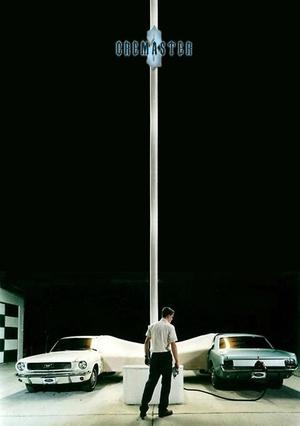
CREMASTER 2 is rendered as a gothic Western that introduces conflict into the system. On the biological level it corresponds to the phase of fetal development during which sexual division begins. In Matthew Barney's abstraction of this process, the system resists partition and tries to remain in the state of equilibrium imagined in Cremaster 1.
After encountering Lensface at the 2019 Unnamed Footage Festival, Filmmaker Travis Z. (Cabin Fever 2016, The Midnight Man) became obsessed with the voyeuristic cryptic, and spiraled into madness, leaving only this bizarre collection of surreal and horrific footage.
A serial killer stalks a woman he befriended after her car broke down.
An obsessive Vine star goes down a road of surreal imagery, as his obsession with the application develops into murder.
In the feature documentary, Summer 82 – When Zappa Came to Sicily, filmmaker and Zappa fan Salvo Cuccia tells the behind-the-scenes story of Frank Zappa's star-crossed concert in Palermo, Sicily, the wrap-up to a European tour that ended in public disturbances and police intervention. Cuccia had a ticket to the concert but never made it. Thirty years later, collaborating with Zappa's family, he re-creates the events through a combination of rare concert and backstage footage; photographs; anecdotes from family, band members, and concertgoers; and insights from Zappa biographer and friend Massimo Bassoli. The story is also a personal one, as Cuccia interweaves the story of Zappa's trip to Sicily with his own memories from that summer.
Each day after work, Carlos, a language school teacher, frequents the heady surroundings of his local cruising ground. One evening he encounters a teenage boy from his class named Toni, and the two engage in a brief sexual tryst. As the relationship between teacher and student begins to develop, some dark truths emerge about the young man and his mysterious group of friends.
Dislocation in time, time signatures, time as a philosophical concept, and slavery to time are some of the themes touched upon in this 9-minute experimental film, which was written, directed, and produced by Jim Henson. Screened for the first time at the Museum of Modern Art in May of 1965, "Time Piece" enjoyed an eighteen-month run at one Manhattan movie theater and was nominated for an Academy Award for Outstanding Short Subject.
In his book "1984", George Orwell saw the television of the future as a control instrument in the hands of Big Brother. Right at the start of the much-anticipated Orwellian year, Paik and Co. were keen to demonstrate satellite TV's ability to serve positive ends-- Namely, the intercontinental exchange of culture, combining both highbrow and entertainment elements. A live broadcast shared between WNET TV in New York and the Centre Pompidou in Paris, linked up with broadcasters in Germany and South Korea, reached a worldwide audience of over 10 or even 25 million (including the later repeat transmissions).
Frank Zappa: New York & Elsewhere is an Austrian released TV documentary directed in 1980 by Rudi Dolezal and Hannes Rossacher, aka DoRo productions, who are most popular for their work with Queen.
Rock musical adaptation of William Shakespeare's "A Midsummer Night's Dream".