Filmed in the Inner Mongolian portion of the Gobi Desert, this film follows a group of oil field workers as they go about their daily routine.
On May 1st, unions all over Japan celebrate May Day, the international day for workers. Workers gather together at parks and hold demonstrations and parades. May Day has its origins in a strike that occurred in the United States on May 1, 1886, a strike that called for an eight-hour workday. Prokino recorded the May Day every year from 1927 to 1932. Among these films, this work is the only one that has survived. However, only its first part has survived. The original film depicts the march to the Ueno Park where the rally was dismissed. Iwasaki Akira coordinated the entire Tokyo Prokino organization as it photographed the 1931 May Day celebrations. They shot in both 16mm and 35mm (other 35mm productions were planned, but this is the only one that achieved completion). A 16mm print was circulated around the countryside by mobile projection units, and a 35mm print was shown at Soviet film nights in Tokyo and Osaka.
For 200 years, coal mining had been a way of life in Cape Breton. By 1920 things were looking up: miners were unionized and paid decent wages. Then the British Empire Steel Corporation arrived and bought every single steel and coal company in Nova Scotia. BESCO cut wages by a third, setting off a bitter labour dispute. The miners settled in for a long strike. Finally, in 1925, the military ended the unrest with brute force. But the miners, in one sense, had won. They broke up the monopoly and provided an example to workers across the country.
Documents the conflicts and tensions that arise between highland migrants and Mosetenes, members of an indigenous community in the Bolivian Amazon. It focuses particularly on a system of debt peonage known locally as ‘habilito’. This system is used throughout the Bolivian lowlands, and much of the rest of the Amazon basin, to secure labor in remote areas.
After his Tokyo farewell ceremony, Yamamoto's ashes were sent to Kyoto on March 9. Many friends and citizens gathered at his home in Uji. On the 15th a worker-farmer funeral was held at the Sanjo YMCA. Prokino's Kyoto Branch shot these five days of activities. The long line of cars is filled with taxis, whose drivers deeply admired Yamamoto. The Watanabe in the title refers to the head of the Communist Party of Japan. Watanabe was returning to Japan from Taiwan when he was stopped by authorities. He committed suicide in their custody. Yamamoto and Watanabe were mourned together.
In the 1970's, filmmakers Tom Burger, Bill McKiggan and Chuck Lapp began documenting the history and current struggles of inshore fishermen in Atlantic Canada to form a union. Until 1979 it was illegal for fishermen to form a union in Nova Scotia. The committed funding from the National Film Board was withdrawn for this film, however the filmmakers continued to edit the film by entering the NFB at night. The CBC refused to broadcast the film, but it was finally released in 1990 and broadcast nationally that year on Vision TV.
Documentary following dockers of Liverpool sacked in a labour dispute and their supporters’ group, Women of the Waterfront, as they receive support from around the world and seek solidarity at the TUC conference.
Man-pulled rickshaw, which have served Kolkata for over eight decades face virtual extinction as a result of legislation introduced by the State Government in 1981. This would rob over 100,000 people of a living. The film analyzes the critical situation, and on the basis of concrete facts and figures, questions whether such a step would be fruitful at all. The image of a man pulling a man is a depressing and a negative one - but not more negative than that of the image of a man going without food.
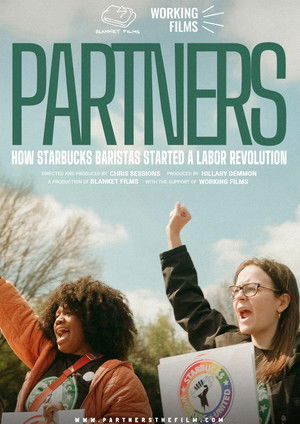
Starbucks baristas in Buffalo unite against corporate exploitation, sparking a generational uprising among working-class Millennials and Gen Z as they challenge a powerful billionaire CEO and fight for their rights.
Inside the life of former baseball star Curt Flood whose fight against MLB's 'Reserve Clause' led to reform, but destroyed his career.
In a secluded village surrounded by forests and a river, an elderly beekeeper and a livestock farmer live alone, their lives shaped by tireless work and quiet harmony. Through one day in their hidden world, this documentary reveals the beauty and mystery of their bond with nature, far from the reach of modern life.
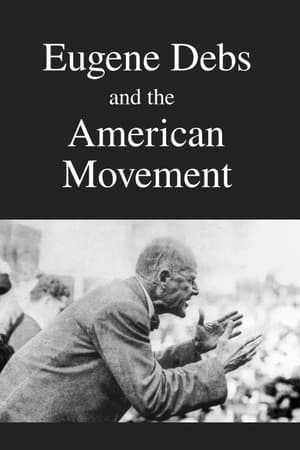
Eugene Debs & the American Movement is an educational video that documents fifty years of long-suppressed history. Using extensively researched photographs, drawings and newsreel footage, it tells a story of the bloody strikes and brutal government reaction to the American workers' attempts to organize. This film is movingly narrated in Deb's own words, read from his speeches and writings, by his friend and comrade, Shubert Sebree.
Shattered Glass: A WNBPA Story dives deep into the lives beyond the court of the next generation of basketball luminaries, Jonquel Jones, Nneka Ogwumike, and Breanna Stewart, as well as WNBA legend, Sheryl Swoopes. From intense off-season routines to the intricacies of family dynamics to navigating the politics of women's sports, this documentary offers viewers a rare, all-encompassing look at the athletes as holistic individuals.
When workers at the Hormel meatpacking plant in Austin, Minnesota are asked to take a substantial pay cut in a highly profitable year, the local labor union decides to go on strike and fight for a wage they believe is fair. But as the work stoppage drags on and the strikers face losing everything, friends become enemies, families are divided and the very future of this typical mid American town is threatened.
A documentary centered on the union formed by Bolivian farmers in response to their government's (which was urged by the U.S.) effort eradicate coca crops, and the man who would come to represent them, Evo Morales.
On 9 July 2021, the 422 workers at the GKN factory in Campi Bisenzio near Florence received their dismissal, by email. They immediately met in front of the factory, scared away the management's bodyguards and have been holding an open-ended meeting at the factory ever since. In June of 2022, they talk about how they are rooted in the territory, why 30,000 people demonstrated with them. They explain why they put their struggle under the slogan "Insorgiamo!" ("Let's rise up!"), the slogan of the italian partisans who liberated Florence in 1944. But they also talk about their collaboration with climate activists and what they would like to produce. But as things stand today, it is not the workers who are responsible for the ecological damage caused by production: "Nobody asked me what I would like to produce when they hired me. They hired me and that was it."
Delegates and workers discuss the issues that effect the Timberworkers’ Union, the reasons for the formation of the Combined Council of Timber Workers Delegates (CCD) and their industrial action.
Brothers on the Line explores the extraordinary journey of the Reuther brothers – Walter, Roy, and Victor – union organizers whose unshakeable devotion led an army of workers into an epic human rights struggle.
A documentary about teachers' strikes in Iceland in the latter half of the 20th century with a special focus on 1995.
Through first person narration, Tari reveals personal stories related to her decision to work in Taiwan, her strained family relationships, the risks involved in working abroad and the traps she has fallen into.