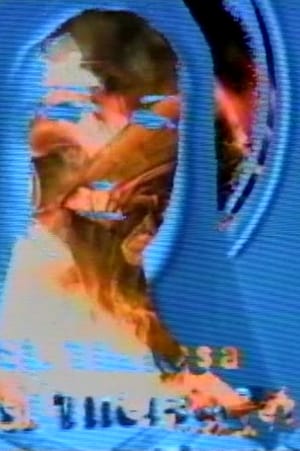
Writes Ando, "Oh! My Mother was the first work I made using a newly bought 16mm camera I had purchased with the writer Shuji Terayama in Paris. This piece was selected for the Oberhausen International Film Festival. In 1969, there were, of course, no video cameras like ones we see now, and color TVs were only found at broadcast television studios. I had just been employed at the TBS (Tokyo Broadcasting System), and I often snuck into the studios after hours to experiment with the equipment. Oh! My Mother was made using the feedback effect, which is produced by infinitely expanding the image by looping the video."
A dying man in his forties recalls his childhood, his mother, the war and personal moments that tell of and juxtapose pivotal moments in Soviet history with daily life.
Begotten is the creation myth brought to life, the story of no less than the violent death of God and the (re)birth of nature on a barren earth.
After his mother's death, a young man edits the family's home videos to bring back her image. As he delves into the occult he begins to reveal the paradoxical magic of memories and cinema.
In a time of superstition and magic, when wolves are seen as demonic and nature an evil to be tamed, a young apprentice hunter comes to Ireland with her father to wipe out the last pack. But when she saves a wild native girl, their friendship leads her to discover the world of the Wolfwalkers and transform her into the very thing her father is tasked to destroy.
Care worker Shoo, who is haunted by a personal tragedy, is sent to a remote village to care for an agoraphobic woman, who fears both her neighbours and the Na Sídhe – sinister folkloric entities she believes abducted her decades before.
A year after losing her mother, a young girl learns that she must journey across Japan to the annual gathering of gods in the sacred land of Izumo.
Inspired by an infamous online video clip of a son beating his mother, a television crew from Belgrade comes to a remote Serbian village to shoot a report on violence against women. Inquiring with the locals about the protagonists of the video, they encounter a local expert on supernatural phenomena and learn about a ritual of summoning an ancient demon, naprata. Wanting to capture the first authentic footage of something otherworldly, they change their plans. Excited by the prospective success of the recording, they defy the old saying that "it's better to believe than to be convinced."
When Hannah travels to Sweden to surprise her boyfriend and meet his parents, she begins to suspect that his family is hiding a monstrous secret.
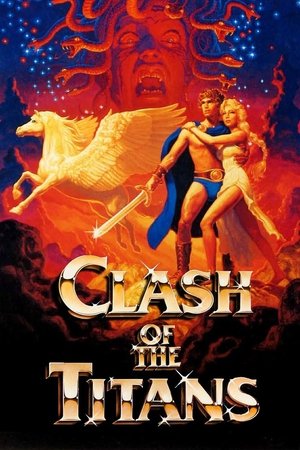
To win the right to marry his love, the beautiful princess Andromeda, and fulfil his destiny, half-God-half-mortal Perseus must complete various tasks including taming Pegasus, capturing Medusa's head and battling the feared Kraken.
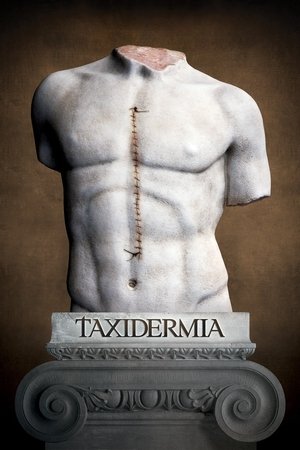
Vintage pornography reels from the archives of Italy’s National Film Museum display over an AI recitation of Dante's The Divine Comedy.
About a mysterious and troubled black woman, a former practitioner of the Santería religion, who must comes to terms with her background whilst in a Caracas jail.
The Garden is an experimental work that describes the inner worlds of two sisters manifested through their connection with the garden outside their home. While mourning the passing of their close relative, the sisters encounter a man in the garden, evoking a sense of mortality in one and awakening the sensuality in another. The film was directed by Ong Ann Meng (better known as Meng Ong), who went on to win numerous awards for his short films at the Singapore International Film Festival between 1991 and 1993. His first feature, Miss Wonton (2001), won the FIPRESCI Prize at the Locarno International Film Festival.
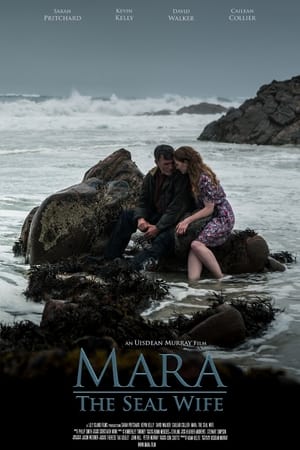
During a moonlit night, Sine vanishes after childbirth, leaving her husband Magnus devastated. A haunting exploration of Sine's past, unearths the traumatic events that connected her to the selkie realm - a world of mythical creatures who transform from seals into humans by shedding their skins. This poignant journey delves into the profound ties between folklore and the human experience.
"21 Days" illustrates a love triangle starring Bete, her boyfriend, Jonas and Agatha, a childhood friend of Jonas. Told from three different points of view, the narrative was inspired by the songs "cardigan", "august" and "betty", from the album "folklore" by singer Taylor Swift.
A tale of people unfolds under the night sky. These doomed couples and lost individuals begin journeys and attempt to find resolution in their lives. Love is observed from a distance, sadness is in the air. With little sympathy for the loss and destruction caused to the characters, the stories progress and become neatly woven into a minimalistic portrayal of modern life.
After the end of a relationship, a young Belgian woman remains alone in an isolated house and turns silence, repetition, and solitude into forms of existence and resistance to forgetting.
An unnamed character is trapped in a cubical white room where others can enter and leave, but which he himself apparently cannot leave. A stool is brought in covered in strawberry jam, the furniture changes throughout the play. The main character is subjected to an increasingly puzzling and frustrating series of encounters, as a variety of people come through various hidden doors. But, as many remind him, he can only leave through his own door, so he must find it.
An outrageous erotic poem focusing on the daydreams of a beautiful boy prostitute who, from the seclusion of his ultra-kitsch apartment, conceives a series of interlinked narcissistic fantasies populated by matadors, dancing boys, slaves, and leather-clad bikers.
Human, Tears, Art