The documentary The Silent Revolution explains the revolution involving nearly 3 million kurds living in Syria. With the outbreak of the civil war —in the frame of the called ‘Arab Spring'— the Kurds of Syria have taken advantage of the context to fight for their political and cultural recognition and thus end the repression that started more than 50 years ago.
During the 16th Workers' Festival in Dresden in 1976, a student group of Chilean emigrants paints a mural symbolically depicting the activity of the Unidad Popular during Salvador Allende's reign. Festival guests comment on this work. Music by Chilean music group Jaspampa, formed in Leipzig in 1972.
After the fall of the Berlin Wall, thousands of documents were hastily shredded by the dreaded GDR political police. 16,000 bags filled with six million pieces of paper were found. Thanks to the meticulous work of technology, the destinies of men and women who had been spied on and recorded without their knowledge could be reconstructed.
Everyone knows the story of Paul Revere and his famous midnight ride to warn colonial forces of the British approach. But history books don't tell of the man who sent Revere on his mission: Joseph Warren, America's least remembered founding father. Uncover the forgotten history of Warren and stories of other unsung heroes in our fight for independence in The American Revolution.
History is Marching is a feature length documentary analysing the rise in tensions between major powers across the globe over the course of 2018. The film follows western history from 1945 to the present day, before looking at how capitalist society is today breaking down into the largest crisis in its history. Socialism or extinction?
Both a political narrative and a psychological reflection, this documentary explores the personal journey of a quarry worker’s son from Calvados who rose to become the last great figure of the French Communist Party. It delves into the logic that shaped his path and his lasting impact on France’s history.
Short biographical documentary about the life of Alfred Florstedt and his life as a progressive communist from the Weimar Republic to his death in 1985.
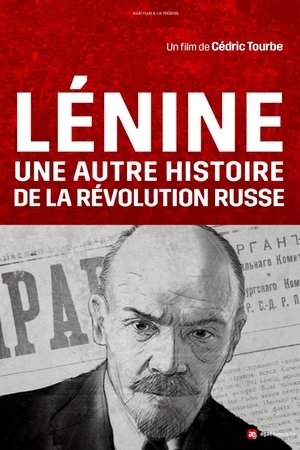
Starting in 1881 this film shows the personal battle between Lenin's Ulyanov family and the royal Romanovs that eventually led to the Russian revolution.
Four lucid grandmothers tell their story forgotten by history: the militancy and resistance of the young women of the leftist youth against the dictatorship of Marcos Pérez Jiménez.
Two journalists born in the mid '80s decide to take a look back at how their country changed in the last 30 years since the fall of communism. The end product is a documentary containing footage of political events and historical milestones significant to Romania accompanied by a narrator's voice walking the viewer through the events, and also interviews with Romanian politicians and other influential public figures sharing their thoughts and their different views on those events.
At the peak of Perestroika, in 1987, in the village of Gorki, where Lenin spent his last years, after a long construction, the last and most grandiose museum of the Leader was opened. Soon after the opening, the ideology changed, and the flow of pilgrims gradually dried up. Despite this, the museum still works and the management is looking for ways to attract visitors. Faithful to the Lenin keepers of the museum as they can resist the onset of commercialization. The film tells about the modern life of this amazing museum-reserve and its employees.
Street art, creativity and revolution collide in this beautifully shot film about art’s ability to create change. The story opens on the politically charged Thailand/Burma border at the first school teaching street art as a form of non-violent struggle. The film follows two young girls (Romi & Yi-Yi) who have escaped 50 years of civil war in Burma to pursue an arts education in Thailand. Under the threat of imprisonment and torture, the girls use spray paint and stencils to create images in public spaces to let people know the truth behind Burma's transition toward "artificial democracy." Eighty-two hundred miles away, artist Shepard Fairey is painting a 30’ mural of a Burmese monk for the same reasons and in support of the students' struggle in Burma. As these stories are inter-cut, the film connects these seemingly unrelated characters around the concept of using art as a weapon for change.
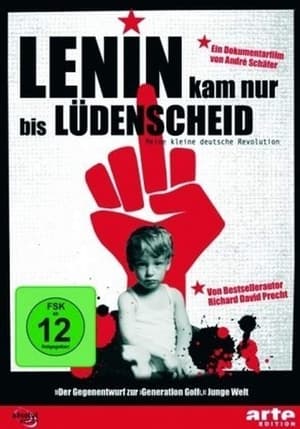
The free, almost naive view from the perspective of a child puts the "68ers" in a new, illuminating light in the anniversary year 2008. The film is a provocative reckoning with the ideological upbringing that seemed so progressive and yet was suffocated by the children's desire to finally grow up. With an ironic eye and a feuilletonistic style, author Richard David Precht and Cologne documentary film director André Schäfer trace a childhood in the West German provinces - and place the major events of those years in completely different, smaller and very private contexts.
October 2018, France. Macron’s government decrees a tax increase on the price of fuel. A wave of protests starts to grow. Citizens mobilize throughout the country: this is the beginning of the Yellow Vests movement. In Chartres, a group of men and women gather daily. Among them, Agnès, Benoît, Nathalie and Allan commit themselves to the collective struggle. Like a whole nation, they discover that they have a voice to be heard...
A documentary about a teacher who sends a group of pupils out of the classroom when one of them does not own up to talking behind the master's back.
How did the end of the Soviet Union change the way of thinking, the way of behaviour of militant French Communists ? For the first time and during several months meetings of a Communist Party cell in one of Paris' industrial suburbs were filmed by André Van In. Set against these meetings, the militants are filmed discussing their commitments, their dreams, their mistakes. Beyond questions about power or the political machinery, they share their faith in militancy and their hopes for a fairer society.
Oriana Fallaci, the Italian journalist who is noted for her provocative interviews, interviews the leader of the Islamic Revolution, the Ayatollah Ruhollah Khomeini, on Sept 12, 1979. For 10 days Oriana Fallaci waited in the holy city of Qum for her interview with the 79 year old Ayatollah, who is the de facto ruler of Iran. On Sept. 12, she was led into the Faizeyah religious school, where Khomeini holds his audiences. She was accompanied by two Iranians Nyho and Iran prime minster Banisadr who had helped set up the interview and who served as translators. Oriana Fallaci, barefoot, enveloped in a chador, the head to toe veil of the Moslem woman, was seated on a carpet, when the Ayatollah entered, and the recorded interview could begin.
This revealing portrait of Cuba follows the lives of Fidel Castro and three Cuban families affected by his policies over the last four decades.
In February 1917, Imperial Russia plunges into revolution. Nine months of unrest before a coup brought about an upheaval that changed the course of history and profoundly altered the future of civilisation.
January 1953: On the eve of his death Stalin finds himself yet another imaginary enemy: Jewish doctors. He organizes the most violent anti-Semitic campaign ever launched in the USSR, by fabricating the "Doctors' Plot," whereby doctors are charged with conspiring to murder the highest dignitaries of the Soviet Regime. Still unknown and untold, this conspiracy underlines the climax of a political scheme successfully masterminded by Stalin to turn the Jews into the new enemies of the people. It reveals his extreme paranoia and his compulsion to manipulate those around him. The children and friends of the main victims recount for the first time their experience and their distress related to these nightmarish events.