A young man decides to join the army. He becomes the drummer in the military band, and his everyday life is now a combination of military training and music. What does the Argentine Army do these days, more than thirty years after the dictatorship? What does it mean to be a soldier in a country without wars?
In '90s Argentina, the murder of a high school student sparks widespread protests. Retold by her loved ones, this documentary shows their fight for justice.
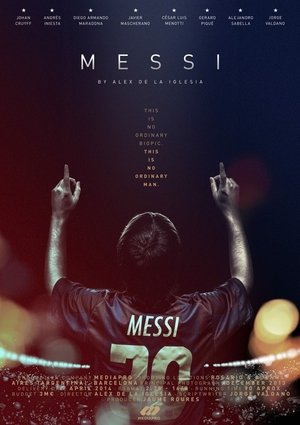
His teachers, coaches, childhood friends and Barça teammates, together with journalists, writers and prominent figures from the history of football, come together in a restaurant to analyze and pick apart Messi's personality both on and off the field, and to look back at some of the most significant moments in his life. Viewed from Álex de la Iglesia's unique perspective, Messi recreates the player's childhood and teenage years, from his very first steps, with a football always at his feet, through to the decision to leave Rosario for Barcelona, the separation from his family, and the role played in his career by individuals such as Ronaldinho, Rijkaard, Rexach and Guardiola.
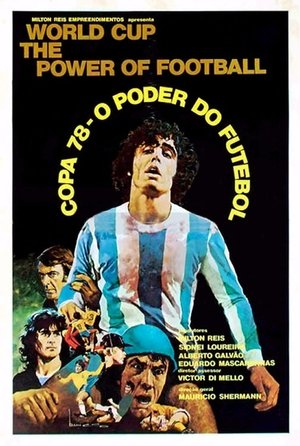
Documentary about the Football World Cup held in Argentina in 1978, focusing on the competition and behind the scenes of the most important soccer competition in the world. Two versions of the 1978 official film exist, the first "Copa 78 - O Poder do Futebol" was made by Brazilian directors Maurício Sherman and Victor di Mello in 1979 but was later withdrawn by FIFA because of its controversial content. The film includes an interview with Rodolfo Galimberti, one of the leaders of the Montoneros guerrilla group and also made accusations that the Argentinian competition organisation committee had deliberately hindered Brazilian chances of success by tampering with the pitch at Mar del Plata.
Documentary film about the then longest range bombing mission in history, which changed the outcome of the Falklands War.
After the fall of the military dictatorship in 1983, successive democratic governments launched a series of reforms purporting to turn Argentina into the world's most liberal and prosperous economy. Less than twenty years later, the Argentinians have lost literally everything: major national companies have been sold well below value to foreign corporations; the proceeds of privatizations have been diverted into the pockets of corrupt officials; revised labour laws have taken away all rights from employees; in a country that is traditionally an important exporter of foodstuffs, malnutrition is widespread; millions of people are unemployed and sinking into poverty; and their savings have disappeared in a final banking collapse. The film highlights numerous political, financial, social and judicial aspects that mark out Argentina's road to ruin.
Reveals an alternate history of the post-war world. This is a version of history where, in contrast to what we are all told, fascist ideology prevailed. The story of Klaus Barbie, Nazi torturer, American spy, tool of repressive right-wing regimes, is symbolic of the real relationship that the "Western" governments had with fascism and makes us see the world as it is today - and the politicians that inhabit it - in a different way.
Images of Argentinian companies and factories in the first light of day, seen from the inside of a car, while the director reads out documents in voiceover that reveals the collusion of the same concerns in the military dictatorship’s terror.
Cartoneras is a documentary that grapples with Latin America’s urban realities, and the cardboard publishing movement that has emerged from these in the 21st century. Reflecting on the different contexts that propelled this form of community publishing, like Argentina’s 2001 economic crisis, the independent art scene, and the movements which formed around waste-pickers, the film’s narrative is developed through conversations with important actors from the cartonera world.
For many, the name Malvinas/Falklands evokes an absurd war between England and Argentina in 1982. For Julieta Vitullo, the protagonist of this film, this tragic history becomes deeply personal 25 years later when she suffers a loss associated with her search to uncover that past, unfolding into a life-affirming struggle for renewal and rebirth. This film tells the story of two trips, one made in 2006 and the other in 2010. In the space between one trip and the next, between past and present, between the public and the private, between what can and cannot be told, the movie reflects on the possibilities of conveying extreme life experiences, presenting landscapes and sounds that suggest subtle contours of that shape, 'The Exact Shape of the Islands.'
This is not just a “folkumentary”, but an invitation to reflect on the future of humanity on a planet where tradition and technology coexist, and where the unknown reminds us that there are still unanswered questions.
The lifetime of the great Argentinian man of letters Jorge Luis Borges through narration and interviews of such key players in his life as Leonor de Acevedo —his mother—, María Kodama —his second wife—, and Adolfo Bioy Casares —his best friend and collaborator for decades.
Yaguareté, la última frontera
Juan lives a solitary existence on a remote farm ever since he witnessed a UFO event. Filmmaker Alan Stivelman—together with the help of famous astrophysicist Jacques Vallée—begin an epic journey to help Juan in understanding the deep meaning of his close encounter. This true story shows the long-term consequences of close encounters, proving that no one is exempt from a potential contact.
There was a time in Argentina, not so long ago, when the army wasn't only one, official, but many and made up by civilians. In those times of courageous youths determined to fight to the death for that cause upheld around Peronism as wll as some left-wing postulates, revolutionary Cubas was a beacon of hope in the world scheme -a Montonero nation. "A House in Cuba" seeks to recover the curious adventure of a couple of Montonero parents and their small children, who were lovingly sent into exile in order for their parents to take up arms.
How a once-in-a-generation Argentina team, led by Manu Ginobili, brought down the “Dream Team” and won gold at the 2004 Olympic Games.
On August 15, 1972, during the dictatorial government of General Lanusse, twenty political prisoners belonging to the PRT- ERP, FAR and Montoneros, escaped from Rawson prison in the Patagonian province of Chubut.
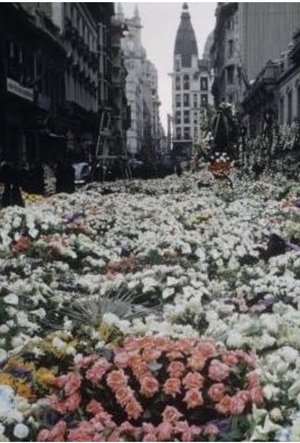
In this documentary about the exile of two famous French actors in Argentina during and after World War II, the director Cozarinsky returns to Argentina after many years in France and recalls places and events from his childhood, particularly the celebration of the liberation of Paris on in August of 1944, in Buenos Aires's Plaza Francia. Featuring testimony from various authors and acquaintances of Maria (Renee) Falconetti and Robert Le Vigan, the film explores their lives and final years in Argentina.
With David Beckham looking uncertain for the 2002 World Cup finals after his clash with Argentinean Aldo Duscher, this documentary charts the explosive 35 year feud between their two nations, when football became war by another means.
The title Good Light, Good Air is oddly paradoxical. Keenly working at the point where his artistic identity and persistent attention on modern Korean history meet, director Im in this film focused on where the history of oppression and struggle intersect between Gwangju and Buenos Aires. In both cities, a great number of people who fought against the dictatorship were slaughtered and disappeared. The people of both societies still live with that trauma. When the testimonies of the victims of the two cities cross over, the film gives us chills as the eerie history of the two is very similar. Through Good Light, Good Air, director Im asks us how we will remember the past from where we stand right now.