When the junior ice hockey team from the small town of Náchod, in the Czech Republic, sets off in a bus to Morocco to play the away game in an exchange programme, the players and their coach expect an easy victory and a cultural shock: “bring ear plugs”, the coach suggests them with a touch of undisguised condescendence, so as not to hear the call to prayer early in the morning. Both on and off the ice, Rozálie Kohoutová and Tomáš Bojar’s camera focuses on a few teenagers and their exchanges, simultaneously funny and cruel, in a clumsy English.
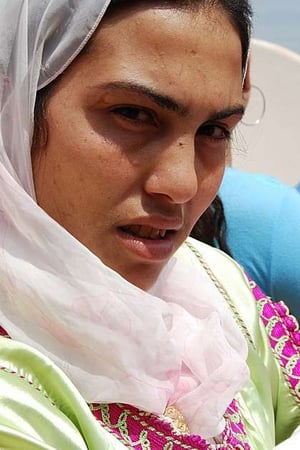
At 14 Rabha El Haimer was an illiterate child bride, beaten, raped and then rejected. Ten years later, she is a single mother, fighting to legalise her sham marriage and secure a future for her illegitimate daughter. With unprecedented access to the Moroccan justice system, “Bastards” follows Rabha’s fight from the Casablanca slums to the high courts.
On the border, the line as principle of property and belonging reaches an extreme dimension where it physically defines the sphere of its relations. Those who transgress it reconstruct these imaginary lines on a daily basis, redefining the traditional geography and occupying the non-spaces where others live in a temporary form of existence. These others, the non-citizens, are phantasmtic, exchangeable parts of a flexible market. Made invisible, they are permanently controlled persons. Under the pretext of a greater civilian security, they are kept clear from the public spaces reserved for the citizens with rights and pushed into non-public spaces, which are run by state and military surveillance, multinational operations servicing a European market and non-governmental organisations.
An alien king sends two of his most loyal--and, as it turns out, stupidest--subjects to Earth to find him a queen to help rule his planet.
An adaptation of the story with the same name by Portuguese writer Alexandre Herculano.
On March 16, 1792, the king of Sweden Gustav III was shot at the Royal Opera in Stockholm. The play portrays the king's last hours before the attack.
A film about a woman who doesn’t exist. Moroccan Hind was raped and consequently denied an official identity – she has no other choice but to work as a prostitute and traditional wedding dancer, but despite the odds of her situation, refuses to give up her dream of dignity, motherhood and love. This is a story of modern day outlaws, children of prostitutes, abandoned child brides and those who have had to escape to the fringes of patriarchal Moroccan society. Through the eyes of one young woman we see a life of constant struggle, but also a life free of the society’s norms and boundaries. The woman in the centre of the film, Hind, is both vulnerable and courageous as she tries to regain her life, her children and her mere right to live as an equal human being in the 21st century.
Ieri è Oggi
Study of the relationship between observer and landscape in the contemplative experience. The view building the landscape from the necessary distance. The delimitation of its borders against the total continuum of nature. The observer immersed in the path of his gaze across the landscape. Resting the gaze in the details that make the globallity. The view selecting the space included as a landscape.
In the vast expanse of desert East of Atlas Mountains in Morocco, seasonal rain and snow once supported livestock, but now the drought seems to never end. Hardly a blade of grass can be seen, and families travel miles on foot to get water from a muddy hole in the ground. Yet the children willingly ride donkeys and bicycles or walk for miles across rocks to a "school of hope" built of clay. Following both the students and the teachers in the Oulad Boukais Tribe's community school for over three years, SCHOOL OF HOPE shows students Mohamed, Miloud, Fatima, and their classmates, responding with childish glee to the school's altruistic young teacher, Mohamed. Each child faces individual obstacles - supporting their aging parents; avoiding restrictions from relatives based on traditional gender roles - while their young teacher makes do in a house with no electricity or water.
During the oppressive reign of Moroccan King Hassan II in the 70s and 80s (Years of Lead), many dissidents went missing. After the throning of a new king, a truth commission was formed in the 2000's. Families of the missing speak.
Documentary that shows the changing attitude towards immigrant labor in The Netherlands. The documentary follows three immigrants that arrived in Holland 30 years ago to work in a bakery.
This video research is based on a trip to Morocco in July 2005, during which the director documented irregular migration transiting through Morocco, as well as their control. This geographical project focuses on the main migratory axes: Oujda, entry point for migrants in Morocco; Tangier, from where migrants can try to cross the strait or the fences of Ceuta; Rabat, organization space; and Laayoune, the closest point to the Canaries. The video questions the nature and meaning of these extraterritorial enclaves that structure the Moroccan territory.
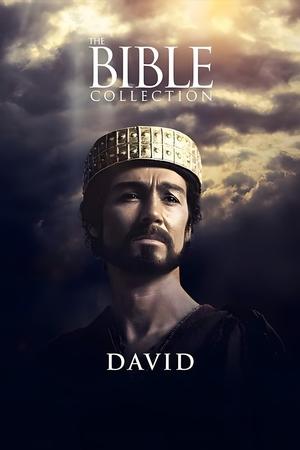
A distinguished military leader whose reign was touched by great scandal, shocking betrayals and rousing victories. A simple shepherd boy chosen to be king, under the watchful eyes of prophet Samuel.
A humorous observation in Barcelona’s immigrant neighbourhood El Raval. Four barber shops, four places of remembrance, strange time and space capsules inhabited by people who left their home to find a better one, while the Spaniards are about to leave their own country themselves.
A traveling couple end up in an abandoned Nebraska town inhabited by a cult of murderous children who worship a demon that lives in the local cornfields.
Once a Punk, always a Punk? This is the story of Stof whom we followed for 8 years through the popular districts of Casablanca. He pays his independence at a high price when he finds himself arrested.
This FitzPatrick Traveltalk short visits the cities of Casablanca, Rabat, and Marrakesh in Morocco, as well as the city of Algiers in Algeria.
As Lupin's mentor Don Dolune lies on his deathbed, he hands the master thief a gift, the diamond named Twilight. Though it's only half the treasure — the other half of the Twilight can be found in Morocco. Lupin must contend with his on-again-off-again-partner Fujiko, his feelings for the mysterious Lara, and the relentless whip-wielding maniac Sadachiyo in order to bring Twilight back to its full glory.
Les Enfants de l’ovale... Un essai qui transforme !