Timo Novotny labels his new project an experimental music documentary film, in a remix of the celebrated film Megacities (1997), a visually refined essay on the hidden faces of several world "megacities" by leading Austrian documentarist Michael Glawogger. Novotny complements 30 % of material taken straight from the film (and re-edited) with 70 % as yet unseen footage in which he blends original shots unused by Glawogger with his own sequences (shot by Megacities cameraman Wolfgang Thaler) from Tokyo. Alongside the Japanese metropolis, Life in Loops takes us right into the atmosphere of Mexico City, New York, Moscow and Bombay. This electrifying combination of fascinating film images and an equally compelling soundtrack from Sofa Surfers sets us off on a stunning audiovisual adventure across the continents. The film also makes an original contribution to the discussion on new trends in documentary filmmaking.
Bruce Brown's The Endless Summer is one of the first and most influential surf movies of all time. The film documents American surfers Mike Hynson and Robert August as they travel the world during California’s winter (which, back in 1965 was off-season for surfing) in search of the perfect wave and ultimately, an endless summer.
During China's Warring States period, a district prefect arrives at the palace of Qin Shi Huang, claiming to have killed the three assassins who had made an attempt on the king's life three years ago.
In 1959 Hiroshi Teshigahara shot the following 16 mm footage of he and his father’s first trip to Barcelona and the outlying Catalonian countryside, including a visit to the home of Salvador Dali in Port Lligat. The footage was recorded without sound.
An exploration —manipulated and staged— of life in Las Hurdes, in the province of Cáceres, in Extremadura, Spain, as it was in 1932. Insalubrity, misery and lack of opportunities provoke the emigration of young people and the solitude of those who remain in the desolation of one of the poorest and least developed Spanish regions at that time.
Megacities is a documentary about the slums of five different metropolitan cities.
July, 1941. After the beginning of the German invasion, an Italian soldier, a veteran of the colonial wars, is sent to the Soviet front. As he remembers the fairy tales his Russian mother used to tell him, the train he is travelling in crosses Europe on its way to the vast Ukrainian plains, where the enemy and a cruel winter await him… (Based on the experiences of several Italian soldiers.)
The film is based on interviews with 2,000 women from 50 countries, and covers the status of women all over the world. The topics covered include forced marriages, sexual assault, female genital mutilation, acid attacks, motherhood, sexuality, menstruation, education and the professional success of women.
Documentary in which artist Jeanie Finlay goes behind the closed bedroom doors of four British adolescents on the brink of adulthood and explores their passions, obsessions and their hopes for the future.
The narrative wanders through Rosi’s films, not in the order they were shot but following the chronology of the historical facts they deal with. The documentary therefore not only narrates Rosi’s work, but also portrays half a century of Italian history.
Documentary centering on the controversial political career of Imelda Marcos, the former first lady of the Philippines whose behind-the-scenes influence of her husband Ferdinand's presidency rocketed her to the global political stage.
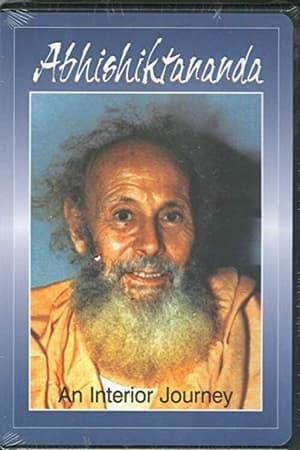
The plot of the film unfolds in the ancient monastery of Dokhiar on the west coast of Mount Athos, on the Aegean peninsula. This peninsula is given to the exclusive use of the monks of Eastern Christianity. Images of nature are woven into a virtually uninterrupted series of work and prayer, lining up in the rhythmic interrelation of man and nature. The central figure of the film was the monastery’s elder, Hegumen Gregory, whose long-term experience of spiritual nourishment rewarded him with a deep understanding of the human soul and her desire to return to the state characteristic of Adam’s human nature before the fall.
Édouard Philippe, newly reelected mayor of Le Havre, becomes the spokesperson for his political "boss" since 2004, Alain Juppé, who hopes to represent the Right at the next presidential election.
Frei Damião o Santo do Nordeste
Despite the 1960s free-love and alternative culture, many women found that their lives and expectations had barely altered. But by the 1970s, the Women's Liberation Movement was causing seismic shifts in the march of the world's events, and women's creativity and political consciousness was soon to transform everything - including the face of publishing and literature. In 1973 a group of women got together and formed Virago Press; an imprint, they said, for 52 per cent of the population. These women were determined to make change - and they would start by giving women a voice, by giving them back their history and reclaiming women's literature.
During the bloody era of the Tokugawa Shogunate collapse, a man appeared capable of overthrowing a corrupt government and ending the feud between the Choshu and Satsuma clans. This is the story of Tsukigat Khanpayit, the sword maker of the Choshu clan, who, along with Katsuro Kogoro and Sakamoto Ryoma, sought to fulfill the dream of a new peaceful era in Japan. Can he realize his ideals or will he die in the chaos of internecine fights...
The history of radio and its connection with Brazilian popular music through Adhemar Casé
The strange case of Mikhail Khodorkovsky — once believed to be the wealthiest man in Russia — who rocketed to prosperity and prominence in the 1990s, served a decade in prison, and became an unlikely martyr for the anti-Putin movement.
The enigma of the personality cult is revealed in the grand spectacle of Stalin’s funeral. The film is based on unique archive footage, shot in the USSR on March 5 - 9, 1953, when the country mourned and buried Joseph Stalin.
In the aftermath of a tragic fire in a Romanian club, burn victims begin dying in hospitals from wounds that were not life threatening. A team of investigative journalists move into action uncovering the mass corruption of the health system and of the state institutions. Collective follows journalists, whistle blowers, and authorities alike. An immersive and uncompromising look into a dysfunctional system, exposing corruption, propaganda, and manipulation that nowadays affect not only Romania, but societies around the world.