Set in 1973 Spain, a struggling encyclopedia salesman and his wife take advantage of an offer to make adult films. The act turns him into an aspring legit filmmaker and her into an international sex symbol.
In 1948, French singer Charles Aznavour (1924-2018) receives a Paillard Bolex, his first camera. Until 1982, he will shoot hours of footage, his filmed diary. Wherever he goes, he carries his camera with him. He films his life and lives as he films: places, moments, friends, loves, misfortunes.
Thurston Moore, Kim Gordon, and Lou Reed roam the streets of Los Angeles searching for James Woods.
SONG 4: Three girls playing with a ball. Hand painted (the Songs are a cycle of silent color 8mm films by the American experimental filmmaker Stan Brakhage produced from 1964 to 1969).
SONG 5: A childbirth song (the Songs are a cycle of silent color 8mm films by the American experimental filmmaker Stan Brakhage produced from 1964 to 1969).
SONG 7: San Francisco (the Songs are a cycle of silent color 8mm films by the American experimental filmmaker Stan Brakhage produced from 1964 to 1969).
SONG 11: Fires, windows, an insect, a lyre of rain scratches (the Songs are a cycle of silent color 8mm films by the American experimental filmmaker Stan Brakhage produced from 1964 to 1969).
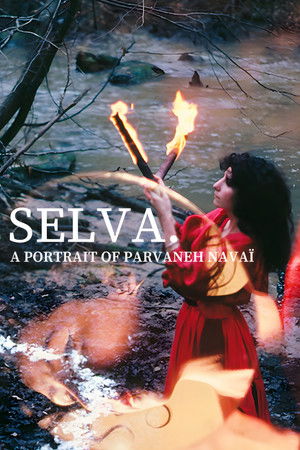
Trance dances and out of body projection. In front of the camera, Parvaneh Navaï becomes a mediator who enters in contact with and immerses into the energies of Nature, while her own energy radiates and echos in the forest ("selva"). The camera amplifies and expands her presence, transforming the forest into an imaginary space. The camera becomes a painter's brush.
Lost Boundaries is comprised of footage shot by Julien on location, in England in the summer of 1985, during the making of the Sankofa film and video collective's first experimental feature film The Passion of Remembrance (1986), which he co-directed with Maureen Blackwood, another member of the collective. In recapturing those moment Lost Boundaries both deconstructs and foregrounds the means of 16mm film production while weaving together a fragile community of Black artists and actors who came to prominence at a time when debates in film theory - such as those of the Screen film journal and of "third cinema" discourses where cinema was intertwined within (Brechtian) filmmaking practices - were at the forefront of forging a new politics of artistic representation. A Black avant-garde.
The director Andrés Kaiser combines hundreds of amateur films and photographs from the treasure trove of images belonging to his migrant grandparents creating a cinematic firework of analogies.
In late 1970s Ohio, a group of friends filming a homemade zombie movie witness a devastating train derailment. Soon after, their quiet town is gripped by unexplained disappearances, strange phenomena, and a growing sense of fear, as they uncover that something terrifying has been set loose.
Filip buys an 8mm movie camera when his first child is born. Because it's the first camera in town, he's named official photographer by the local Party boss. His horizons widen when he is sent to regional film festivals with his first works but his focus on movie making also leads to domestic strife and philosophical dilemmas.
Hieronymus Rivera, a strong force in the New York fashion underground, is offered the deal of a lifetime by Cecilia Meadows, a government official who is the head of a new secret program called DAFTCA. What begins as a simple agreement to design uniforms for the organization, soon finds Hieronymus in the center of a vast web of conspiracy.
A traumatized cheer captain races to stop a masked killer and the new tourist attraction aimed to exploit her tragedy from a year earlier.
This is Poe and Král's first effort, shot on small-gauge stock, before their more well-known endeavor The Blank Generation (1976) came to be. A "DIY" portrait of the New York music scene, the film is a patchwork of footage of numerous rock acts performing live, at venues like Madison Square Garden, Radio City Music Hall, the dive bars of Greenwich Village and, of course, CBGB.
On September 11, 2018, the movie "Retsunami Kakuon Gunrushi 911” - a collection of unreleased footage of G.I.S.M. - screened for just one day at Tachikawa Cinema City, Tokyo, selling out over 700 seats in hours. Released physically on September 11, 2024 worldwide, the film is a one-hour piece of shocking footage carefully selected from the band’s legendary visual archive, shot and directed by Junji Yasuda.
On the beach at sunset a man waits for his one true love. When she arrives, a bittersweet romance ensues.
Concert footage of The White Stripes recorded in January of 2004, featuring tracks from the band's four studio albums as well as live favorites like the Dolly Parton cover "Jolene"
We see the film title card on screen and sound is coming from the cinema, but the screen is black. The filmmaker hands a cellphone with video to two sitting in front of the crowd. The image of the film plays on the phone for those who can see it in the crowd as the audio comes through the cinema speakers.
In 1975, soon after the end of the Vietnam War, Hoa Thi Le and Hue Nguyen Che fled the country on a small boat. After nine days at sea, they docked in the Philippines, where they were utilized as background extras for “Apocalypse Now.”