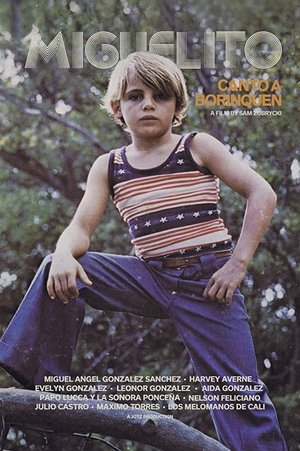
In 1973, eleven year old Miguelito was discovered singing in the San Juan airport by the legendary New York record producer Harvey Averne. Within the year, he went from the slums of Manuel A Perez, to recording an album with some of the finest salsa musicians of the time to finally performing with Eddie Palmieri at Madison Square Garden in front of 20,000 people. Throughout Latin America his songs ‘Payaso’ and ‘Canto a Borinquen’ had become cult hits. And then he simply disappeared...
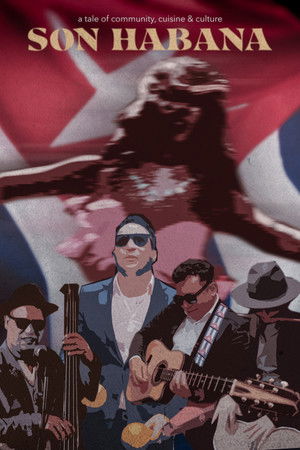
When the world shut down, a Cuban band in Los Angeles turned up on a stage at a Cuban-Latin American restaurant. Their music became a beacon light in the dark. Their music helped reconnect people. "The Music that Saved a Community" Culture. Community. Cuisine. This is Son Habana.
Shows the colonization process in the nature reserves of La Serranía de la Macarena and Bajo Caguán in Caquetá. The settlers and a FARC leader describe the causes of the burning of the forests and the role of the guerrillas in areas where there is no state presence.
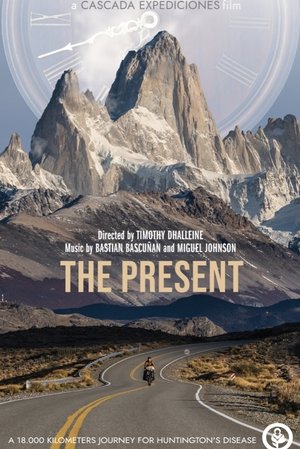
At 34, French traveler Dimitri Poffé tested positive for Huntington's disease, a rare, hereditary, incurable disorder that slowly erodes body and mind. His father died of it; his sister has fought its symptoms for over a decade. Genetic studies predicted Dimitri's own symptoms would begin between 35 and 40 — a countdown he could not stop. Rather than wait, he got on a bicycle. Alone, he rode 18,000 kilometers from Mexico City to Ushuaia, crossing deserts, jungles, mountains and endless plains, a route as unpredictable as the disease itself. What began as defiance became something larger: a story of resilience, solidarity and the strength to reclaim life on your own terms. More than a test of physical limits, The Present is a reminder that when the future is uncertain, the present is still ours to live — one pedal stroke at a time.
La Salsa Vive is a vibrant cinematic exploration of Afro-Cuban music's history, tracing its roots from New York's lively streets to Cali, Colombia, now the global salsa capital.
When the revolution in Nicaragua won its victory nearly 40 years ago, the world began to dream. A young generation was taking the reins in a country of grand utopias. From West Germany alone, 15,000 “brigadists” travelled to help rebuild the war-torn country: liberals, greens, unionists, social democrats, leftists and church representatives harvested coffee and cotton, built schools, kindergartens and hospital wards. No movement has mobilised so many people. What became of the hopes and dreams of the revolutionaries and their supporters?
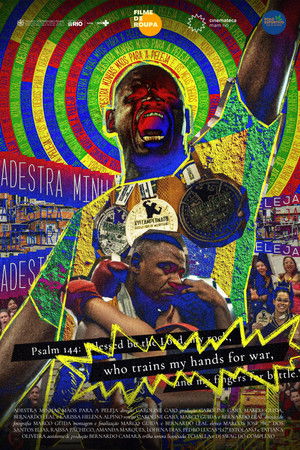
Founding a social Muay Thai project in the North Zone of Rio de Janeiro, Mestre BG and his competitors face the adversities of an underfunded project and fight to win their place on the podium. The challenges intensify when one of the students, Raíssa Pacheco, secures a spot to compete in a South American championship in Uruguay.
The true story of the rise of a Japanese businessman from Los Angeles named Eishy Hayata from an Airline engineer into the legend of the Emerald world -- the Emerald Cowboy
In the plains of Latin America, Guaco, a humble landowner, witnesses a son's betrayal driven by greed, leading to the downfall of a respected family.
Ostrovy milionů ptáků
Soy Múcura
A group of three friends, Rodrigo, César and Vitória, have a date at Vitória's house after a long time without meeting due to the COVID-19 pandemic. They sit in her backyard with a few bottles of beer and a joint, chat as it gets dark and each one brings up their own existential conflicts, perhaps looking for a solution, or leave with even more questions...
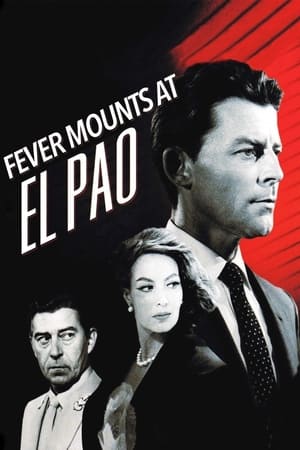
After Caribbean despot Mariano Vargas is murdered at the hands of his enraged populace, his secretary Ramón Vázquez takes not just control but also Vargas' widow Inés, with whom he's been having an affair. Special military unit leader Alejandro Gual arrives to overthrow Vázquez by turning the people and Inés against him.
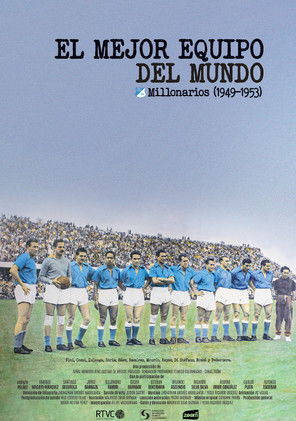
Tells the story of the famous Millonarios, one of the most awarded football teams in Colombia, which, as it was stated by the press, rivals and football leagues, between 1949 and 1953, it was the best team in the world. The documentary film, which some might say, one of the most important sports film pieces in Colombia, involves the stories of fans, members, ex-players, managers, chairmen and great journalists from the world of football, telling how this team revolutionized and changed the history of Colombian football forever.
With analog and digital material collected during her stay on a "Work Trip" taking care of children in an American kindergarten as a migrant. I'm not speak English proposes —as a visual autobiography— to make visible a phantasmagorical light as a metaphor for the sudaca's bodies that work in invisible care task. Migrant bodies who bear as an imperceptible force the North American Nation.
In late 1980, the bodies of four American women were exhumed from a crude grave in El Salvador. The women - Ita Ford and Maura Clarke, nuns of the Maryknoll Congregation in New York; Dorothy Kazel, a nun in the Ursuline Sisters of Cleveland; and Jean Donovan, a lay missionary from the Cleveland Mission - had been abducted, raped, and murdered. An investigation led to the trial and conviction of five Salvadoran National Guardsmen.
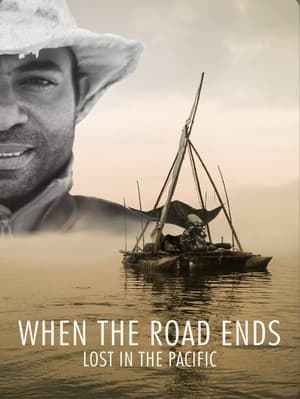
Growing up in poverty as a child, Dylan dreamt of travelling the world on a motorcycle. Many years later he broke the shackles of a normal life and took to the road. After journeying 200,000km across four continents, the road from Panama to Colombia comes to an end, swallowed up by an impenetrable jungle. Dylan has no choice but to take to the sea, building a raft powered by his motorcycle engine in the hope of reaching Colombia's road network 700km away. He must brave strong ocean currents and storm batterings in his journey from Central to South America.—Journeyman Pictures
A documentary about the invisible workers who sustain cinema, revealing their lives through direct testimonies and bringing them together to form the crew of the director's next feature film.
A young balladeer raised in the United States returns to Colombia to continue her career. Her plans do not align with her mother's, a famous singer of tropical music, and their clash is inevitable. The girl flees her home and frequents the spaces of musicians and artists with revolutionary tendencies.
Pistoleros de la muerte