A German Documentary about the “village of friendship” that was created by American Veteran George Mizo to help the Vietnamese kids suffering from the Vietnam War.
An album of odd and humorous stories on small places exclusively dedicated to idleness, which are empty in winter and crowded in summer: the spa towns. Cities under water, luxury hotels, mermaids, sea animals, sand castles, people who worship water, praying for health.
This film tries to blow the whistle on what it calls the biggest swindle in modern history: 'Man Made Global Warming'. Watch this film and make up your own mind.
Riding Giants is story about big wave surfers who have become heroes and legends in their sport. Directed by the skateboard guru Stacy Peralta.
After their mother's femicide, three siblings are separated and forced to live in different places. Years later they gather to raise their voices and fight to be made visible in a country where orphans for femicide are ignored by the state and invisible to society. It's up to them to tell their story.
A look at the state of the global environment including visionary and practical solutions for restoring the planet's ecosystems. Featuring ongoing dialogues of experts from all over the world, including former Soviet Prime Minister Mikhail Gorbachev, renowned scientist Stephen Hawking, former head of the CIA R. James Woolse
My Trip to Miami follows a well-meaning, misguided, tourist as he tries to self-actualize via Trip Advisors algorithmic script. My Trip to Miami is a documentation of a fantasy, a failure in image-based expectations.
The world seen through the eyes of children. The action takes place in Karosta, the former military port of Liepaja city – however, it is not that important, as the film could take place anywhere. We observe children playing on the beach, revealing the core of Pakalnina’s work: perceiving and transmitting emotions.
In the competitive world of tourism, there are very few experiences that are out of bounds. “Danger Zone” explores the world of war tourism, catering to a growing market for ever more rare and extreme experiences.
Leading Australian documentarian Eddie Martin puts viewers on the frontlines of the deadly 2019–2020 bushfires, capturing the catastrophe with a perspective and scale never before seen. 24 million hectares were burnt, 3000 homes were destroyed, 33 people died, and nearly three billion animals perished or were displaced. Fire Front is a powerful account of that calamitous antipodean summer, told from the ground where climate change took on the face of hell.
Enjoy the sexy images of Mizuki Hoshina. This work is the strongest move based on her reunion with a childhood friend plus the nurse setting, and it will grab your heart again!!
What do the Japanese see in Canada? What's the magnetic pull from the Far East? And what's our take on this land of ours? Bolstering our feeling of national pride comes naturally after watching the Japanese embrace the country. The film follows Masaaki Kagami, a Japanese transplanted in Alberta. He specializes in making souvenir videos for Japanese tourists. HO! KANADA is an investigation of national stereotypes. The film records the way the Japanese see us, and how we see them and ourselves.
When the 2004 tsunami hit the coast of Sri Lanka, 65-year-old Anton Ambrose's wife and daughter were killed. "In five minutes," he says, "I lost everything." A year later, Anton returns to Sri Lanka. With him is his nephew, award-winning filmmaker Rohan Fernando. A Tamil, Anton moved to California in the 1970s and became a very successful gynecologist. His daughter, Orlantha, made the opposite journey, returning to Sri Lanka where she ran a non-profit group that gave underprivileged children free violin lessons. Blood and Water is the story of one man's search for meaning in the face of overwhelming loss, but it is also filled with improbable characters, unintentional comedy and situational ironies.
A close examination of the Whakaari / White Island volcanic eruption of 2019 in which 22 lives were lost, the film viscerally recounts a day when ordinary people were called upon to do extraordinary things, placing this tragic event within the larger context of nature, resilience, and the power of our shared humanity.
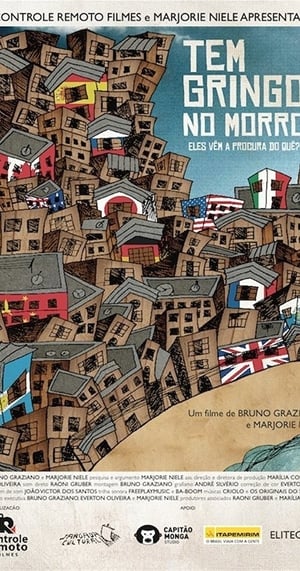
Are tourists destroying the planet-or saving it? How do travelers change the remote places they visit, and how are they changed? From the Bolivian jungle to the party beaches of Thailand, and from the deserts of Timbuktu, Mali to the breathtaking beauty of Bhutan, GRINGO TRAILS traces stories over 30 years to show the dramatic long-term impact of tourism on cultures, economies, and the environment.
An account of the devastating 1906 San Francisco earthquake and the subsequent effort to rebuild.
February 2010. On a remote island in the Pacific Ocean called Juan Fernández, everyone slept in town. But a 12-year-old girl felt a tremor and warned of imminent danger.
Alison Brown and Charlie Simonds plan this film at Britain's oldest naturist club, Spielplatz. It’s then off to the Greek Mediterranean and Crete to discover Kalypso Cretan Village. They meet up with friends, Jocelyne and Regis, to investigate why this resort has become so popular.
"Trouble the Water" takes you inside Hurricane Katrina in a way never before seen on screen. The film opens the day before the storm makes landfall--just blocks away from the French Quarter but far from the New Orleans that most tourists knew. Kimberly Rivers Roberts, an aspiring rap artist, is turning her new video camera on herself and her Ninth Ward neighbors trapped in the city. Weaving an insider's view of Katrina with a mix of verité and in-your-face filmmaking, it is a redemptive tale of self-described street hustlers who become heroes--two unforgettable people who survive the storm and then seize a chance for a new beginning.
Private Diary documents photographer Pedro Usabiaga working with a variety of amateur models. The audience sees how the relationships between the photographer and the subjects changes during their time together, as well as how the individual photographs begin to take shape. Pedro Usabiaga is a well-established Basque photographer whose chief concerns are figurative photography and whose passion in photographing the Spanish male. In this hour long conversation with the artist we are given entry into that process of selecting models (none of the models he uses for this book to be titled 'Private Diary' are professional, but instead are randomly chosen as Usabiaga observes athletes in action) and then allowed to follow Usabiaga and his crew as they photograph these men in natural settings and natural light.