This documentary shows the fishing grounds of the far north. It provides an insight into the hard and dangerous work on a fishing trawler ; laying out and hauling in the fishing nets, processing the fish on board and storing it in the cold store.
Few amateur films with sound were produced in the 1930s and fewer remain extant. A charming artifact that demonstrates the expressive possibilities and technical limitations of amateur talkies, "The Spider and the Fly" includes a backyard Labor Day gathering, a trip to the Riverview Amusement Park, and a homemade Halloween parade of witches and ghouls.
The New Boats is an investigative documentary that presents an eye-opening look at the impact of international industrialized fishing in West African waters and its disastrous effect on local communities at a critical point in Sierra Leone's history.
The story of Catholic iconoclast Michael Pfleger who made it his mission to transform the drug ravaged south side Chicago community surrounding his parish. In so doing, Father Mike has run directly into conflict with the local Catholic hierarchy. The film explores issues of racism, the power of the media, and the tension between Pfleger's 'gospel of the streets' versus traditional Church theology.
On Chicago's South and West sides, the scourge of guns and gangs is destroying countless lives. Taking matters into their own hands, two men dedicate their lives educating, empowering and healing young Black men at high risk for being victims—or perpetrators—of deadly gun-violence.
As one of his generation's quintessential Mad Men, television commercial director Joe Sedelmaier's work was iconic, dynamic, and instantly recognizable--some twenty to thirty years later, people are still wondering 'Where's the beef?” He turned the advertising world on its brain-damaged head by casting offbeat non-actors in still-unforgettable spots. His brilliant, frequently hysterical commercials for Wendy's, Alaska Airlines, Federal Express and others were snappy slices of cultural quirk that tapped into the Cold War-fearing, corporate workaholic zeitgeist of the '70s and '80s with a sense of humor that cracked billions of smiles, sold billions of burgers, and sped up the default rhythm of time-based media.
Increasing pollution, over fishing and climate change are major threats our oceans are currently facing worldwide. This documentary follows us on our journey as we film devastating consequences of these harsh realities.
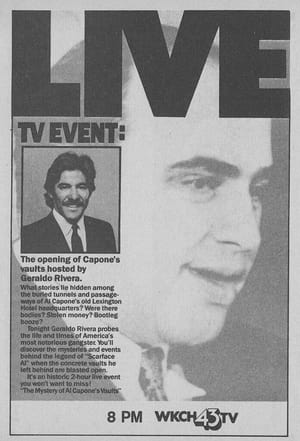
The Mystery of Al Capone's Vaults is a two-hour live American television special that was broadcast in syndication on April 21, 1986, and hosted by Geraldo Rivera. It centered on the live opening of a secret vault in the Lexington Hotel in Chicago once owned by noted crime lord Al Capone.
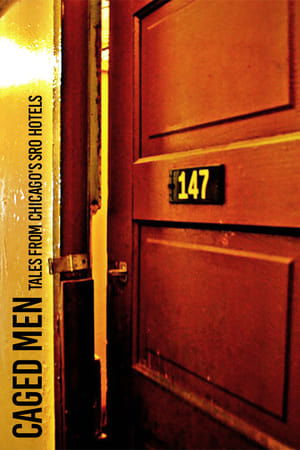
Caged. Invisible. Shamed. Trapped. These words mark the tenants, clerks and even the owners of Chicago's last remaining Singe Room Occupancy (SRO) hotels. These small spaces are home for many at the bottom of Chicago's housing ladder. Cloaked in darkness and secrecy, these hotels are often maligned as drug dens and havens for prostitution but the people who live, work and own these hotels have never fully shared their stories. Caged Men is a feature-length documentary which examines the disquieting stories of near-homeless Americans living on the margins and their invisibility in a largely indifferent and, at times, hostile community. It attempts to lend a voice to SRO residents, clerks, owners and to the hotels themselves.
Free Fish is a short documentary filmed over the course of a year in Gaza, following two brothers — Abu Nagham and Ahmad — separated by war yet connected by the sea. Displaced from their home, Abu Nagham now lives in a tent in the south, fishing with his young nephew Rami, who lost his twin brother. Ahmad remains in the north, fishing amid ruins and occupation. Once a source of livelihood and freedom, the sea has become a battleground — heavily restricted, constantly watched, and always dangerous.
The Vatican media documentary about the roots of Robert Francis Prevost in his native United States. It follows an itinerary that begins with his childhood in Dolton, through the memories of his brothers Louis and John, and continues among schools and universities, communities and parishes, featuring the voices of confreres, teachers, classmates, and longtime friends. A production of the Vatican Dicastery for Communication, in collaboration with the Archdiocese of Chicago and the Apostolate El Sembrador Nueva Evangelización (ESNE), broadcast on the official channels of Vatican Radio – Vatican News.
Filmmaker Kevin McMahon accompanies the Haida delegation on a repatriation trip to Chicago in 2003. His film reveals the whole repatriation process through the stories and experiences of the people who participated, both Museum staff and the Haida people.
This Rose will forever be Chicago Red.
In 1965, on the Eastern Shore of the Chesapeake Bay, there was the last operating fleet of sailing work boats in the United States. Forty-odd "Skipjacks" were still used by Maryland watermen to dredge up oysters from the Bay. At that time, the fleet had survived because of a Maryland conservation law which prohibits the use of motor power for oyster dredging. The watermen traditionally marked the opening of each oystering season with a skipjack race which the Maryland State Tourist Board incorporated into its annual "Chesapeake Bay Appreciation Day."
In Paul Brandt’s filming debut, he joins friend Paul Norris and legendary fly-fishing guide, Naoto Aoki, on a journey that is both a look into his consuming passion for fly fishing and an ode to his hometown of Calgary, which he dubs as the World’s Largest Fly Fishing Lodge.
Report on a trout and pike fishing excursion on Lake Waconichi.
Archival footage, animation and music are used to look back at the eight anti-war protesters who were put on trial following the 1968 Democratic National Convention.
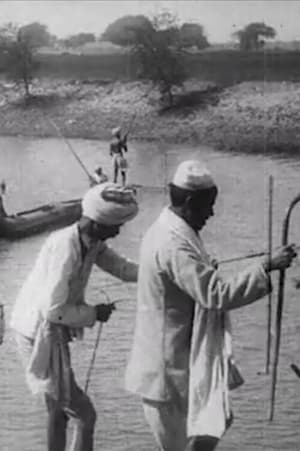
Amateur film of fishing and geese-shooting trips by a British party in India.
In this special documentary that inspired a two-season television series, scientists and other experts speculate about what the Earth, animal life, and plant life might be like if, suddenly, humanity no longer existed, as well as the effect humanity's disappearance might have on the artificial aspects of civilization.
Every day, fishermen venture out into the polluted waters of Sepetiba Bay to provide for their families, searching for what remains of the region's marine life.