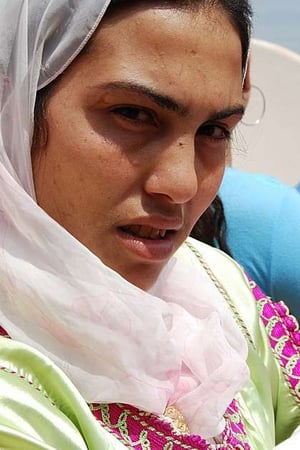
In Pakistan, veils hide one of the country's most terrible secrets. Driven by revenge, jealousy or sexual non-co-operation some men subject their wives to horrific attacks with acid that is freely available in the street. Completely disfigured, the victims are often ostracized by their families and become prisoners in their own home. This chilling documentary is a terrifying insight into the shattered lives of these women.
Liliana Cavani's "The Night Porter" is a film that, fifty years after its release, continues to spark debate and mixed reactions. The story, set in Vienna in 1957, follows doorman Max Aldorfer and his former concentration camp prisoner, Lucia, who reunite after years in a hotel.
$avy investigates the historical, cultural, and societal norms around women and money.
The story of a young boy forced to spend all five years of his short life in hospital while the federal and provincial governments argued over which was responsible for his care, as well as the long struggle of Indigenous activists to force the Canadian government to enforce “Jordan’s Principle” — the promise that no First Nations children would experience inequitable access to government-funded services again.
Frustrated by watching Black patients suffer due to end-of-life healthcare inequities, two determined allies – a chaplain and a doctor – work to transform a broken medical system, one patient at a time.
The rock-wild youth of the 1960s during the apparitions of their idols.
Soon after New York state passed a 2015 law that health insurance should cover transgender-related care and services, director Tania Cypriano and producer Michelle Hayashi began bringing their cameras behind the scenes at New York’s Mount Sinai Hospital, where this remarkable documentary captures the emotional and physical journey of surgical transitioning. Lending equal narrative weight to the experiences of the center’s groundbreaking surgeon Dr. Jess Ting and those of his diverse group of patients, BORN TO BE perfectly balances compassionate personal storytelling and fly-on-the-wall vérité. It’s a film of astonishing access—most importantly into the lives, joys, and fears of the people at its center.
Street art, creativity and revolution collide in this beautifully shot film about art’s ability to create change. The story opens on the politically charged Thailand/Burma border at the first school teaching street art as a form of non-violent struggle. The film follows two young girls (Romi & Yi-Yi) who have escaped 50 years of civil war in Burma to pursue an arts education in Thailand. Under the threat of imprisonment and torture, the girls use spray paint and stencils to create images in public spaces to let people know the truth behind Burma's transition toward "artificial democracy." Eighty-two hundred miles away, artist Shepard Fairey is painting a 30’ mural of a Burmese monk for the same reasons and in support of the students' struggle in Burma. As these stories are inter-cut, the film connects these seemingly unrelated characters around the concept of using art as a weapon for change.
For millennia, Native Americans successfully stewarded and shaped their landscapes, but centuries of colonization have disrupted their ability to maintain their traditional land management practices. From deserts, coastlines, forests, mountains, and prairies, Native communities across the US are restoring their ancient relationships with the land. As the climate crisis escalates these time-tested practices of North America's original inhabitants are becoming increasingly essential in a rapidly changing world.
What is the secret behind the success of "Rocky Horror"? Is it the music? The actors? The comedy? It's certainly not the Special Effects. "Rocky Horror" has been around for more than 40 years, and still continues to be successful in the movie theaters as well as on stage. This documentary is highlighting the history of "Rocky Horror", which started off as a two-page script written in crayons, and ended up with two movies, tons of merchandise, millions of fans and world touring shows, grossing more than $500 million in revenue.
Three women share their experience of navigating the app-world in the metro city. The sharings reveal gendered battles as platform workers and the tiresome reality of gig-workers' identities against the absent bosses, masked behind their apps. Filmed in the streets of New Delhi, the protagonists share about their door-to-door gigs, the surveillance at their workplaces and the absence of accountability in the urban landscape.
Pussy Riot make a comeback after a long absence to stand with Ukraine. Their story and their struggle are told through archival footage and interviews with the group’s members.
Passionate about ocean life, a filmmaker sets out to document the harm that humans do to marine species — and uncovers an alarming global conspiracy.
In interviews, various actors and directors discuss their careers and their involvement in the making of what has come to be known as "cult" films. Included are such well-known genre figures as Russ Meyer, Curtis Harrington, Cameron Mitchell and James Karen.
Guy Debord's analysis of a consumer society.
This documentary by Léa Clermont-Dion and Guylaine Maroist plunges us into the vortex of online misogyny and documents hatred towards women. This bleak opus, reminiscent of a psychological thriller, follows four women across two continents: former President of the Italian parliament Laura Boldrini, former Democratic representative Kiah Morris, French actor and YouTuber Marion Séclin, and Donna Zuckerberg, a specialist in online violence against women and the sister of Facebook’s founder. This tour de force reveals the devastating effects such unapologetic hatred has on victims, and brings to light the singular objective of cyber-misogyny: to silence women who shine. Some targets of cyber-violence will crumble under the crystallizing force of the click. Others, proud warriors, will stand tall and refuse to be silenced.
A daring exploration of the intersection of religion, patriarchy, and gender oppression in India, unearthing how rituals, customs, and cultural double standards—often sanctified in the name of faith—perpetuate misogyny across generations.
Younost, une jeunesse russe
A documentary on the expletive's origin, why it offends some people so deeply, and what can be gained from its use.
Investigates the politics of cinematic shot design, and how this meta-level of filmmaking intersects with the twin epidemics of sexual abuse/assault and employment discrimination against women, with over 80 movie clips from 1896 - 2020.