This documentary-drama hybrid explores the dangerous human impact of social networking, with tech experts sounding the alarm on their own creations.
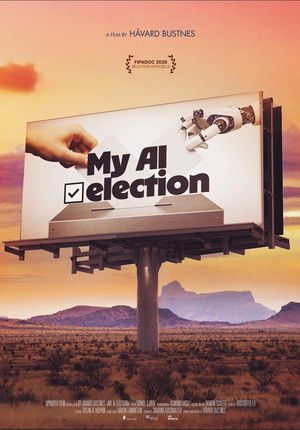
With the rapid advancements in artificial intelligence, the line between humans and machines continues to blur, and everything is evolving at an astonishing pace as this technology offers tantalizing promises. However, some researchers, including 2024 Nobel Prize in Physics laureate Geoffrey Hinton, warn about its exponential power. A deep dive into the dizzying complexities of AI.
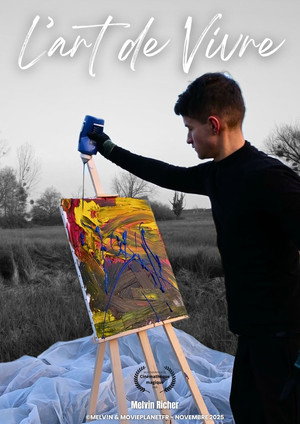
What is the Art of Living ? A few weeks ago, I asked myself this question, as silly in its formality as it is complicated in its complexity. In this video, I'll try to give you my definition and my vision of what the art of living is !
A father-to-be tries to figure out what is happening with all this AI insanity, and explores the most powerful technology humanity has ever created... and what's at stake if we get it wrong.
Director Adam Bhala Lough sets out to better understand the technology and people at the center of the AI boom. His quest sends him on a path towards the father of AI, OpenAI CEO, Sam Altman. When he isn’t able to sit down with Altman himself, Adam travels to India to create an AI version of him to interview instead.
Conflict between man and machine has been a science fiction staple for over a century. From 2001: A Space Odyssey to The Terminator the perceived threat posed by super-intelligent robots has been exploited by Hollywood for decades. But do advances in Artificial Intelligence mean we are now facing a future in which that threat could become a reality?
Garry Kasparov is possibly the greatest chess player who has ever lived. In 1997, he played a match against the greatest chess computer: IBM's Deep Blue. He lost. This film depicts the drama that happened away from the chess board from Kasparov's perspective. It explores the psychological aspects of the game and the paranoia surrounding IBM's ultimate chess machine.
Everyday Portabella
A journey into the world of artificial intelligence, to understand its operating logic and current and future applications. The TV program explains what AI is, its history, its current and future applications. It also illustrates the figure of Pepper, a humanoid robot that is the subject of important research at the University of Palermo. The TV program also talks about future developments of AI, the opportunities and possible social risks that it could entail: an aspect to focus on, both for the need to arrive at a correct algorithm, and to achieve an indispensable regulation of the sector.
“A Song Reborn” reveals the extraordinary 1994 reunion of Paul, George and Ringo, 24 years after The Beatles parted ways. A true collaboration became possible when Yoko Ono handed them an unfinished John Lennon composition. Crafted from never-before-seen studio footage, this short film captures the three Beatles rediscovering their bond as they shape John’s song into the GRAMMY-winning “Free As A Bird.”
Exploring the fallout of MIT Media Lab researcher Joy Buolamwini's startling discovery that facial recognition does not see dark-skinned faces accurately, and her journey to push for the first-ever legislation in the U.S. to govern against bias in the algorithms that impact us all.
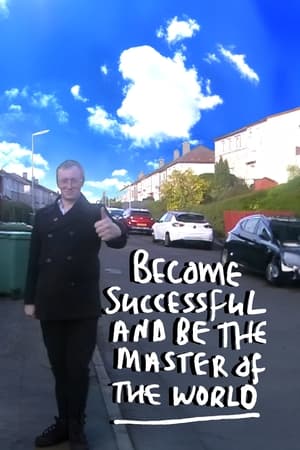
Filmed mostly on a Mini DV camera Gavin has thought of a quick way to become successful and be the master of the world but he has to wait for it all to fall into place… he has to wait for the postman to start production documenting the process of being master of the world.
Narrated by Oscar-winning actor Jeremy Irons, The Genius of George Boole assembles academics and industry leaders from across the globe to explore the life and importance of one of the world’s greatest unsung heroes.
From leaving Egypt 10 years ago, to almost dying a month ago in a car accident. This film is about the journey in between and the massive role the internet played in the life of prominent Youtuber and Yes Theory co-founder Ammar Kandil.
This documentary, produced by Paul Burnford, features how products are made in factories. It uses an example of a jack-in-the-box produced by Mattel.
In 1772, Englishwoman Mary Delany wrote to her niece: “I have found a new way of imitating flowers.” The imitation in question was the art form called decoupage, based on cut-outs and reshuffling of pictures. The charm and botanical precision of these works attracts attention of even today’s artists, among others by an anonymous programmer who is trying to invent a way of capturing the flowers’ vivacity in pictures. With this aim in mind, she has created an algorithm, which would combine science and beauty, similarly to Delaney’s efforts, whose illustrations it is meant to animate.
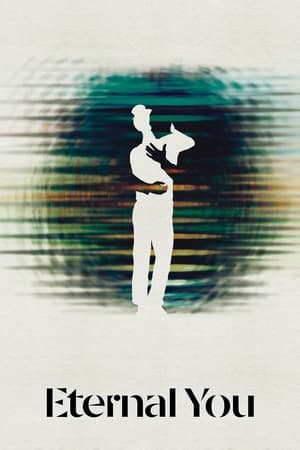
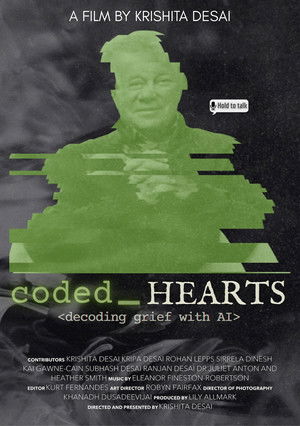
Filmmaker Krishita Desai explores AI grief technology that lets people interact with digital versions of their deceased loved ones. Through families and experts, the film asks whether it brings comfort or complicates grief and healing.
The search for René Descartes’ daughter Francine leads an internet user into the depths of an AI’s mental space. This intelligence generates limitless images from words given by humans, until it starts working by itself. An alternative, fleshless new world, containing all the world's memory, emerges.
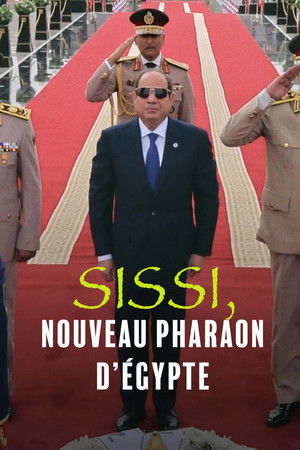
Egypt, nicknamed "the mother of the world" by its people, is unrecognizable. Gigantic construction sites have sprung up in the desert at an exponential rate, including roads, bridges, and megaprojects on the Mediterranean coast. This new Egypt is an illusion: in 10 years, the population has sunk into unprecedented poverty. The regime shows no mercy to the poor. Abdel Fattah el-Sisi, the new pharaoh, and his army have set up a pyramid-shaped financial system, built on subsidies from major international institutions—including the European Union—and foreign investment. The most populous nation in the Arab world finds itself on the brink of collapse.
Things go awry when two filmmakers attempt to automate every aspect of their lives using ChatGPT.