Record of the first ascent of Everest made without the use of oxygen equipment, made in May 1978 by Reinhold Messner and Peter Habeler. Could it be done? Would their blood vessels burst? Would they suffer brain damage leading to madness? Nobody was sure. Messner: 'I would never come here for trying Everest with oxygen. That is not a challenge for me.' A fascinating piece of history, well filmed by Leo Dickinson and Eric Jones (above the South Col Messner used a cine camera to continue the filming), featuring Messner and Habeler's thoughts. The film follows the usual sequence from Namche to Base Camp, through the Icefall, to Camps I, II and III. It also shows historical footage of the pioneering Mallory and Shipton expeditions.
The true story of Joe Simpson and Simon Yates' disastrous and nearly-fatal mountain climb of 6,344m Siula Grande in the Cordillera Huayhuash in the Peruvian Andes in 1985.
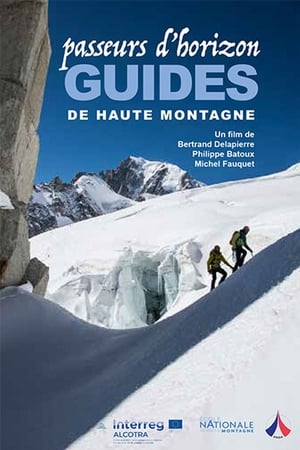
History, advice and demonstrations of mountaineering in the Mont Blanc massif by the renowned guides of the National School of Ski and Mountaineering from Chamonix. The film starts with an historical summary illustrating the aspirations and methods that lead man to conquer the mountains. Armand Charlet teaches mountaineering techniques and takes his students to the field for glacier or rock exercises. Gaston Rebuffat makes demonstrations of particularly dangerous climbs. At altitude, people move in solitude, cold and silence, like circus acrobats without spectators, but nothing stops the modern mountaineer.
For a century and a half, mountain images by their beauty have largely gained from its influence, its frequentation and its development. But they are also a tool in the service of science, fixing the transformation of landscapes, habitats... Over 150 years, the Tairraz dynasty photographed the mountain. Four generations of photographers have magnified the Mont-Blanc massif. From the first photograph taken at the summit of Mont-Blanc in 1861 to the present day, this art is at the origin of many mountaineering vocations and has largely contributed to the tourist development of these formerly ignored valleys. Here is the wonderful story of a dynasty of photographers, the Tairraz, which stretches from 1861 to the dawn of the 2000s.
"Ski The Outer Limits" is a poetic exploration of man's "conquest of the useless," his quest to expand the limists of his abilities. Racing, clowning, teaching, flipping and flying - the world's finest skiers define their limits. A philosophical narration brings the story home to anyone wishing to explore their limits.
The dramatic story of the British expedition that made the first ascent of Everest. Combining interviews with the surviving members of the 1953 British and 1952 Swiss attempt on Everest with rare archival material, this film tells the story of the race to climb Everest in the early 1950s and its climax in 1953.
This documentary follows the feats of high-altitude climber Jerzy Kukuczka and his ascent to higher heights before his death in 1989.
Gaston Rébuffat is part of the history of mountaineering. Marseillais prodigy, high mountain guide of the Chamonix guide company and famous for the ascent of the most famous north faces: some are 1st rehearsals, others 1st French or 1st as a guide. Filmed by Georges Tairraz, this masterpiece released in 1955 reveals the beauty of effort and the pleasure of sharing in the mountains. Apart from the feat, the mountains are not there to satisfy egocentric ambitions. A classic !
Roger Frison-Roche born in Paris in 1906 and moved to Chamonix at the age of 17. He was quickly adopted by local mountaineers and became the first guide in the Company not to have been born in the valley. He is also an insatiable explorer, in love with landscapes and peoples, having traveled from the Hoggar to the Sami camps in Lapland. And the author, among others, of the famous adventure novel Premier de Cordée! This documentary, made up of archive images and interviews, exposes the prolific life of a man who communicated his passion for the mountains by all possible means. A young journalist from Chamonix follows in the footsteps of Roger Frison-Roche. She meets people who knew him and others who followed in his footsteps: guides, filmmaker and author Philippe Claudel, a director, his family; on a trip to Lapland, Algeria, Chamonix.
Avid for steep slopes, Marco Siffredi (1979-2002) obeys only one rule: not to fall. This gifted kid with hair sometimes blond peroxidized, green or blue clashed in his valley: Chamonix, mecca of mountaineering. His thing was to go up and down on a snowboard. . 90 minutes September 8, 2002, altitude 8848 meters, rare oxygen, his head already brushing the sky and his snowboard running, Marco Siffredi, 23, rushes from the summit of Everest in the Horbein corridor and its slopes at 50 degrees . A year earlier, he had already made the first descent of the mountain on a snowboard. But there remains another corridor… more direct. It's not a challenge, just a reason to be... However, that day, at the top of the roof of the world, his trace is lost...
On 15 May, 2006, double amputee Mark Inglis reached the summit of Mt Everest. It was a remarkable achievement and Inglis was feted by press and public alike. But only a few days later he was plunged into a storm of controversy when it was learned that he had passed an incapacitated climber, Englishman David Sharp, leaving him to a lonely end high in the Death Zone.
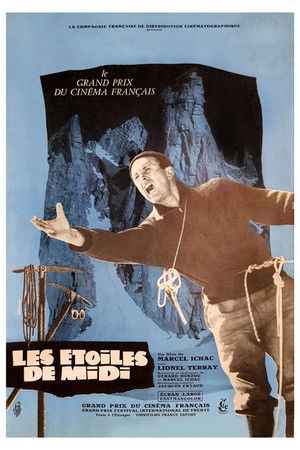
Les Etoiles de Midi is an engaging docudrama about some of the more spectacular exploits of French mountain climbers over the last several decades. In one re-enacted story, there is a wartime escape through the mountains, and in another, a daring rescue of a pair of climbers who had been missing. The actors themselves are adept at the sport of climbing, and they give the scenes an immediacy and real daring that brings the stories alive. A combination of their acrobatics and skill and the outstanding episodes in the history of French climbing creates a winning 78 minutes.
L'Appel Des Cimes, directed by Alain Pol, is a documentary commissioned by the CAF and the various French ministries on the practice of post-war mountaineering. In 1946, climbers trained at the Fontainebleau Climbing School. Guy Poulet and Jacques Poincenot try to climb the Aiguilles de Chamonix but fail during the climbing phase. After a night in a refuge with Denise Rouzeau and the guide Pierre Allain, the mountaineers make a new attempt. Successful demonstration for those who continued the approach walk then the passage of the seracs of the glacier. On the rock, the roped party crosses a chimney and a crack to reach the summit and abseil down. Led by high mountain scouts, Guy and Jacques rediscover the glaciers and needles of the Mont-Blanc massif during the next lesson.
Dévers
The first ascent of the Matterhorn was made on July 14, 1865 by Edward Whymper, Francis Douglas, Charles Hudson, Douglas Hadow, Michel Croz and two guides from Zermatt, Peter Taugwalder father and son. Douglas, Hudson, Hadow and Croz are killed on the descent after Hadow slips and drags the other three men down the north face. Whymper and the two Taugwalders, who survive, are later accused of having cut the rope that connected them to the rest of the group so as not to be dragged into the fall, but the ensuing investigation finds no evidence of their guilt and they are acquitted. The Matterhorn is the last great peak in the Alps to be conquered and its ascent marks the end of the golden age of mountaineering. One hundred and fifty years later, a team undertakes the same expedition in order to unravel the mystery.
The classic film that inspired the National Geographic Series. Join a global quest with world-class climbers in pursuit of the ultimate goal: the first ascent. Featuring Dean Potter, Timmy O'Neill, Sonnie Trotter, and the amazing Didier Berthod on his quest for the first ascent of the Cobra Crack.
Transcending cultural barriers and consistently going against the grain, female Nepali climber Pasang Lhamu Sherpa attempted to summit Everest four times in the early nineties. Although she was not allowed to attend school as a child, Pasang did not let that stop her from pursuing her dreams. After founding her own trekking company in Kathmandu, she blazed a trail for Nepali women via her efforts to summit Everest. Proving how big you can dream and how far you can go to achieve those dreams, she left a legacy not only for the family she has left behind, but for the myriad women following in her footsteps.
At the Limit is a documentary about extreme climbing. In this sports documentary, Pepe Danquart shows brothers Thomas and Alexander Huber climbing in Patagonia and on the granite rock "El Capitan" in Yosemite Valley (USA). A key part of the film is their attempt at a speed ascent of the 1,000-meter-high route "The Nose," in which the two athletes aim to break the then speed record of 2:48:30 hours, set by Hans Florine and Yuji Hirayama in September 2002.
Movie about David Lama climbing the Patagonian mountain Cerro Torre for the first time free, a mountain that has been dubbed the most difficult to climb in the world.
Two-time Olympic champion, seven-time world champion, overall World Cup winner – Laura Dahlmeier is one of the most successful German biathletes and sportswomen of all time. But at an unusually early age, at just 25, she turned her back on winter sports and devoted herself to mountaineering. A film crew accompanied the exceptional athlete from Garmisch-Partenkirchen for three and a half weeks on her expedition to the spectacular Ama Dablam in Nepal. In addition to incredible drone footage of the mountain landscape, the documentary also features private moments during the ascent of the "Matterhorn of the Himalayas." The biathlon legend talks about her life as a mountain guide and alpinist after her sporting career, without concealing the dangers involved. Conversations with parents and friends reveal the character and motivation of the 31-year-old, making it clear why this exceptionally talented woman turned her back on the biathlon circuit at such a young age.