Time passes, slips away, dissolves. But what if we could hold it for a moment? "Capturing Memories" is a dive into the essence of the inconsistent, an invitation to reflect on the importance of preserving moments before they are lost in oblivion. Through visual fragments, the documentary reveals how small scenes of everyday life carry echoes of the past and seeds of the future. In a world where everything passes, what really remains? This film is a tribute to the art of immortalizing the moment, to the beauty of seeing beyond the present and to the need to give meaning to what may one day become a memory.
Expedition Artenschutz - Auf der Spur des Jaguars
The interview, held on January 4, 2001, was the last given by Professor Milton Santos, who died from cancer on June 24 of the same year. The geographer is gone, but his thoughts remains. Its political and cultural ideals inspire the debate on Brazilian society and the construction of a new world. His statement is a true testimony, a lesson that the world can be better. Based on geography, Milton Santos performs a reading of the contemporary world that reveals the different faces of the phenomenon of globalization. It is in the evidence of contradictions and paradoxes that constitute everyday life that Milton Santos sees the possibilities of building another reality. He innovates when, instead of standing against globalization, proposes and points out ways for another globalization.
Short film created for the 2012 anthology 'Mundo Invisível' (Invisible World).
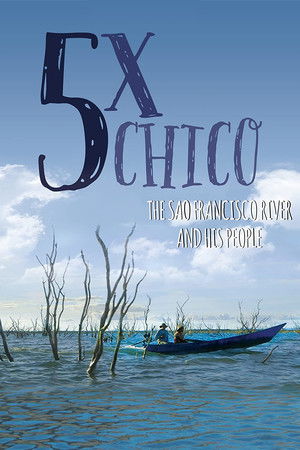
The last part of the triptych is dedicated to the struggle of the peasant communities of northeastern Brazil; on the banks of the São Francisco River, the indigenous residents of the village of Caiçara fight to keep their Island of São Pedro, enclosed in a farm; all that remains is an abandoned chapel to which they go in procession. Tyrannized by their powerful neighbors, they talk about their lawsuits and sing about their two-century struggle, filmed in the village, during a procession to San Pedro and an expedition to the court where a delegation will file a complaint.
Documentary about Brazilian music circa 1969, with extremely rare scenes, such as the only color footage of Pixinguinha, images of João da Baiana, one of the fathers of Samba, Maria Bethânia rehearsing at Barroco nightclub, Baden Powell playing his acoustic guitar, Paulinho da Viola showing his masterpiece "Coisas do Mundo, Minha Nega", that he had just finished, and Márcia, a singer from São Paulo.
Joseph Wilson meets the dance teacher fighting transphobic violence through voguing in Rio’s favelas.
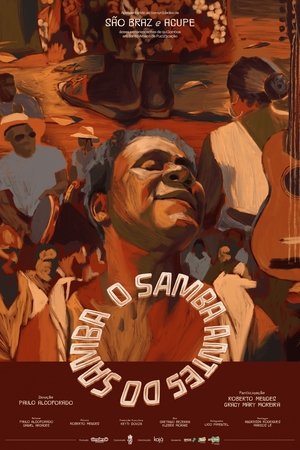
O Samba Antes do Samba
Patricio Bisso was an Argentine multidisciplinary artist who rose to stardom in Brazilian theatre and television, where he developed a meteoric career marked by his irreverent and highly individualistic personality.
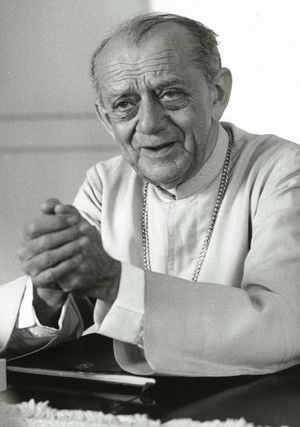
Documentary film about Archbishop Dom Hélder Câmara of Recife & Olinda in Brazil.
Indigenous chief Juma Xipaia fights to protect tribal lands despite assassination attempts. Her struggle intensifies after learning she's pregnant, while her husband, Special Forces ranger Hugo Loss, stands by her side.
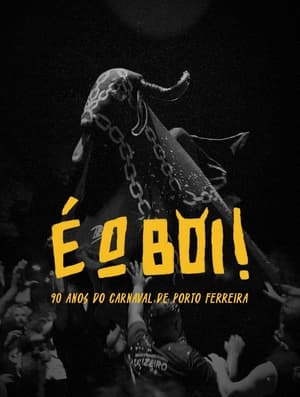
"É o Boi" is a documentary that narrates the origins, portrays the present and discusses the perspectives of carnival in the city of Porto Ferreira/SP. Celebrating a tradition that already is already 90 years old, the film is mainly made up of images taken during the Porto Ferreira's carnival and interviews with people who fight daily to keep this unique and at the same time typically Brazilian cultural manifestation alive. Made over almost a decade, "É o Boi" also portrays critical moments of this carnival in the countryside of São Paulo, including disagreements with public authorities that almost led to the carnival being banned and the impacts of the Covid-19 pandemic on the organization of celebrations.
Raízes Perdidas
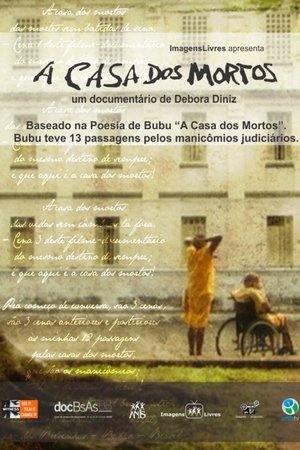
Bubu is a poet who has been committed to state institutions for the insane twelve times. He challenges the meaning of hospital-jails, hybrid institutions which sentence the insane to life imprisonment. The poem "The House of the Dead" was written during the filming of the documentary and reveals the forgotten deaths that occur in these judicial asylums. There are three stories in three acts of death. Jaime, Antonio, and Almerindo are anonymous men, considered dangers to society, whose punishment is the tragedy of suicide, the unending cycle of being committed to the asylum, or surviving life imprisonment in the house of the dead. Bubu is the narrator of his own life and also of his own destiny-death in the asylum.
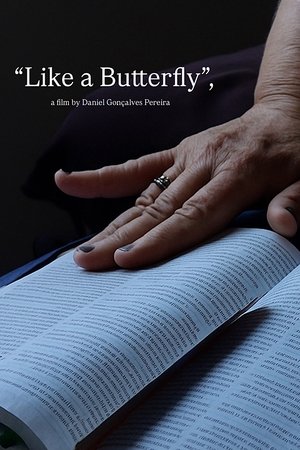
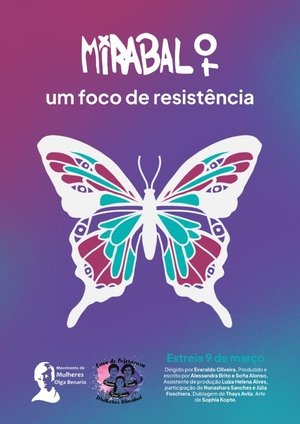
Maria José's life story reveals not only the harsh reality she and her family faced, but also a portrait of the real Brazil. Like a butterfly that is born crawling, she finds her beauty where it is not convenient to be found and sets her flight free to the sky.
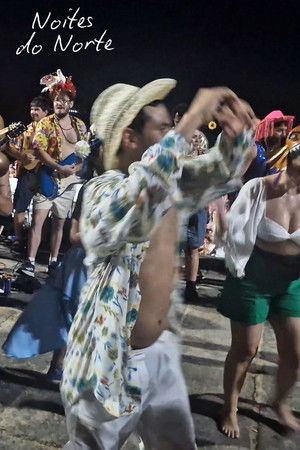
Noites do Norte
The jaguar is the third largest of the big cats and pound for pound the most powerful. Our jaguar patrols a home range of over one hundred square kilometers in Brazil deep in the heart of the world's largest tropical rainforest.
5 Times Chico: The San Francisco River and His People
A journey through the Brazilian Amazon, guided by the eyes of Renato, a Carioca turned Amazorioca. A reflection on identity, the legacy of an ancestral territory, and the cost of progress. An ode to the forest and the fragility of what remains.
Noitada de Samba