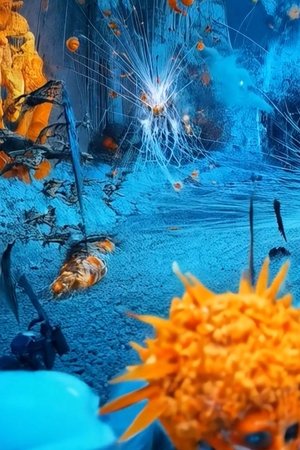
The Hypergaussian Wars is an AI-generated feature-length audiovisual work exploring algorithmic warfare, obsolete media and the transformation of images through repetition, saturation and collapse. Built from thousands of generated images, synthetic landscapes and references to 14th–16th century painting, the film stages a continuous conflict between historical visual culture and contemporary computational systems. Fragments of obsolete video games, ruined architectures, military simulations and post-human figures circulate through increasingly unstable environments. Rather than telling a linear story, the film operates as an image system in which visual excess progressively erodes meaning. The Hypergaussian Wars reflects on memory, obsolescence, artificial intelligence and the persistence of images after their original function has disappeared.
A visual meditation on creative sovereignty in the machine's age. A research-creation short film.
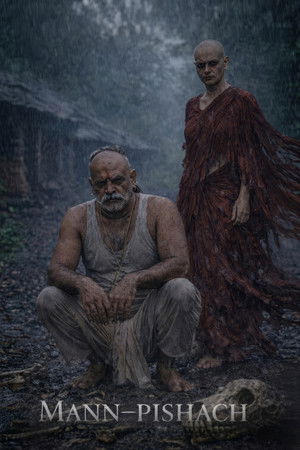
In June 1990, a junior archaeologist travels to the isolated village of Hadamgaon to investigate a mysterious stone dome revealed after a monsoon landslide. As he stays with a young widow and observes the village’s strange customs, sealed homes, deserted streets, and a strict rule to lock indoors before nightfall, he uncovers a buried structure built not to worship but to contain the darkest impulses of the human mind. In Hadamgaon, what is buried does not remain silent for long.
The ultimate faith-based heroic saga: a cosmic war in the heavens where the charismatic, rebellious archangel Lucifer defies God, is hurled into the abyss of Hell, and vows revenge on all creation. From the fiery lake of damnation, Lucifer rises as Satan to seduce humanity’s first parents, Adam and Eve, in the flawless Garden of Eden, triggering the Fall of Man and the loss of Paradise itself. At its core, Paradise Lost asks the question every generation must answer: When faced with reckoning and crisis, do we obey, rebel, or redeem?
An origin story of the nefarious Captain James Hook, conceived as a character study tracing the literary buccaneer’s life from Royal Navy officer to the mutiny that led him to piracy.
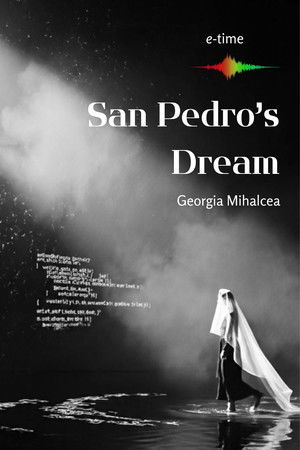
A desperate bureaucrat escapes his failing life by entering a technologically perfected afterlife — only to discover that paradise is a carefully constructed illusion that hides a terrifying truth.
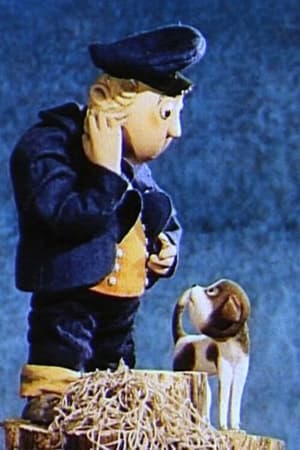
Loopdidoo, the goofy dog, has found the perfect spot to bury his bone. As he starts digging, Loopdidoo uncovers… A treasure chest! Right there! Isn’t he a lucky dog? Not quite… Not only does the treasure chest only contain incomprehensible clues, but the evil pirates, Captain Coco and his sidekicks, have just moored their ship, The Black Egg, off the island, determined to get their hands on the treasure too! Will Loopdidoo and his friends be able to outwit the pirates, rescue Loopdidoo’s cousin and find the treasure?
Animated short film by Phil Mulloy.
In November 1936, a few months since the beginning of the Spanish Civil War, the government of the Second Republic moves to Valencia. In this situation, several Valencian artists and intellectuals decide to build four fallas — satirical plasterboard sculptures created to be burnt — to mock fascism.
军事禁区
1986, in a village in France. A child, Natalia, discovers strange scars on the body of her father, an Argentinean exile.
"Boneca de Ataúro: Searching for the Lost Love" is an animated short film (20mins), in which the main character-a handmade rag doll called Ataurina-while looking for her lost boyfriend Ketilu, takes us into an adventurous trip across the island of Atauro. Throughout the journey, Ataurina encounters several dangers and meets other characters, all handmade puppets born from the same hands at the "Boneca de Atauro" (Atauro's Doll), the renown cooperative of 60+ women based in the coastal village of Vila Maumeta, in the beautiful Atauro island (Timor-Leste).
When desire is stronger than physical strength, and the consequences are immeasurable, we are left with a radical journey of an elderly person who wants to skate in order to feel alive again.
This 1914 drama set in the WWI-era relates a heroic act carried out by a war nurse for the Red Cross (Dora Tschitorina) who has witnessed the death of her husband (Ivan Mosjoukine).
Paper sample books discarded and dumpstered by long-gone businesses undergo a series of sequential experiments in pattern, rhythm, colour and text(ure). A call and response of flickering and lingering, this catalogue of catalogues remembers a tactile economy.
'Tie-dye' film study. Psychedelic patterns and colours mix on the various materials then explode onto the retina. The 16mm material perfectly captures the details of the materials.
A shiny otherworld of holographic reverie pairs dollar store gift bags and haunting resound, unfolding an effervescent melancholy in three parts. Mesmerising RGB bling-bling for the cinema, featuring compositions for bowed vibraphone by Elliot Cole.
Eye candy as a special treat. Let Your Light Shine is the ultimate Spectrum Short film, a photokinetic stroboscopic spectacle for spectacles. A work in the tradition of the absolute animation film of the 1930s, which requires prismatic glasses to achieve the maximum result.
These are the first images shot in the ALN maquis, camera in hand, at the end of 1956 and in 1957. These war images taken in the Aurès-Nementchas are intended to be the basis of a dialogue between French and Algerians for peace in Algeria, by demonstrating the existence of an armed organization close to the people. Three versions of Algeria in Flames are produced: French, German and Arabic. From the end of the editing, the film circulates without any cuts throughout the world, except in France where the first screening takes place in the occupied Sorbonne in 1968. Certain images of the film have circulated and are found in films, in particular Algerian films. Because of the excitement caused by this film, he was forced to go into hiding for 25 months. After the declaration of independence, he founded the first Algerian Audiovisual Center.