Women enter and exit a science fiction author's life over the course of a few years after the author loses the woman he considers his one true love.
"Nostalgia of Everything", the second short film experiment in the Experimental Test trilogy, blends fragments of the director’s personal past with newly filmed material. It features scenes originally shot as memories, never intended for a film and later combined with a few moments captured specifically for this project. As with the first entry in the trilogy (Days, Months, Years and Nothing Else), all visuals were filmed quickly using a phone camera, under natural light, without any formal setup. The monologue was written during post-production, crafted to emotionally resonate with the imagery and the atmosphere shaped by the non-original soundtrack, Mystery Man by Terje Rypdal.
NOSTALGIA
A man lists his love songs CD in a used group, but why is he letting it go? What story lies behind this sale
An aging screen icon gets lured into accepting an award at a rinky-dink film festival in Nashville, Tenn., sending him on a hilarious fish-out-of-water adventure and an unexpectedly poignant journey into his past.
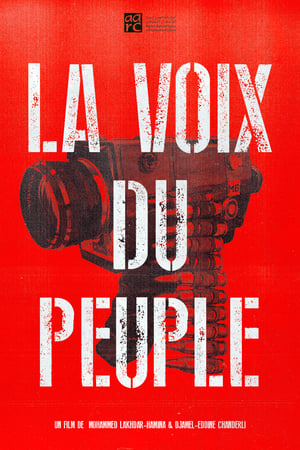
These are the first images shot in the ALN maquis, camera in hand, at the end of 1956 and in 1957. These war images taken in the Aurès-Nementchas are intended to be the basis of a dialogue between French and Algerians for peace in Algeria, by demonstrating the existence of an armed organization close to the people. Three versions of Algeria in Flames are produced: French, German and Arabic. From the end of the editing, the film circulates without any cuts throughout the world, except in France where the first screening takes place in the occupied Sorbonne in 1968. Certain images of the film have circulated and are found in films, in particular Algerian films. Because of the excitement caused by this film, he was forced to go into hiding for 25 months. After the declaration of independence, he founded the first Algerian Audiovisual Center.
Two deaf and dumb children. She is the daughter of an American Oil engineer. He is the son of an Algerian farmer. They meet and manage to communicate, transcending all the cultural barriers that separate them.
Closing night at a rural bar gets complicated when a blizzard traps a motley crew of misfits overnight.
As a boy, Raoul is reared by an Arab tribe in Algerian Sahara. Years later, as a refined Europeanized gentleman, he falls in love with Barbara, an officer's daughter, who rejects him when she discovers his background. Affecting a raid, he captures her and then secretly buys her at a slave auction. When she is rescued by French troops, however, his ancestry is established and they find happiness together.
Late 19th century Japan: a studio photographer who always captures his clients’ best smile. One day he tries to coax a smile out of a little girl, but… A nostalgic tale of a relationship that transcends wars and disasters.
“La Zerda and the songs of oblivion” (1982) is one of only two films made by the Algerian novelist Assia Djebar, with “La Nouba des femmes du mont Chenoua” (1977). Powerful poetic essay based on archives, in which Assia Djebar – in collaboration with the poet Malek Alloula and the composer Ahmed Essyad – deconstructs the French colonial propaganda of the Pathé-Gaumont newsreels from 1912 to 1942, to reveal the signs of revolt among the subjugated North African population. Through the reassembly of these propaganda images, Djebar recovers the history of the Zerda ceremonies, suggesting that the power and mysticism of this tradition were obliterated and erased by the predatory voyeurism of the colonial gaze. This very gaze is thus subverted and a hidden tradition of resistance and struggle is revealed, against any exoticizing and orientalist temptation.
An emblematic figure in the defense of Berber culture, Mouloud Mammeri (1917-1989) experienced numerous confrontations with the authorities in Algeria, including the suspension in 1973 of the teaching of Berber at university and the ban of the conference he was to deliver on March 10, 1980 at the University of Tizi Ouzou on ancient Kabyle poetry... which will be the detonator of the powerful and harshly repressed cultural demands movement of April 1980, also called the Berber Spring. Mouloud Mammeri is one of the "historians" of French-speaking Algerian literature from the middle of the last century who, through his pen, gave back the soul to a country by giving it back its voice.
The whole clique of Cruchot's police station is retired. Now he lives with his rich wife in her castle - and is bored almost to death. He fights with the butler, because he isn't even allowed to do the simple works. But when one of the clique suffers from amnesia after an accident, all of the others reunite and kidnap him, to take him on a tour to their old working places and through their memories. In their old uniforms they turn St. Tropez upside down.
Docufiction about Mouloud Feraoun, an author who upholds the great values of the Universal Man. It is in the name of man that Feraoun stands up against injustice. It is in the name of man that he is tormented by war. Feraoun is a solitary creator who suffers to the point of wishing for liberating madness. It is through his work that the portrait of a humble and discreet author, a talented writer and convictions emerges. Most of the time, I let him talk about himself in simple and fair words. I compile his moments of hope, worry, dreams and fears. During all my research, a generous and good Mouloud Feraoun stood out to me who did not hesitate to expose an inhuman and shameful colonial system. His clear and straightforward voice echoes the cry of a people from whom he has never separated.
In Algeria in 1954, in a village in the Aurès region, poverty reigns over peasants enslaved by colonial administrators and Algerian landowners. Noua, in love with the son of a peasant dispossessed of his land, must be sold to a wealthy landowner.
A legend that begins with the magic words: "Once upon a time." Once upon a time, there was a little girl nicknamed Mimezrane for her beauty and especially for her beautiful braids. She was beautiful but had strangely sad eyes. She was orphaned at a very young age. Her boyfriend and confidant was Hennouche, a mischievous little boy with big black eyes. They lived together a carefree childhood. Time passed. They grew up. Hennouche became a goat herder with a melodious voice; Mimezrane, for her part, became a washerwoman and, on occasion, a water carrier. Both accepted their fate without ever complaining. Yet, even in her poverty, Mimezrane was the most beautiful of all.
Juliet Forrest is convinced that the reported death of her father in a mountain car crash was no accident. Her father was a prominent cheese scientist working on a secret recipe. To prove it was murder, she enlists the services of private eye Rigby Reardon. He finds a slip of paper containing a list of people who are 'The Friends and Enemies of Carlotta'.
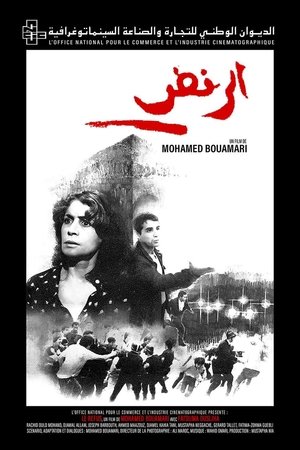
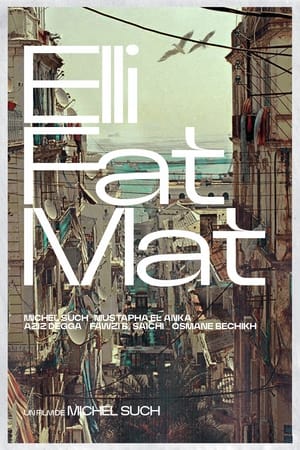
In Algiers in 1993, while the civil war is starting, Mrs Osmane's tenants have to endure her bad temper. Her husband left her and the fear to lose her respectability haunt her. The former member of the Resistance during the Independence War persists in controlling the slightest moves of the households rather than struggle against her own frustrations. Learning her daughter is in love, the possibility of finding herself alone will push her to the limit: The symbolical Mrs Osmane "harem" is about to collapse.
Following a hard break up, Cesar feels nothing. On the day of his 30th birthday, he asks one thing and one thing only, from the people he meets: their testimonial on unconditional love in front of his camera. Throughout his interviews the young artist tries to understand a question that haunts him: how to love?
The comic mishaps and adventures of a young boy named Ralph, trying to convince his parents, teachers, and Santa that a Red Ryder B.B. gun really is the perfect Christmas gift for the 1940s.