A murderer terrorizes the city of Buenos Aires by attacking on the streets on rainy days and always leaving a card with the name "S. López". A local boarding house full of eccentrics appears to house a possible suspect.
Andrés waits at the wrong bus stop, there he meets Lucía who offers to help him search for the correct stop. Together, they take a journey not only through the beautiful and melancholic city of Córdoba at night, but also through their thoughts and ideas about the city, people, music, and life.
Experimental documentary short starring Batato Barea and Peter Pank, filmed in July 1991
A hostage situation gone bad. Jesús, an amateur thief, holds prisoner a group of clients. But nothing is what it seems. Behind the gates of the drugstore the story will unfold in two times. On one side, to the inevitable end: the police will shoot their way inn. And on the other side, to the past, unveiling how Jesús got caught in this situation, where the hostages are not the real victims, but something more sinister. Retracing step by step, reveling the truth, playing with the prejudices and beliefs of the audience on racial hate, social prejudices, and the intolerance. How far are we willing to go to survive?
Remembering his old memories, he will leave a photograph in every place where he was happy.
Sebastian, a man in his thirties, works a series of temporary jobs and embraces love at every opportunity. He transforms, through a series of short encounters, as the world flirts with possible apocalypse.
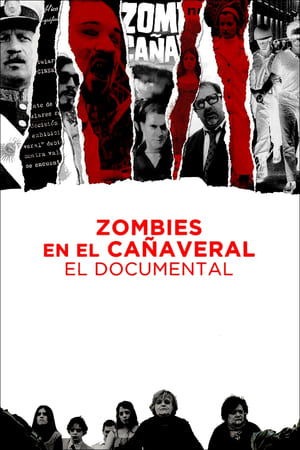
Tucumán, Argentina, 1965. Three years before George A. Romero's Night of the Living Dead was released, director Ofelio Linares Montt shot Zombies in the Sugar Cane Field, which turned out to be both a horror film and a political statement. It was a success in the US, but could not be shown in Argentina due to Juan Carlos Onganía's dictatorship, and was eventually lost. Writer and researcher Luciano Saracino embarks on the search for the origins of this cursed work.
Based on a discursive analysis of historical right-wing forces in Argentina and around the world, the objective is to situate the current Argentine government in the context of a resurgence of reactionary thinking, as well as to warn of the country's potential direction.
On the anniversary of their mother's death, brothers Enzo and Franco find a box with many old photographs. As one of the brothers is blind, the other will tell him what is in the photographs.
Buenos Aires, 1994. Memé Tizou is a famous vedette whose name shines brightly on the marquee of Corrientes Avenue, at least until the show’s producer, Armando, announces the decision to hire a younger woman. This decision leaves Memé confronted with a challenging question: what is she capable of doing to prove her place belongs on stage?
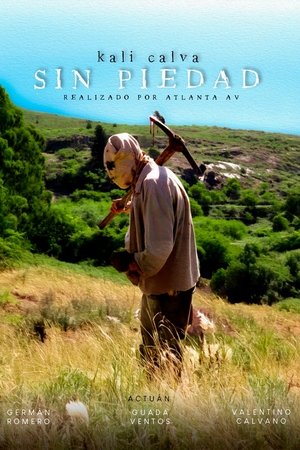
Under the relentless sun, a killer stalks through the mountains, where the innocence of a young couple becomes prey. With no shadows to hide their fate, the hunt is a macabre game in broad daylight, where fear is not hidden in the darkness, but burns with the rawness of the unperturbed noon.
Deep in the forest a group of five friends wander around like a lion herd. Lost in their word games, they play and seduce each other while going back and forth into adulthood territory, in a desperate search to avoid their already written story.
Out of work, Diego has only one goal: to return to live in the Capital no matter the cost. After leaving his family in Delta del Tigre, he becomes an obsessive salesman inside a building's showroom: a perfect model that will lead him to experience absurd situations on the verge of madness.
Ceremonia secreta
It is the story of Eleanor, a good housewife who lives with her husband, Fernando, and their two children. Deeply loves her husband and does not question the reciprocity of love and fidelity. One day, circumstantially, discovers her husband is cheating. Leonor emotionally feels betrayed and realizes that his world, based on a lie, has collapsed like a house of cards. With more fear than conviction, leaving the house, leaving little signs with instructions for their march and trust their children to the care of her husband.
In the 1920s Horacio Coppola studied modern languages, photography and film, set up the first cinema club in Buenos Aires, and travelled to Italy, France, Spain and Germany, where he trained with the Bauhaus photographer Walter Peterhans. After visiting Vienna, Budapest and Prague, still hotbeds of secessionist art, Coppola returned to Berlin and made the experimental film Traum (Dream, 1933) with the theatre director Walter Auerbach, a nice short influenced by the French & German surrealists.
This documentary is a portrait made in Mexico by a group of Argentine exiles, directed by the painter Nicolás Amoroso.
SANTA FE ROCK
For many years, Buenos Aires, Argentina, was one of the best places in the world for a film buff; but from the mid-sixties onwards, successive authoritarian governments shaped the will of the spectators, dictating what could be seen and what could not, so that the true cinema lovers, in their desire to watch films, had no choice but to embark on the most extraordinary and strange adventures.
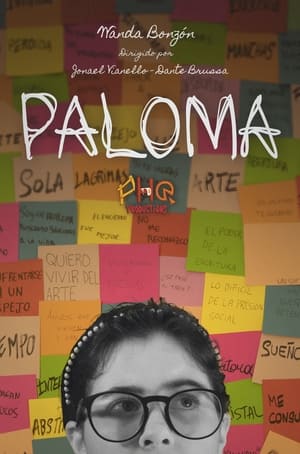
Paloma is a young adult who finds herself living in automatic mode, following every imposed social norm, already working in an office and living alone in a studio apartment. Her daily life passes fleetingly and with little taste, until one night, after a long day of work, she receives an email titled FOR MY FUTURE SELF, which prompts her to change her life.