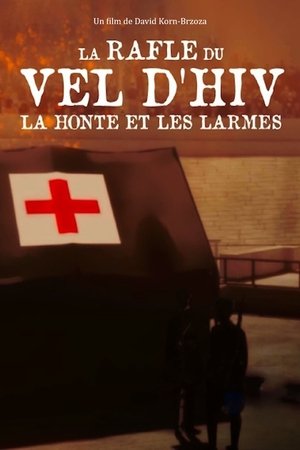
In 1942, more than 8,000 Jews were arrested on 16 and 17 July and sent to the Vélodrome d'Hiver sports center in the 15th district, a stone's throw from the Eiffel Tower, before being deported. The expression "Vel d'Hiv round-up" has become part of our collective memory, to the point of becoming the main memorial reference point for France during the dark years. Based on research carried out in unpublished or rarely explored archives, this film retraces the history of this roundup as experienced by hunted Jews and police trackers, from its planning in the Vichy offices to its hour-by-hour unfolding in the streets of Paris.
Surviving against all odds. In 1940, Benjamin Orenstein, just a teenager, was sent to his first concentration camp in Poland. It was the beginning of a journey that would mark him for life. After years of silence, he now bears witness to one of the darkest chapters in history.
The Holocaust began with the indiscriminate mass shootings by the Einsatzgruppen in the bloodlands of Eastern Europe and was perfected in the gas chambers at Auschwitz. “Bullets And Blueberries” explores the motives, methods and madness of the perpetrators, using never-before-seen images captured by the killers themselves — images that fully capture the banality of evil.
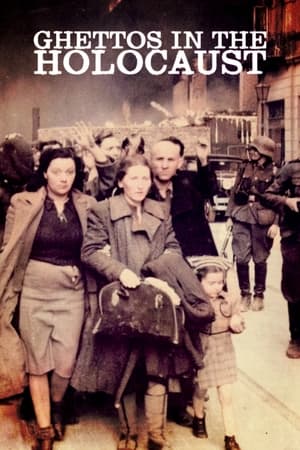
The gruesome story of the Jewish ghettos during the Nazi occupation of Eastern Europe in the dark days of World War II, based on the records written by their inhabitants, who bear witness to the human tragedy of the Shoah; but also to an indomitable will to live.
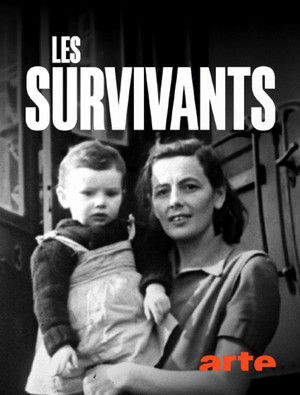
Les survivants, l'impossible départ après la Shoah
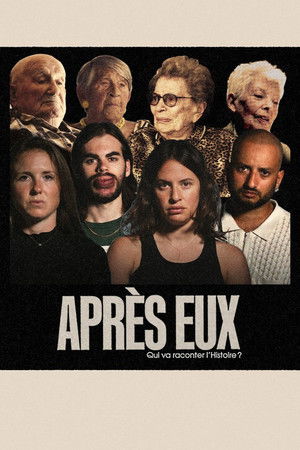
French documentary that explores how the third generation deals with the memory of the Holocaust. It follows grandchildren of survivors—Camille, Frankie, Théo, and Mathis—as they inherit family secrets and the responsibility of bearing witness to this trauma
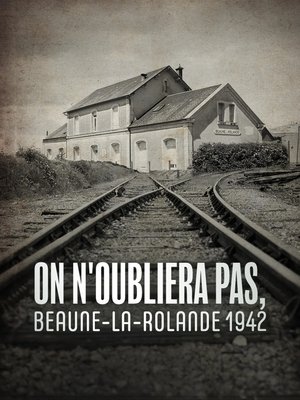
Nothing predisposed a rural commune in the Loiret region such as Beaune-la-Rolande to embody the height of the Holocaust in France. Yet it was there that a camp was set up where Jewish families were interned, separated, their children abandoned to their fate before being deported alone to their deaths. Long hidden from view, more than eighty years after the events, this tragedy remains a sensitive subject that can still divide opinion on what should or should not be done to ensure it is not forgotten. Following personal journeys and collective commitments, this film meets activists, elected officials, and teachers who are committed to helping a region recover its memory and reconnect with its history, however painful it may be.
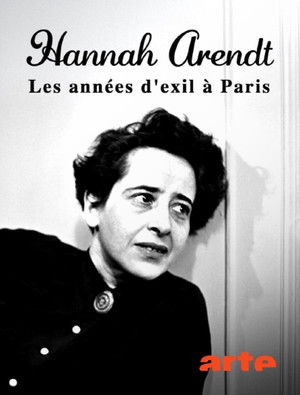
Hannah Arendt's views on Jewish identity, the Israel-Palestine conflict, and authoritarian-totalitarian systems seem more relevant than ever. Together with biographer Thomas Meyer, this documentary takes us back to the time of her exile in Paris. It was there, on the banks of the Seine, that she laid the foundations for her later works, which would bring her international renown.
On May 20, 2017, Jérôme Laronze, a 37-year-old cattle farmer, was shot dead by gendarmes at the end of a nine-day run. In conflict with government services, the organic farmer, spokesman for the Confédération paysanne de Saône-et-Loire, had evaded yet another health inspection and, during his escape, had tried to alert people to the malaise in his profession. The news of his death came as a bombshell in a farming world already plunged into mourning by a wave of suicides. How did it come to this? While their incomes depend almost exclusively on European subsidies - which favor large farms - farmers must, in return, comply with very strict standards.
Obsessively referring to the traumas and wounds that the Spanish civil war (1936-39) and Franco's dictatorship (1939-75) caused in their day no longer serves to explain the impassable abyss of incomprehension and hatred that the abject policies and radical positions adopted by both the right and the left in recent decades have opened up before the citizens of a country that is barely known beyond hackneyed cultural clichés.
Natural disasters are now a reality even in Central Europe, which was previously thought to be safe - as the Ahr floods in 2021 made terrifyingly clear. One year later, the film reconstructs the events of July 14-15 in detail based on the stories of the people who experienced terrible things on the ground that night.
By invading this "state fiction" that is, according to him, Ukraine, Vladimir Putin takes up the motto of the tsars: "sovereign of all Russia, the great, the small and the white". The first would have Moscow as its capital, the second, kyiv, and the last, Minsk.
Aides à domicile, les temps modestes
The Last Straw is a film documenting the very last live poetry reading given by Charles Bukowski at The Sweetwater, a music club in Redondo Beach, California on March 31, 1980
Homer's Odyssey meets King of Kong as two über geeks try to collect all 678 officially licensed Nintendo Entertainment System game cartridges in 30 days, WITHOUT the aid of online purchasing.
Is the story of a generation of thieves who achieved their greatest victories in the sixties; their distinctive code of ethics, the various categories of delinquents inhabiting the citys streets, their alliances with high ranking police officials that allowed them to operate, the betrayals that followed, and the price they ended up paying.
Nikola Tesla transformed the world with technology that was ahead of its time. Claiming to be in contact with aliens, he was ultimately prevented from pursuing his greatest inventions by a ruling elite concerned he would derail their systems of mass control.
This short starts out as a documentary. In a dramatization, Eadward Muybridge's photographic experiments prove that when a horse gallops, there are times when all four of the animal's feet are off the ground. We are then brought to the present, where MGM directors and their cinematographers are shown working on current productions. The film closes with closeups of the studio's major stars and a tribute to the studio's actors who have joined the armed forces.
The feature-length documentary "Forgotten Scares" goes back to the birth of Flemish horror in the '70s and shines a bright light on the future of horror in Belgium. The viewer gets a chance to discover long forgotten - and even unfinished - genre gems and learn in-depth info about underrated 'splatter and gore'-fests, post-apocalyptic movies, slasher-films, nazisploitation, women-in-prison and other fantastical Flemish genre benders through the eyes of the directors, producers, composers, principal actors and genre experts. "Forgotten Scares" is illustrated by rare behind the scene footage, classic film scenes, production stills, promotional art and even never before seen videos out of the vaults of the filmmakers.
In 1948, French singer Charles Aznavour (1924-2018) receives a Paillard Bolex, his first camera. Until 1982, he will shoot hours of footage, his filmed diary. Wherever he goes, he carries his camera with him. He films his life and lives as he films: places, moments, friends, loves, misfortunes.