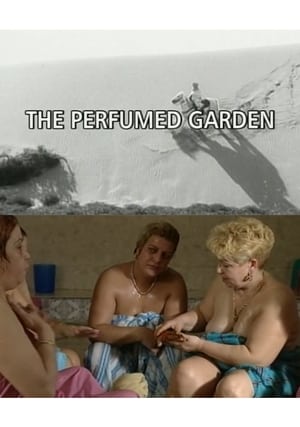
THE PERFUMED GARDEN is an exploration of the myths and realities of sensuality and sexuality in Arab society, a world of taboos and of erotic literature. Through interviews with men and women of all ages, classes, and sexual orientation, the film lifts a corner of the veil that usually shrouds discussion of this subject in the Arab world. Made by an Algerian-French woman director, the film begins by looking at the record of a more permissive history, and ends with the experiences of contemporary lovers from mixed backgrounds. It examines the personal issues raised by the desire for pleasure, amidst societal pressures for chastity and virginity. The film discusses pre-marital sex, courtship and marriage, familial pressures, private vs. public spaces, social taboos (and the desire to break them), and issues of language.
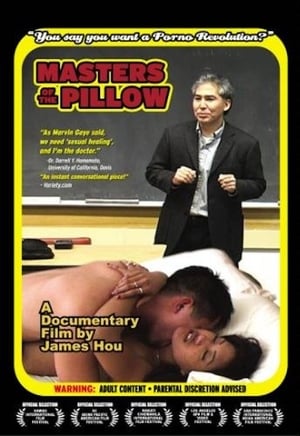
Traces the making of UC-Davis professor Darrell Hamamoto's first-ever Asian American porn movie ("Skin on Skin") from planning to production. Hou interviews filmmakers Justin Lin ("Better Luck Tomorrow") and Eric Byler ("Charlotte Sometimes"), professor Elaine Kim and playwright David Henry Hwang to get at whether Asian America truly needs its own "porno practices" as a way of decolonizing the community's collective sexual imaginations and confronting how sexuality and masculinity are treated in the Asian American community.
Preschool to Prison is a compelling examination of how the United States public school system is built and operated like prisons. Zero-tolerance policies are used to justify suspension and arrests that set up a pathway to send children of color and children with special needs from school to prison. Children are being suspended, restrained, dragged, physically manhandled, and subsequently arrested for minor offenses such as throwing candy on a school bus. These personal accounts from people affected by the school-to-prison pipeline give riveting tales about the generational impact on society.
A look at the Brazilian black movement between 1977 and 1988, going by the relationship between Brazil and Africa.
In this daring follow-up to The History of White People in America, comedian Martin Mull takes us on an in-depth look at such topics as White Religion, White Stress, White Politics, and White Crime.
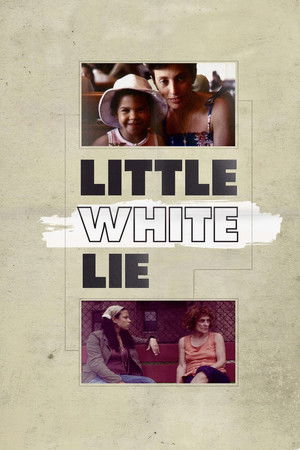
Lacey Schwartz grew up in a typical upper-middle-class Jewish household in Woodstock, NY, with loving parents and a strong sense of her Jewish identity - despite the open questions from those around her about how a white girl could have such dark skin. She believes her family's explanation that her looks were inherited from her dark-skinned Sicilian grandfather. But when her parents abruptly split, her gut starts to tell her something different. At age of 18, she finally confronts her mother and learns the truth: her biological father was not the man who raised her, but a black man named Rodney with whom her mother had had an affair.
Twenty-six years after her parents' dramatic break-up, film director Nicoline Skotte takes on the task of revisiting her childhood trauma by inviting her parents to participate in an investigation of shared family dynamics. Memories of their common past seem to be selectively edited by each individual. What led to this dramatic outcome and how did two such incompatible people ever end up together? Nicoline dives into the messy family relations, seeking to uncover what has never been said.
Edward Said's book Orientalism has been profoundly influential in a diverse range of disciplines since its publication in 1978. In this engaging and lavishly illustrated interview he talks about the context within which the book was conceived, its main themes, and how its original thesis relates to the contemporary understanding of "the Orient" as represented in the mass media. "That's the power of the discourse of Orientalism. If you're thinking about people and Islam, and about that part of the world, those are the words you constantly have to use. To think past it, to go beyond it, not to use it, is virtually impossible, because there is no knowledge that isn't codified in this way about that part of the world." -Edward Said
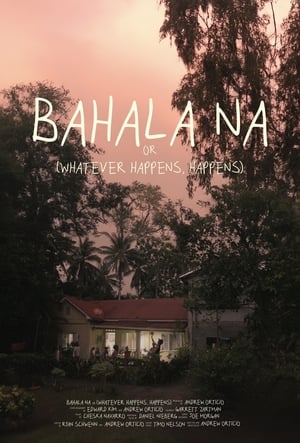
After learning to 'write what you know,' in film school, Half-Filipino and Half-White aspiring filmmaker Andrew Orticio travels back to his father's village in the Philippines to understand his mixed identity.
Con Traje y Sin Zapatos
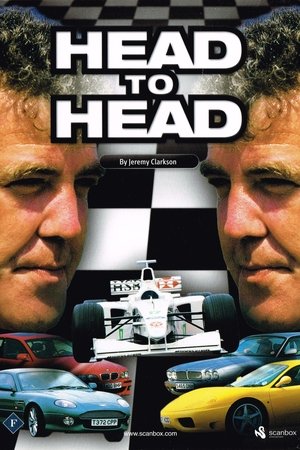
Which is faster round a racetrack - a Porsche 911 or the Yamaha R1? Would you rather have a Ferrari 360 Modena or the new Aston Martin DB7 Vantage? Which is the best road-going rocketship - the BMW M5 with Tiff Needell at the wheel or JC’s Jaguar XJR? Which of the new Japanese super tech cars is best? the Evo6 or the 22b? PLUS grimace as JC shows a Hyundai what it’s like to be eaten, marvel at the Lamborghini LM002 as it wreaks havoc on London’s traffic and check out the greatest race Silverstone has ever seen - Johnny Herbert in his Stewart Ford and Colin McRae in his full rally spec Focus...versus JC in a Cougar. (NEVER BEFORE SEEN ON TV)
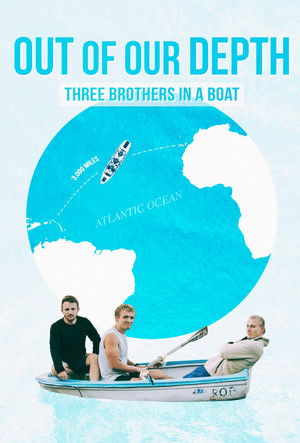
Three brothers with no rowing experience take on the world's toughest row: a 3,000 mile race across the Atlantic with 50ft waves, exhaustion, seasickness and your two siblings - how hard can it be?
Documentary covering the trailblazing career and tragically short life of Laurie Cunningham, the English football star of the '70s and '80s.
After four years away, Huiju returns home to South Korea. Exchanges with her loved ones are awkward and clumsy. Huiju turns once again to her familiar rituals: pruning the trees, preparing a sauce, tying a braid.
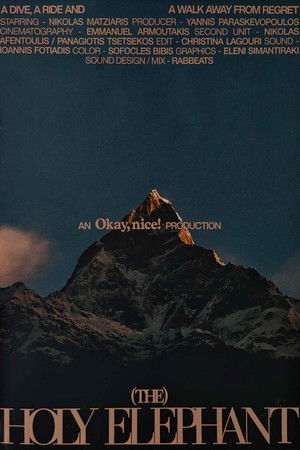
(The) Holy Elephant
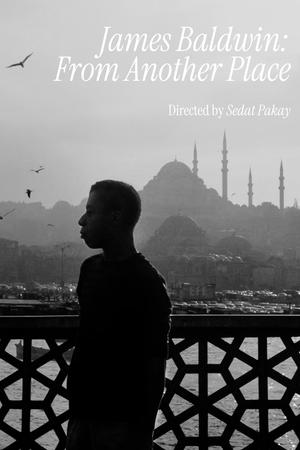
Showcasing three short films by American writer James Baldwin, wherein he muses about race, sexuality and civil rights, among other topics, in Istanbul, Paris and Great Britain.
This documentary records the extraordinary determination of Jungle Jim Hunter to be the best ski racer in the world. We witness his grueling exercise routines, pre-race tensions, trials and deep religious faith of this dedicated athlete.
Coming back during Winter, Alex Powell explores both the places and personal connections found in his hometown and how they've changed. “Guide to a Midwest Hometown” explores what makes the barren places at home feel sentimental and special, and the good and bad feelings that come when being back home. Inspired by "How To With John Wilson".
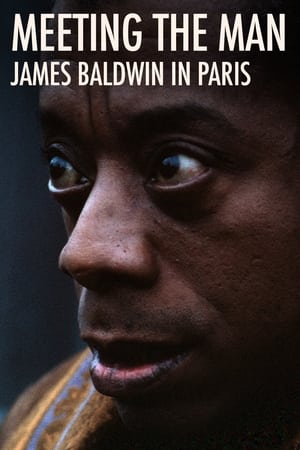
In 1970, a British film crew set out to make a straightforward literary portrait of James Baldwin set in Paris, insisting on setting aside his political activism. Baldwin bristled at their questions, and the result is a fascinating, confrontational, often uncomfortable butting of heads between the filmmakers and their subject, in which the author visits the Bastille and other Parisian landmarks and reflects on revolution, colonialism, and what it means to be a Black expatriate in Europe.
Destroyed in a dramatic and highly-publicized implosion, the Pruitt-Igoe public housing complex has become a widespread symbol of failure amongst architects, politicians and policy makers. The Pruitt-Igoe Myth explores the social, economic and legislative issues that led to the decline of conventional public housing in America, and the city centers in which they resided, while tracing the personal and poignant narratives of several of the project's residents. In the post-War years, the American city changed in ways that made it unrecognizable from a generation earlier, privileging some and leaving others in its wake. The next time the city changes, remember Pruitt-Igoe.