Wounded Civil War soldier John Dunbar tries to commit suicide—and becomes a hero instead. As a reward, he's assigned to his dream post, a remote junction on the Western frontier, and soon makes unlikely friends with the local Sioux tribe.
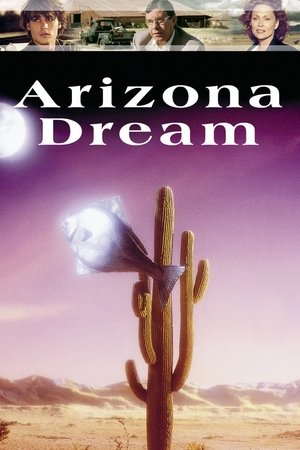
An Inuit hunter races his sled home with a fresh-caught halibut. This fish pervades the entire film, in real and imaginary form. Meanwhile, Axel tags fish in New York as a naturalist's gofer. He's happy there, but a messenger arrives to bring him to Arizona for his uncle's wedding. It's a ruse to get Axel into the family business. In Arizona, Axel meets two odd women: vivacious, needy, and plagued by neuroses and familial discord. He gets romantically involved with one, while the other, rich but depressed, plays accordion tunes to a gaggle of pet turtles.
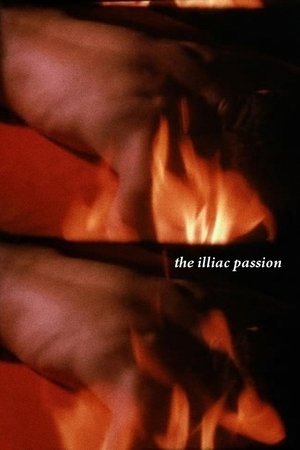
Prometheus, on an Odyssean journey, crosses the Brooklyn Bridge in search of the characters of his imagination. After meeting the Muse, he proceeds to the "forest." There, under an apple tree, he communes with his selves, represented by celebrated personages from the New York "underground scene" who appear as modern correlatives to the figures of Greek mythology. The filmmaker, who narrates the situations with a translation of Aeschylus' Prometheus Bound, finds the personalities of his characters to have a timeless universality.
Young Haru rescues a cat from being run over, but soon learns it's no ordinary feline; it happens to be the Prince of the Cats.
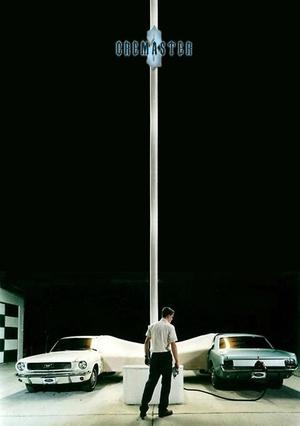
CREMASTER 2 is rendered as a gothic Western that introduces conflict into the system. On the biological level it corresponds to the phase of fetal development during which sexual division begins. In Matthew Barney's abstraction of this process, the system resists partition and tries to remain in the state of equilibrium imagined in Cremaster 1.
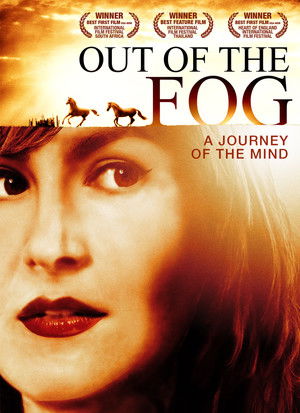
A geologist, Sarah Portico, travels to a remote island to investigate an environmental mystery. Upon her arrival, she experiences strange visions, dreams that seem to predict her future, and eventually force her to confront her painful past. As Sarah uncovers the cause of the environmental mystery, she discovers her true self. Out of the Fog is an experiential film about emotional healing and self-discovery.
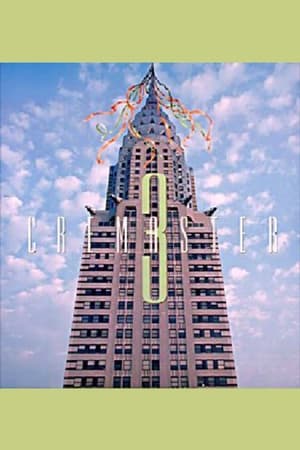
CREMASTER 3 (2002) is set in New York City and narrates the construction of the Chrysler Building, which is in itself a character - host to inner, antagonistic forces at play for access to the process of (spiritual) transcendence. These factions find form in the struggle between Hiram Abiff or the Architect ...
A musical audiovisual journey in four parts. A young man finds himself unexpectedly taking an audiovisual odyssey into a world of surreality, slowly recounting his memories, revealing the puzzle pieces that led him to where he is, and maybe how he can get out.
In this non-canon pilot to the animated series 'Infinity Train', Tulip must learn to set her personal interests aside to make her way through a mysterious train and help the king of all corgis save his people.
A short film about self-love and self-discovery.
Ben Tyler has been diagnosed with cancer. With a grim chance of survival in the best case scenario even if he immediately begins treatment, he instead decides to take a motorcycle trip from Toronto through the Canadian prairies to British Columbia.
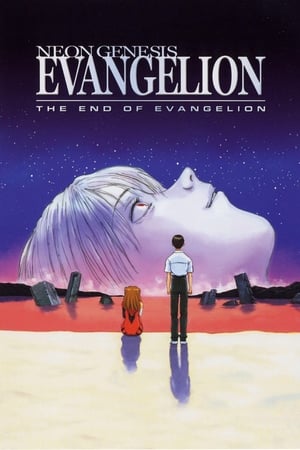
SEELE orders an all-out attack on NERV, aiming to destroy the Evas before Gendo can advance his own plans for the Human Instrumentality Project. Shinji is pushed to the limits of his sanity as he is forced to decide the fate of humanity.
With input from actor and writer Jan Hlobil, director and cinematographer Rene Smaal presents a film in the true surrealist tradition, in the sense that only 'found' elements were used, and that it defies interpretation based on ordinary cause-and-effect time sequence.
We are first presented a cobweb castle, filled with the haunting doubts of the young protagonist. Spirits appear on the screen and are heard on the soundtrack. Gradually a female guide emerges and escorts the young man into an antechamber to another (and possibly higher) world.
What does the energy harnessed through orgasm have to do with the state of communist Yugoslavia circa 1971? Only counterculture filmmaker extraordinaire Dušan Makavejev has the answers (or the questions). His surreal documentary-fiction collision begins as an investigation into the life and work of controversial psychologist and philosopher Wilhelm Reich and then explodes into a free-form narrative of a beautiful young Slavic girl’s sexual liberation.
In this fragile yet frightening poetic fantasy set against a dark industrial landscape, a woman sits knitting on the porch of her home when a man appears and takes the knitting from her.
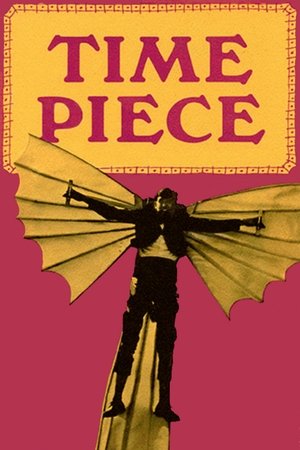
Dislocation in time, time signatures, time as a philosophical concept, and slavery to time are some of the themes touched upon in this 9-minute experimental film, which was written, directed, and produced by Jim Henson. Screened for the first time at the Museum of Modern Art in May of 1965, "Time Piece" enjoyed an eighteen-month run at one Manhattan movie theater and was nominated for an Academy Award for Outstanding Short Subject.
Mild-mannered computer consultant Norman Neale has two great loves in this cruel world: Comic books and his office's effervescent main receptionist, Andrea Hicks. Norman spends his days dreaming of Andrea from the isolation of his cubicle and his nights dreaming of fighting crime from the solitude of his apartment. Then one fateful day Norman discovers that a fellow co-worker, Victor Ventura, a swaggering, pretty-boy salesman, has slight telekinetic abilities beyond his understanding. After discussing his mind-blowing discovery with his only friend Chuck, a know-it-all comic book store owner, Norman comes to the outlandish conclusion that he should train Victor to become a real-life superhero by helping him refine and expand his extraordinary ability.
Under the impetus of the 75th anniversary of the bamboo top-handle bags, the House presents a contemporary retelling of an ancient Japanese story entitled ‘Taketori Monogatari (The Tale of the Bamboo Cutter).’ Makoto Nagahisa stages the plot of finding oneself, along with true love, in a Tokyo betwixt and between reality and a dream. Dressed in looks from the Gucci Love Parade collection, Hikari Mitsushima, Aoi Yamada, and Eita Nagayama star in the story shedding a new light on the Gucci Bamboo 1947 and Gucci Diana Beloved lines.
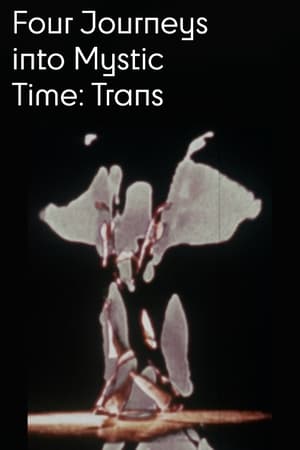
Part of the larger filmic Four Journeys Into Mystic Time, in this work director Shirley Clarke makes use of a dancer’s body not only as the primary performer, but also as a canvas on which to paint projected images. Further enhanced by editing and effective use of shadows, the film is a transformative experience.