Ten years after the film Home (2009), Yann Arthus-Bertrand looks back, with Legacy, on his life and fifty years of commitment. It's his most personal film. The photographer and director tells the story of nature and man. He also reveals a suffering planet and the ecological damage caused by man. He finally invites us to reconcile with nature and proposes several solutions
This planet of ours is Two Worlds: one of land and one of the ocean. This fascinating program explores a pair of marine animals, the manatee and the lion fish, and documents their interactions with each other, as well as with their habitat. We journey to an alien environment where man goes, at his peril, to meet the creatures which make this planet one. This is a feature length documentary edited together from episodes of the inspiring documentary series for physical release.
Kenya's Musiara marsh is prime lion country. Lush tall grasses, scrubby brush, and an abundance of watering holes attract a vast array of big game and smaller wildlife to this lowland valley. Yet during the lean winter months, before the great migration of wildebeest and zebra, the resident lions live on the edge of starvation. Everything rides on the success or failure of a few critical hunts. The fate of the young cubs hangs in the balance as the bond that holds the pride together is stretched to the limit. Now enter the domain of Kali the lion and her pride as they face the daily challenge to survive on the African plains
After an explosive and fortuitous encounter, a male hyena and a leopard join forces and create a peculiar hunting alliance.
The billfish are the biggest, fastest, and most dangerous gamefish in the sea. All have captured man's imagination like few other creatures, whether it's the graceful sailfish, the menacing swordfish or queen of them all, the marlin, immortalized by Hemingway in 'The Old Man and the Sea'. Marine biologist and film-maker Rick Rosenthal has travelled three oceans in his attempt to capture them all on film, and in doing so has become a passionate champion for these endangered yet little-known ocean giants.
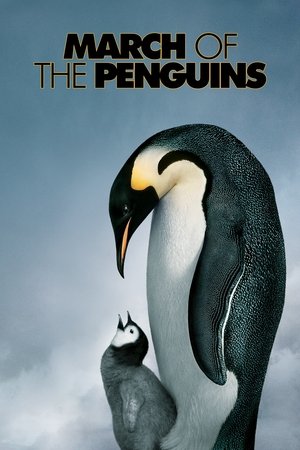
Every year, thousands of Antarctica's emperor penguins make an astonishing journey to breed their young. They walk, marching day and night in single file 70 miles into the darkest, driest and coldest continent on Earth. This amazing, true-life tale is touched with humour and alive with thrills. Breathtaking photography captures the transcendent beauty and staggering drama of devoted parent penguins who, in the fierce polar winter, take turns guarding their egg and trekking to the ocean in search of food. Predators hunt them, storms lash them. But the safety of their adorable chicks makes it all worthwhile. So follow the leader... to adventure!!
Cats are cuddly felines and lovely pets, but also highly evolved predators that hunt huge amounts of small mammals, birds and reptiles; perfect killing machines that threaten delicate ecosystems around the world.
This heart-warming documentary shows true stories about the unconditional loyalty between humans and dogs and investigates our best friends' remarkable intelligence, their outstanding sensory abilities and emotional bond to us humans.
Fascination Coral Reef
Follow ocean legend Sylvia Earle, renowned underwater National Geographic photographer Brian Skerry, writer Max Kennedy and their crew of teenage aquanauts on a year-long quest to deploy science and photography to inspire President Obama to establish new Blue Parks to protect essential habitats across an unseen American Wilderness.
Dive into a world of ice and freezing waters to discover a little-known yet iconic marine mammal, the Beluga. Today, this fascinating white Whale that lives in Arctic and sub-Arctic waters is once again in decline, especially in the St. Lawrence River. Is it due to the loss of sea ice? The growth of ocean shipping? Noise? Contamination? Genetics? Alongside world-renowned researchers, this documentary in 4K takes us on a major scientific quest that sheds new light on Beluga populations which are fighting for their survival. Over four seasons, we share the daily life of an international group of scientists who study this extraordinary species in its native habitat to better comprehend their existence and understand why they are endangered.
Askania-Nova is the largest steppe wildlife sanctuary in Europe. It is located in south part of Ukraine, not far from Crimea peninsula. In order to underline this unique beauty we created a documentary musical film about life of animals and people in wildlife sanctuary of Askania-Nova. The movie reveals stories of a three protagonists, whose destinies were entangled because of wildlife sanctuary.
Allegations of a significant elephant-poaching problem in Botswana have sparked a political row between the president and his predecessor. As Alastair Leithead reports, the issue has ignited a national debate over whether there are too many elephants and whether hunting should be re-introduced.
BBC The Natural World. In 2004, a team from the Planet Earth series captured the first ever film of a wild snow leopard in the mountains of Pakistan. For Nisar Malik, who led the expedition, these images sparked a passion that compelled him to return. With cameraman Mark Smith, he spent two years documenting the snow leopard's daily life, finally lifting the veil on the most elusive of all cats.
Photographer Ami Vitale follows a global effort to save the northern white rhinoceros from extinction. With only two surviving females, a team of scientists races to create the world’s first surrogate rhino pregnancy. The fate of the species now rests in the hands of the teams who are devoted to saving it in this hopeful, urgent film
Follow a three-month-old baby whale on a magical journey down one of the Earth’s great ocean highways to discover the incredible world of ocean currents. She will never know it, but as she swims with the flow of the current, her story becomes inexorably connected to our own. Ocean currents are hidden marine rivers that flow around the Earth. They are responsible for the fish we eat, the rain that feeds our crops, the snow that covers our mountains - even the air we breathe, and they have been helping to keep the temperature of our planet just right for life for millions of years. As our young whale goes with the flow of the current on a great migration from the warm tropics to the frozen ice floes of Antarctica, she meets the curious creatures that call the current home.
Bacteria, viruses, but also fungi, algae, pollen, and even insects: micro-organisms thrive and circulate constantly in our sky. How can so many living beings find their way into the air and circulate? How do they survive? And what influence do they have on our lives and the living world? Biodiversity, health, climate: it is only recently that scientists have begun to understand how this discreet aerial "plankton" affects our lives and our ecosystem. But despite their many virtues, some of these micro-organisms are now threatened by human activities. With the help of experts and 3D models, this scientific investigation plunges us into the heart of a still mysterious world, and reveals the diversity and fragility of the air we breathe.
For two-thirds of the year, the Little Rann is a desert. Suddenly, in August, monsoon winds whip up the Arabian Sea and carry it 100 km inland. The desert and these mounds soon become islands and homes to high concentrations of rarely-seen, endangered and spectacular wildlife.
An exploration of technologically developing nations and the effect the transition to Western-style modernization has had on them.
A group of young architects, confined to a forest in Barcelona during the COVID crisis, explore the problems generated by the ambition of wanting to be completely self-sufficient.