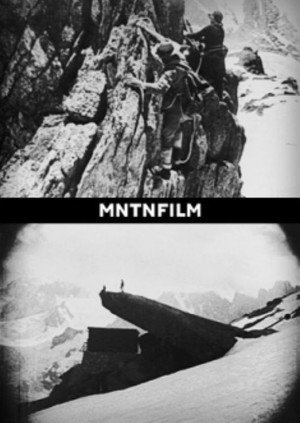
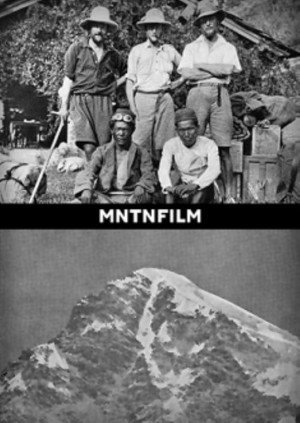
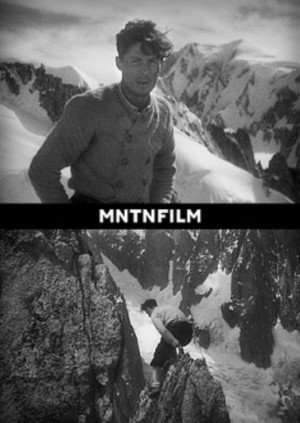
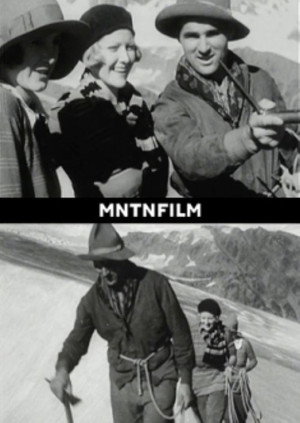
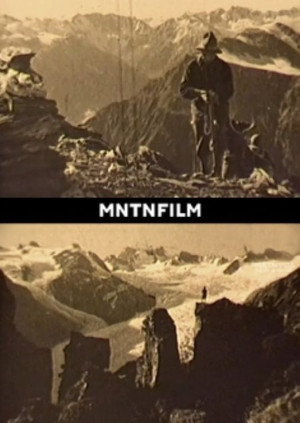
On September 28th, 1903, the Urban Mountaineering Expedition, headed by Frank Ormiston-Smith, left Zermatt to attempt the conquest of the Matterhorn. On the 29th, the conquest was completed by the filming of the panorama from the actual summit of the mountain. The film consists of 20 scenes and illustrates the whole ascent from Zermatt through the Hornli Ridge. A copy of the film was found in Zermatt in 1953 and was was erroneously attributed to Frederick Burlingham and dated 1901. Since then, the film has been widely publicized as the first mountain film under the title of 'Cervin 1901', but this is incorrect. Ormiston previously had made 'Alpine series' (1901), 'The ascent of Mont Blanc' (1902), 'Climbing the Great Schreckhorn' (1902) and 'Ascent of the Jungfrau' (1903). The pictures and descriptions of the Charles Urban Trading 1903 film catalogue show without any doubt that 'Ascent of the Matterhorn' and 'Cervin 1901' are the same film.
Three mountaineers, including a woman, climb the l'Aiguille du Moine, in the Mont Blanc Massif departing from the Couvercle Shelter. Facing walls that are sometimes rocky and sometimes snowy, they end up reaching the summit, which rises to 3412 meters high. One of the mountain guides in the film is Hermann Perren, who also participated in the another film by René Moreau: A la conquête des cimes (1927).
Following in the footsteps of Captain John Noel and his immensely popular documentaries taken on the Mount Everest expeditions of the 1920s ("Climbing Mount Everest"/"The Epic of Everest"), Frank Smythe hoped to help finance his 1931 attempt on Kamet, another Himalayan peak, by bringing back film footage of a successful ascent including summit shots which were at that time the highest ever taken in the world.
A party of tourists ascending to the peak of the Rigi find a fresh fall of snow covering the summit. They soon divided into battalions, and bombard each other with snowballs.
1902, cinematography by Frank Ormiston-Smith
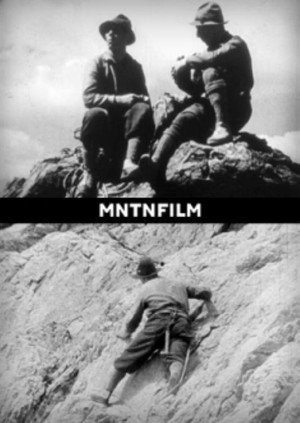
"A rock climbing traverse in the Gastlosen Massif. Arrival of the train to Saanenmöser, three men walk to reach the wall. Crossing the rock face to reach the Wandspits, the first summit of the Gastlosen. Crossing the whole chain and climbing the last summit, the Katze. Rappelling of the Katze to cross the Markzähne and ascent of the highest point of the Gastlosen. After a picnic in the summit, the mountaineers greet with their hat." 1920's.
In beginning of the 20th century, two climbers carry a statue of the Virgin to the top of a mountain.
Released in 1923, produced by Frederick Burlingham.
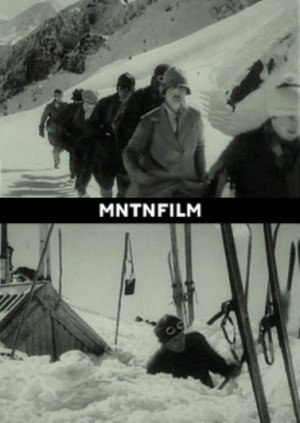
A group of mountaineers ascend the Grossvenediger in the Austrian Tyrol in winter. The group starts from the Krimmler waterfalls and the Warnsdorfer Hütte and continues through the Krimmler glacier by icy terrain using ice axes. They reach the summit and start the descent. The second half of the film starts with an intertitle presenting how the film was made, and then the film crew is shown while filming the mountain scenes, preparing the shots and carrying the material up to the mountain.
The idea is a simple one: three alpinists climb in the Mont Blanc Massif. This situation brings one face to face with the dangers of the mountain: avalanches, crevasses, fog, the climbing of the rocks, roping up, etc. All of this is magnified, transcended by a remarkable and strong use of the language of cinema. One of the first films about high mountains with Roger Frison-Roche and magnificent music by Maurice Jaubert
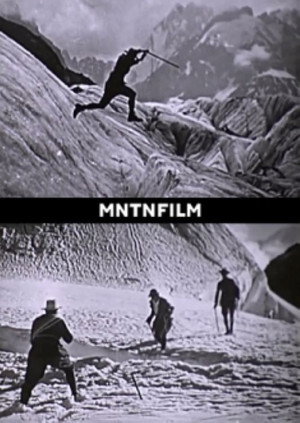
Second part of the film 'River of ice', a mountaineering tour on Franz Josef Glacier in New Zealand. After spending the night in the Deficance Hut, two women and a mountain guide ascend up to Mount Moltke. From Defiance Hut, past the Unser Fritz Falls, across the Franz Josef Glacier, past Castle Rock, to the Summit. On the way, they encounter a friendly Kea, New Zealand's mountain parrot. Finally, the group reaches the summit and admire the magnificent vistas. The films are part of a series of films produced at the end of the twenties by the New Zealand Government Publicity Office to promote the beauty and attractions of the country.
A winter vintage ascent to Mount Ruapehu by a large group of mountaineers composed of about 11 men and women. Mount Ruapehu, 2797 meters high, is an active stratovolcano at the southern end of the Taupo Volcanic Zone in New Zealand, in the North Island. The film follows the march of the group through the vast snowfields up to the top of the mountain and shows magnificent vistas of the adjacent peaks. The film is part of a series of films produced at the end of the twenties by the New Zealand Government Publicity Office to promote the beauty and attractions of the country.
An alternative version of the film 'Southern Peaks', shortened in this case to be included in an episode of the series 'Glimpses of New Zealand'. 'Southern Peaks' continues the story of 'River of ice', a mountaineering tour on Franz Josef Glacier in New Zealand. In the film, two women and a mountain guide ascend up to Mount Moltke. From Defiance Hut, past the Unser Fritz Falls, across the Franz Josef Glacier, past Castle Rock, to the Summit. On the way, they encounter a friendly Kea, New Zealand's mountain parrot. Finally, the group reaches the summit and admire the magnificent vistas. 'Glimpses of New Zealand' were a series of films produced at the end of the twenties by the New Zealand Government Publicity Office to promote the beauty and attractions of the country.
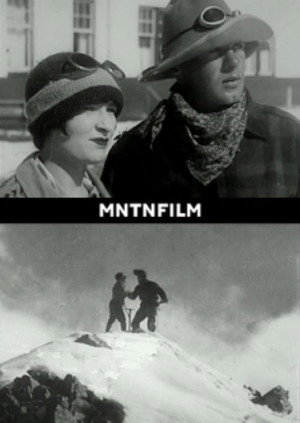
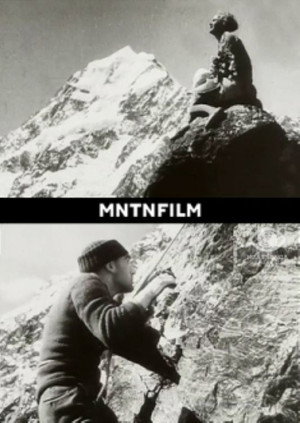
A mountain guide and a young woman make an ascent to Mount Sebastopol in New Zealand's Southern Alps. The couple leave from Mount Cook's Hermitage Hotel and after following an easy path by foot, they rock climb a sheer rock face. After reaching the top of the rock pinnacle, they follow by snowy terrain up to the top of Sebastopol, completing a precarious passage across the steep snowfield. The film is part of a series of films produced at the end of the twenties by the New Zealand Government Publicity Office to promote the beauty and attractions of the country.
A short version of the film 'A la conquête des cimes' by René Moreau released for the domestic market in two Pathe Baby big reels. In the film, the mountain guide Hermann Perren prepares the ascent of Dent du Requin with a companion. He checks the equipment necessary for any mountaineer, rope, ice axe, glasses, double socks and iron shoes. They leave Chamonix, cross the Mer de Glace and arrive at the Requin Refuge. The next morning, Perren and his companion cross the glacier and encounter huge crevasses and seracs, which slow their progress. They cautiously cross a snow bridge and bivouac a few hours later. The climb is more and more difficult. They reach the Requin shoulder and have to climb the vertical wall to the summit.
Along New Zealand’s South Islands runs the mighty chain of the Southern Alps, where large and beautiful glaciers and Ice-falls abound among the towering peaks... That's how the film presents different leisure activities in the Southern Alps of New Zealand, and more specifically around the Hermitage Hotel. Activities include snow activities like snowball fights, dog sledding, ski lessons, and hunting of European chamois; and summer activities like golf practice in front of the hotel, rock climbing, and sight-seeing trips and picnic outings amid scenery of outstanding beauty.
A rock climbing in the Bavarian Allgäu Alps in Germany. The camera follows two mountaineers on a climb. We see all stages of the ascent, from the screes at the foot of the mountain up to the difficult ledges that require the use of pitons and belay ropes. The mountaineers ascend from Einödsbach to the Waltenberger Haus. After they have surmounted a chimney, the mountaineers eventually reach the summit. From there, they descend with ropes.
Hermann Perren, mountain guide, prepares the ascent of Dent du Requin with a companion. He checks the equipment necessary for any mountaineer, rope, ice axe, glasses, double socks and iron shoes. They leave Chamonix, cross the Mer de Glace and arrive at the Requin Refuge. The next morning, Perren and his companion cross the glacier and encounter huge crevasses and seracs, which slow their progress. They cautiously cross a snow bridge and bivouac a few hours later. The climb is more and more difficult. They reach the Requin shoulder and have to climb the vertical wall to the summit. Shortened and sounded version of the original 1927 film by René Moreau.
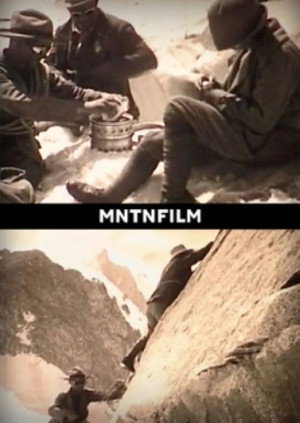
"An early color film presented as 'Ascent to the Bernina Massif'. Two mountaineers break from the Forno hut and first climb the Punta Rasica and then the needle Fiamma. The mountaineers are equipped with canvas backpack, felt hats, hemp rope, woodpickel and cigarettes. Climbing is done in knickerbockers. The pictures give a good insight into the climbing style of the two men. Finally, they squat on the tip of the needle and enjoy the panoramic view, before they descend by rappel."
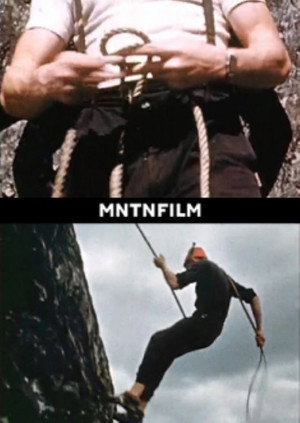
An ascent of 'The Tooth' via the South-east Face. The film was made by Burge Bickford and Lyman Boyer. It features Jim Crooks leading Fred Beckey on a rock climbing ascent of the southeast face of The Tooth, near Snoqualmie Pass, Washington. At the summit, the climbers find a brass tube with a Mountaineers register book inside. Illustrates Cascade Mountains climbing just before World War II. The leader never places any protection such as pitons or slings. The film focuses on the climbers' hand and foot work intermixed with mountain views.