The first ascent of the Matterhorn was made on July 14, 1865 by Edward Whymper, Francis Douglas, Charles Hudson, Douglas Hadow, Michel Croz and two guides from Zermatt, Peter Taugwalder father and son. Douglas, Hudson, Hadow and Croz are killed on the descent after Hadow slips and drags the other three men down the north face. Whymper and the two Taugwalders, who survive, are later accused of having cut the rope that connected them to the rest of the group so as not to be dragged into the fall, but the ensuing investigation finds no evidence of their guilt and they are acquitted. The Matterhorn is the last great peak in the Alps to be conquered and its ascent marks the end of the golden age of mountaineering. One hundred and fifty years later, a team undertakes the same expedition in order to unravel the mystery.
From Trento to Chamonix, via Zermatt; from the Morgiou cove to the Eiger's north face; from Planica to the Lavaredo peaks, the Alps are depicted, illustrated, and magnified in all their unique and sublime beauty, through the sports practiced there and the most typical customs and traditions of their inhabitants. A helicopter rescue and a parachute jump from the Red Wall by Wolfgang Weizenbocks are experiences not to be missed.
On September 28th, 1903, the Urban Mountaineering Expedition, headed by Frank Ormiston-Smith, left Zermatt to attempt the conquest of the Matterhorn. On the 29th, the conquest was completed by the filming of the panorama from the actual summit of the mountain. The film consists of 20 scenes and illustrates the whole ascent from Zermatt through the Hornli Ridge. A copy of the film was found in Zermatt in 1953 and was was erroneously attributed to Frederick Burlingham and dated 1901. Since then, the film has been widely publicized as the first mountain film under the title of 'Cervin 1901', but this is incorrect. Ormiston previously had made 'Alpine series' (1901), 'The ascent of Mont Blanc' (1902), 'Climbing the Great Schreckhorn' (1902) and 'Ascent of the Jungfrau' (1903). The pictures and descriptions of the Charles Urban Trading 1903 film catalogue show without any doubt that 'Ascent of the Matterhorn' and 'Cervin 1901' are the same film.
March 12, 1987. The young French mountaineer Eric Escoffier prepares his equipment, very reduced in material and food. He leaves the next day and intends to chain three north faces in the Alps: Eiger, Matterhorn and Grandes Jorasses. The ascent of the first summit, the Eiger is slow, difficult and full of pitfalls. It takes 17 hours to reach it. Without recognizing the terrain -he prefers to improvise- the mountaineer continues through the Matterhorn. When night falls, anxiety is felt on Zermatt's side. Help is organized to pick him up. Despite his refusal to return, Escoffier is finally hoisted. Christophe Profit, a few hours earlier, managed the chain of three summits.
It was a dream of superlatives: to establish a new alpine skiing downhill classic at the foot of the Matterhorn. Sponsors, athletes and fans were on hand, but the weather didn't cooperate. A reflection on the relationship between sports, tourism and climate change.
Documentary featuring the ascent of the Matterhorn (Cervino) completed in 1911 by Mario Piacenza along the guides of Valtournenche Joseph Gaspard and Joseph Carrel . The ascent was filmed by Piacenza from the Italian side, by the Lion Ridge. In the film, a party of four climbers ascend from Cervinia to the Colle del Leone. From there they start the real rock climbing. The team ascend the chimney using a fixed rope with knots to reach the Luigi di Savoia Hut at 3830 meters and later, the snow covered Tyndall Peak. Finally the team arrive to the Italian summit and two men cross to the Swiss side. The film ends with a panoramic of the Matterhorn from Zermatt, suggesting the descent down the Swiss face.
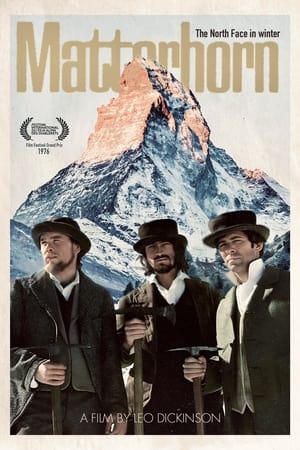
The first filmed winter ascent of the north face of the Matterhorn. To set the scene, the tragic story of Edward Whymper's first ascent is skillfully pieced together. The modern expedition, a team of three British climbers, is also plagued with epics: Eric Jones is hit by an avalanche and can only come to a dangerous stop at the edge of a 1000 foot drop. Then the worst storm ever recorded in Zermatt hits the Matterhorn. With time and weather against them, the team is forced to climb in the dark as thunderstorms rumble around them. This adventure captures the skill and courage of the climbers, their agony and tension, and the beauty of the assault on this spectacular mountain. Grand Prize at the Les Diablerets festival (Switzerland) in 1976.
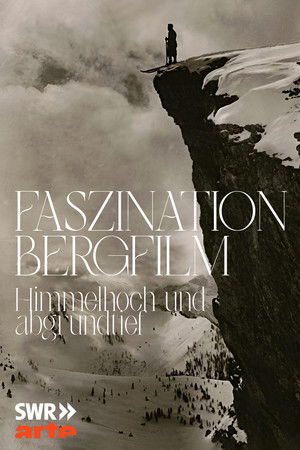
A fascinating chronology of 100 years of mountain film history in the Alps. This documentary focuses primarily on films shot on the Matterhorn, the Eiger, and the Grandes Jorasses, considered until the 1930s as the "last problems of the Alps," and shows the evolution of mountain filmmaking through numerous excerpts from documentaries and feature films – notably on the Matterhorn in 1901. The genre, appropriated as a means of mass exaltation by "fascist" regimes during the Second World War, was reinvented in the 1950s by Gaston Rebuffat, Marcel Ichac, and Lionel Terray in the Mont Blanc massif, avant-garde figures of French mountain cinema, who reintroduced, beyond performance, the values of the mountains – and in color – poetry, humor, and sharing among people from all walks of life.
The most legendary 'sequence' ever achieved by a mountaineer: on 12 and 13 March 1987, in 40 hours, 26-year-old Christophe Profit managed to climb three of the highest north faces in the Alps, in winter: Grandes Jorasses, Eiger, and Matterhorn. But over and above this 'coverage' of the feat, we discover the wings, the story behind the project, the peaks and troughs of the preparations for it, and the personality of the man behind the climbs, a dancer on sheer rock faces, focusing all the energy and reflexes of life itself in his fingertips.
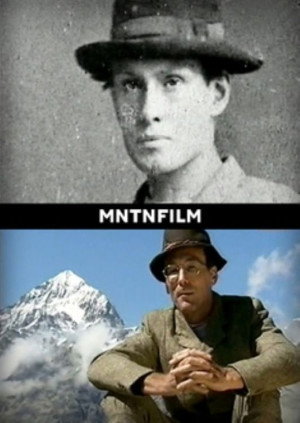
"Edward Whymper's relentless siege of the Matterhorn in 1865 ended in controversy when four of his companions plunged to their deaths an hour after leaving the summit... The documentary is the second episode of 'Mountain men', a British documentary series looking at the achievements of pioneering mountaineers. The series, accompanied by unique archival materials, detailed maps, and photographs, invites us to follow in the footsteps of these fearless explorers, and tells us their stories with all the romance and audacity, bravado and suffering, courage and miscalculation intact."
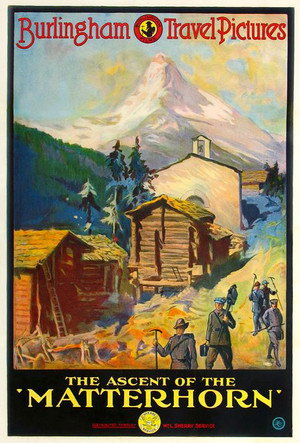
The ascent of the Matterhorn by the Hornli Ridge, filmed in July 1913 by Frederick Burlingham. The team, composed of Burlingham and four mountain guides from Zermatt, carried the 15-kilo camera and the 10-kilo tripod to the top the mountain to film the summit of the Matterhorn. Frederick Burlingham, known at the time as 'The man who kinomatographed the Matterhorn', was a traveller cinematographer and one of the mountain film pioneers. Continuing the mountain film tradition established by Ormiston-Smith, Burlingham filmed several mountaineering films largely in Switzerland, taking mountain film in a new direction of immediacy and perceived peril.
Released in 1923, produced by Frederick Burlingham.
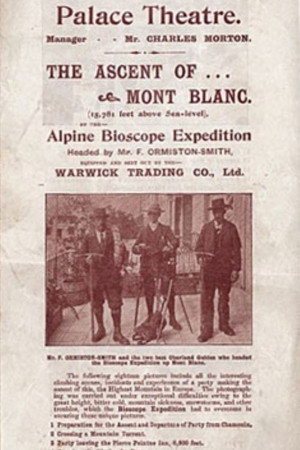
A pioneering mountaineering film made by Frank Ormiston-Smith for the Warwick Trading Company in 1902. Ormiston-Smith himself led and filmed an expedition of seven men up to the top of Mont Blanc. The party left Chamonix the 23rd of september up to Pierre-Pointue and Grands Mulets and reached the top the 25th. The film consists of 18 scenes including a final scene of the team on the summit. This is the first major mountain film shown widely in cinemas. The mountaineering filming is rudimentary by later standards, but in 1902 it gave audiences moving pictures of places, and altitudes, which they could never expect to witness otherwise.
The train leaving the Schiedegg station and entering the Eiger tunnel en route for the station Eigerwand.
1902, cinematography by Frank Ormiston-Smith
A thrilling incident showing a climber ascending a cleft or chimney by hanging on with his finger tips and pushing his back and knees into opposite walls of rock.
Released in 1920, produced by Frederick Burlingham.
Released in May of 1921, produced by Frederick Burlingham.
1903, cinematography by Frank Ormiston-Smith
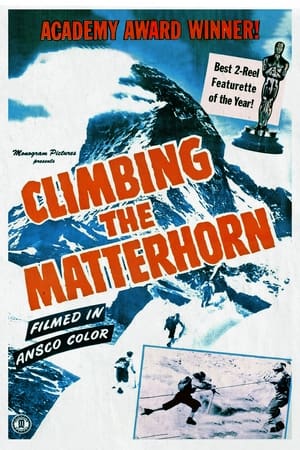
Starting from the Swiss village of Zermatt, two people and a guide make a perilous ascent of the Matterhorn. Local villagers mount a torchlight rescue of a British couple trapped on the famous mountain. Irving Allen shot footage for this documentary while filming his feature film 'High Conquest'. Filmed in Ansocolor, the documentary won the Academy Award for Best Short Film in 1947.