A documentary featuring interviews with teachers and officials on the profession of teaching and what it means to them.
Preschool to Prison is a compelling examination of how the United States public school system is built and operated like prisons. Zero-tolerance policies are used to justify suspension and arrests that set up a pathway to send children of color and children with special needs from school to prison. Children are being suspended, restrained, dragged, physically manhandled, and subsequently arrested for minor offenses such as throwing candy on a school bus. These personal accounts from people affected by the school-to-prison pipeline give riveting tales about the generational impact on society.
Territorios extraordinarios is a documentary that delves into the heart of Northern Neuquén. Crossing the peaks and valleys of the imposing Cordillera del Viento, we will get to know some of its ancient settlers, breeders and gold prospectors. Marcelina Aguilera, Ananías Retamal, Felipe Méndez and Conradino Contreras will accompany us on an exploratory journey where, in their stories and experiences, we will see reflected some of the landmarks, myths and rites of these lands.
October 2003, Alma and Lila Levy are excluded from the Lycée Henri Wallon in Aubervilliers solely because they were wearing a headscarf. What follows is a deafening political and media debate, justifying in most cases the exclusion of girls wearing head-scarves to school. February 2004, a law was eventually passed by the National Assembly. "A thinly veiled racism" is about this controversy since the affair of Creil in 1989 (where two schoolgirls were excluded for the same reasons) and attempts to "reveal" that maybe what hides behind is the desire to exclude these girls. This film gives them a voice as well as others - teachers, community activists, feminists, researchers - gathered around the group "A School for You-All" fighting for the repeal of this law they consider sexist and racist ... This movie was censured in Septembre 2004 in France.
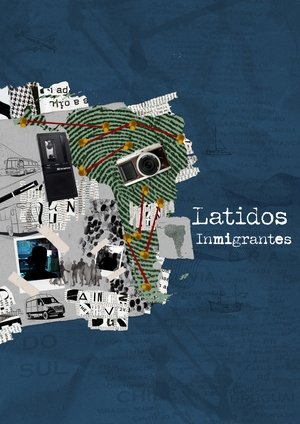
At 60 years old, Calthoum recalls his bittersweet journey to Brazil where memories of joy and anguish intertwine.
This documentary follows the French soccer team on their way to victory in the 1998 World Cup in France. Stéphane Meunier spent the whole time filming the players, the coach and some other important characters of this victory, giving us a very intimate and nice view of them, as if we were with them.
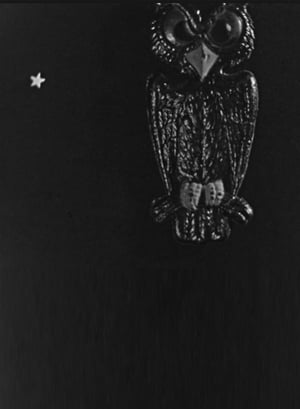
A silent day unfolds on the slope of a mountain… A child exists alongside his mother and father, yet each of them seems to inhabit a different world. With no dialogue, the film relies on visual storytelling. In certain close-up shots, color fades to black and white; symbolizing moments of inner solitude, personal conflict, and emotional disconnection. The unseen distances within the family are revealed not through words, but through images.
Le Ballon
Russia's most skilled streetball players unleash a whole arsenal of unique tricks, incredible dunks, and defenders-destroying dribbling moves. Spotlighting the burgeoning streetball culture of the largest country in the World, documents first streetball challenges and tournaments including performances from the biggest names in hip-hop industry.
Four voices intertwine in a testimonial journey through the Santiago subway, confronting what society prefers to keep underground in its stations. A journey of reconstruction — from memory and experience — that explores the invisible trace these events have left on their lives.
MAKING OF DA VIDA
A Bulgarian theater company struggles to adapt Herman Melville's epic "Moby Dick" for the stage, revealing the obsessive dedication and creative challenges faced by cast and crew in their quest to bring an unfilmable masterpiece to life.
No abras los ojos y tendrás mi piel
Filmmaker Julie Buck explores her grandfather’s collection of Super 8 footage; the revelations behind the captured moments of joy reveal dark truths.
One filmmaker's exploration of natural light in California and its influence on people's lives.
Civil Rights Movement activist, TSSAA Hall of Fame Basketball Coach, swim coach, teacher, musical director, father, grandfather, and friend to many, Coach Sylvester Ford Sr. was known by many as “Big Time.” The nickname was given to him as a kid for his height, but “Big Time” showed time and time again why his nickname was about way more than his looks– it’s also because of how he showed up big for his community. Hometown Feature Audience Award winner at Indie Memphis 2024, Big Time chronicles the life of legendary Memphis basketball coach, Sylvester Ford Sr., while inspiring us all to live “big time” lives along the way.
This often confronting documentary observes a Māori restorative justice model through the eyes of straight-talking Mike Hinton, manager of Restorative Justice at Manukau Urban Māori Authority. The bringing together of victims (including wider whānau) and offenders may offer an alternate way forward for "a criminal justice system failing too many and costing too much”. Restoring Hope kicked off Māori Television’s 2013 season of Sunday night documentaries. In a Herald On Sunday preview, Sarah Lang argued it was “enough to restore hope in local documentary-making.” I’m in an arena where people have high emotions, they get stressed and pressured. I’m reasonably confident that I can avoid situations where I’ll be unsafe. I don’t have any death wish — I’ve got a game of golf tomorrow. – Mike Hinton, on the dangers of the job
On the outskirts of Den Helder lies De Nollen, an inland dune area where nature, sculpture, and painting merge into a truly immersive experience. It is the life's work of artist Rudi van de Wint. He died unexpectedly in 2006. His sons, Ruud and Gijs, carried on his dream, out of love for their father and for De Nollen. But plans for a Rudi van de Wint museum in the area led to cracks in their idyllic existence.
Noi e la grande ambizione
Barack Obama launched into our national consciousness at the 2004 Democratic National Convention and ever since, he's delivered messages of patriotism, unity, and hope through the power of words. But of all the speeches he's given, six in particular may define his legacy as, in historian Doris Kearns Goodwin's words, "one of the best writers and orators in the presidency." Interviews with eminent historians and key figures in his writing process give rare insights into these iconic speeches, as well as the Obama presidency and the man himself.