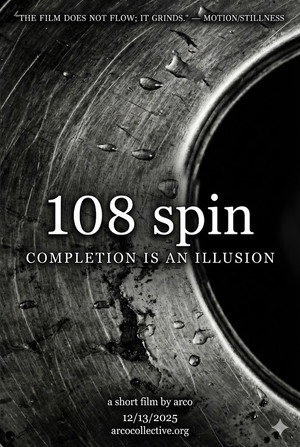
A ritual of grids, reflections and chasms; a complete state of entropy; a space that devours itself; a vertigo that destroys the gravity of the Earth; a trap that captures us inside the voids of the screen of light: «That blank arena wherein converge at once the hundred spaces» (Hollis Frampton).
Filmmaking icon Agnès Varda, the award-winning director regarded by many as the grandmother of the French new wave, turns the camera on herself with this unique autobiographical documentary. Composed of film excerpts and elaborate dramatic re-creations, Varda's self-portrait recounts the highs and lows of her professional career, the many friendships that affected her life and her longtime marriage to cinematic giant Jacques Demy.
A new exploration of familiar places located in the region of Rhône and Isère throught an reinvention of digital nuances, a study of perceptions and fluidity around the nature of motion in landscapes and human interactions.
Nima Yooshij (Iranian poet) for his son’s 1st birthday. He says: “my son, by now, you have seen a spring, a summer, an autumn and a winter. From this point on, everything is simply a repetition except kindness.”
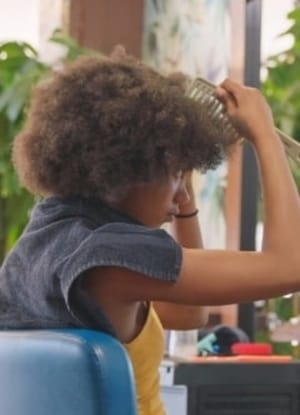
Every month, natural hair specialist Nancy Falaise closes the doors of her Montreal salon to lead a private workshop for young girls of colour struggling to love their natural hair. Step-by-step, she teaches them how to care for their respective hair textures, while also creating a safe space for them to bond over their shared experiences and forge meaningful friendships. Nancy’s Workshop is an intimate and immersive exploration of this journey. The film is an invitation to observe Nancy and the journey of these girls, and is a testament to the immeasurable value derived from strong and empowering female relationships. Produced by the Canadian Broadcast Corporation.
The author's erotic imagination is mixed between desire and magazine clippings, and the trade of collage becomes a ship that travels from outer space to the city itself.
Landscapes revealed themselves through text, paper through movement, while the sun gave them relief. This is a journey across found words, enunciating a discovery, their textures constructing the sea and the waves, in a travelogue from the first exploration, the first step over the sand towards the shore. “Amor” writes this joy to underline it in its time, captured on paper. This film has been composed through a scanner, and it’s the first chapter of the “Reír al Sol” series.
A portrait of Rosa von Praunheim's neighbor, who worked for decades as a professional dominatrix in Berlin's Wilmersdorf district. While the real Lady MacLaine reflects authentically and wittily on her life and work, her life is retold in dramatized scenes.
After concluding the now-legendary public access TV series, The Pain Factory, Michael Nine embarked on a new and more subversive public access endeavor: a collaboration with Scott Arford called Fuck TV. Whereas The Pain Factory predominantly revolved around experimental music performances, Fuck TV was a comprehensive and experiential audio-visual presentation. Aired to a passive and unsuspecting audience on San Francisco’s public access channel from 1997 to 1998, each episode of Fuck TV was dedicated to a specific topic, combining video collage and cut-up techniques set to a harsh electronic soundtrack. The resultant overload of processed imagery and visceral sound was unlike anything presented on television before or since. EPISODES: Yule Bible, Cults, Riots, Animals, Executions, Static, Media, Haterella (edited version), Self Annihilation Live, Electricity.
Joni Mitchell has been called the queen of folk music and one of the biggest pop stars of the 60s and 70s. Even today, her lyrics and unique guitar style continue to inspire new generations of singers and songwriters.
Stan Brakhage is a film maker whose work is shown mainly at film festivals. His work has been likened to poetry. Brakhage explains his techniques and his motivation.
In a time of resurgence of social protests, political radicalization and distrust of power, Arendt's thought has never been more relevant: A critical thinker according to some or a conservative according to others, this great figure of the intellectual world remains, in many ways, an enigma. Who was Hannah Arendt?
Lio
With her short red hair, expressive face, vitality, and playful acting style, Shirley MacLaine stands out in the Hollywood pantheon. Driven by a volcanic personality and iron discipline inherited from classical dance, she has constantly reinvented herself, from the girl next door to the eccentric old lady she plays on screen today, proving at 91 that there is a place for actresses of all ages. A refreshing portrait featuring film clips and archival footage, particularly those in which this talk show regular exercises her sharp wit.
The hairstyles of four Afro-descendant people from Mexican - Senegalese families, represent the starting point to reflect, through memories that emerge from their past and present, what it is like to live in México wearing a Black Crown and the consequences that implies.
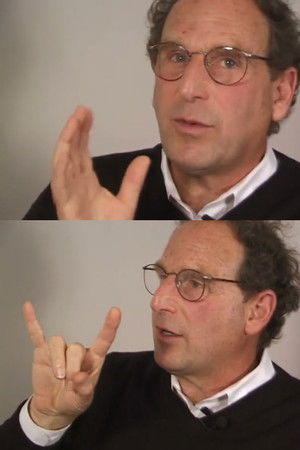
The film features a conversation between Lucas and Francis Ford Coppola, producer of THX 1138. They discuss Lucas' vision for the film, including his ideas about science fiction in general and in particular his concept of the "used future" which would famously feature in his film Star Wars. Intercut with this discussion is footage shot prior to the start of production of THX 1138 showing several of its actors having their heads shaved, a requirement for appearing in the film. In several cases the actors are shown being shaved in a public location. For example, Maggie McOmie is shaved outside the Palace of Fine Arts in San Francisco, while Robert Duvall watches a sporting event as his hair is cut off. Another actor, Marshall Efron, who would later play an insane man in the film, cut off his own hair and was filmed doing so in a bathtub.
A short documentary about one man’s sacrifice to survive in America.
An Untidy Package sets out to dispel the popular misconception that Newfoundland women weren’t major players in the cod fishery before the moratorium, and that the federal compensation they received was only added to their husband’s claims to increase their family’s allowance. We learn at the outset that one third of the 35,000 workers displaced were women. Using the viewpoint of some of these women, this video examines the cod crisis and its social implications for families.
Cameraman Claude Gabriëls, well known for his work with Henri Storck and Paul Meyer, has made this beautiful evocation of a snowy day in Brussels.
In America women can go to jail for their husbands’ crimes, men are allowed to marry ten-year-olds, and abortions in some states are illegal, even in cases of rape. Documentary filmmaker Brice Lambert journeys through the American South and meets women who are at the receiving end of the attack on women’s rights since Donald Trump’s return to power.