o céu diante dos meus olhos nunca é cinza
Alia and Muz are Pakistani-Welsh queer chosen siblings who overcome rejection and forge a path towards inclusivity. While being part of the local house ballroom scene, they soon meet Aiman, who compels them to form a trio as an Asian artist's collective in Wales. 'Trailblazers' follow their journey in reclaiming their identities, preserving their cultural heritage, and empowering Asian queer artists who refuse to let their families' rejection define them.
“All that which in Picture is not of the body or argument thereof is Landskip, Parergon, or By-work” (Thomas Blount, Glossographia, 1656).
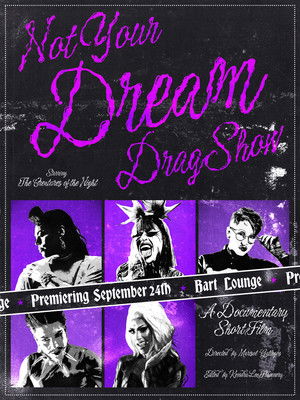
A heartfelt and uplifting portrayal about one young remarkable drag queen from Leith who, despite suffering from cystic fibrosis, lives life to the max. At 24 years of age, Jordan McKinley knows he is on borrowed time. This Leith-born-and-bred drama teacher, DJ and top Edinburgh drag artist faces his medical condition head-on and lives his life at 100 miles an hour.
In attempting to deal with his HIV status, the narrator mixes his past and present to give us a portrait of friendships, family ties, and other intimate relationships.
La Rodilla del Diablo
The life of internationally renowned artist and activist Nan Goldin is told through her slideshows, intimate interviews, ground-breaking photography, and rare footage of her personal fight to hold the Sackler family accountable for the overdose crisis.
When the members of the Keystone Rainbow Curling League get together, it's not just about the game. Rainbow Ice follows four members of Manitoba's premiere LGBT2SQ+ curling league as they gear up for another season. The league, which has been around since 2005, is made up of 28 teams with players from the LGBT2SQ+ community and their allies. It's an open and inclusive place to escape Winnipeg's brutal winters and enjoy some exercise, camaraderie and sport at the 140-year-old Granite Curling Club. Rainbow Ice takes a look at the positive space that's created when the spirit of fun, friendship and freedom to be yourself are combined with a love of curling.
Since 1979, Rose Chong Costumiers have been dealing in elaborate and vibrant maximalist attire for hire. In 40 years, it has established itself as an iconic and legendary Melbourne staple among the Inner-North's queer scene. But neither Rose Chong's nor fancy-dress are as simple as they first seem according to Dan, one of the long-time "Chongettes" who works there. When considered with care and attention, they reveal glittering ideas of play and fun and community. From a queer lens - or rather, a mirror - this unassuming costume shop is a place where one might begin to conceive truths about themselves and their identities. How to Dress Like Me is a 5-minute documentary that contends with the intersections of play, queerness, and clothes.
Follows the progress of the Euromaidan revolution from the perspective of LGBT Ukrainians. From accounts of exile and torture, to stories of resistance, this film shows a side of the conflict in Ukraine the world has not yet seen.
Emma Dabiri looks at racism in Britain via the world of modern dating, love apps, and a national survey suggesting that young Britons could be more segregated than ever.
Outrage kiss-in at Bow Street police station in London, with a demonstration against homophobic government bills clause 25/28.
In the 50s and 60s, deep in the American countryside at the foot of the Catskills, a small wooden house with a barn behind it was home to the first clandestine network of cross-dressers. Diane and Kate are now 80 years old. At the time, they were men and part of this secret organization. Today, they relate this forgotten but essential chapter of the early days of trans-identity. It is a story full of noise and fury, rich in extraordinary characters, including the famous Susanna, who had the courage to create this refuge that came to be known as Casa Susanna.
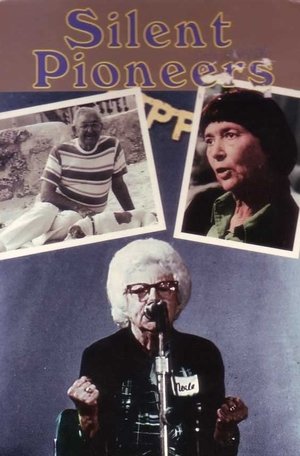
Contrary to the public stereotype of a youthful homosexual community, gay men and women do grow old. Silent Pioneers presents an upbeat focus on the lives of these people today, showing them living full and diverse lives and sharing concerns on ageing, health and housing, with other senior citizens. It also considers how support networks within the gay and lesbian community have enriched and strengthened their individual lives.
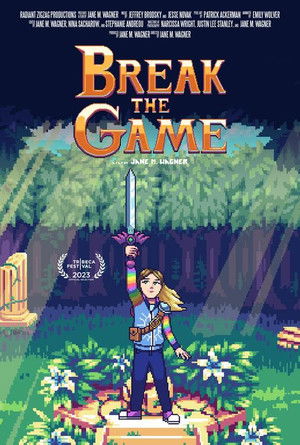
Two children are directed by a cinemaker.
How did the rise of LGBTQ visibility, political progress, and digital technologies in the 2000s come together to offer the abundance of complex queer and transgender representations we see today? Media scholar Katherine Sender shows how LGBTQ visibility and political progress have combined with new digital media technologies and television platforms to produce an increasingly complex range of queer and transgender representations.
This feature length documentary explores the queer side of gaming culture and the game industry's LGBTQ presence. The GaymerX convention that took place in 2013 was a huge step forward for the queer geek community being recognized on a worldwide industry scale. In the same year, more popular mainstream and indie games featured a greater amount of gay and lesbian characters than ever before, helping with visibility and acceptance. The video games universe will only continue to improve and diversify both in its community and industry if we elevate the conversation about inclusion and respecting one another - not in spite of our gay geekiness, but because of it!
Shot between 1965-1970, Gay San Francisco features a collection of incredible footage of San Francisco’s thriving LGBTQ culture, with a focus on the Tenderloin, San Francisco’s first queer neighborhood.
Described in the 70’s as "A Chorus Line for gay people," Crimes Against Nature remains vital today as a communal disclosure of roles that gay people adopt in order to survive in a world that devalues homosexual feelings. It features individual actors delivering revealing monologues, during which the other members of the collective play background roles (parents, schoolmates, etc.). One by one, the actors detail the ways in which they have buried their true selves in order to survive and be accepted in the world: repression, drug use, shyness, being agreeable, putting experiences into "little boxes," acting "butch," and so on.
The film follows the story of Jamie, a struggling butch lesbian actress who gets cast as a man in a film. The main plot is a romantic comedy between Jamie's male alter-ego, "Male Jamie," and Jill, a heterosexual woman on set. The film's subplots include Jamie's bisexual roommate Lola and her cat actor Howard, Lola's abrasive butch German girlfriend Andi, and Jamie's gay Asian friend David.