At once a journey and a reckoning, this film follows 19 year old Koen's ascent of Mount Rinjani—often regarded as Indonesia’s toughest summit. What begins as a test of endurance gradually transforms into something more intimate: a dialogue between self and nature. Shot as a reflective video diary, the film holds not just the view from the summit, but the moments of insight and introspection discovered along the way.
Video diary from behind the scenes of 2002's "Cruise of the Gods."
Making-of DVD for a film of tokusatsu series "Kamen Rider Gaim" starting to be shown at theaters from July 2014. Includes a documentary of the shooting scenery and interviews with staff and cast. Was included as a Bonus disc with Blu-ray version of the film. Complete recording of the filming site of the movie that you can't miss!/Full recording of the filming site of "Theatrical version Kamen Rider Gaim Soccer Great Decisive Battle! Golden Fruit Scramble!" released in July 2014! and interviews with guest cast members such as Masafumi Nakayama and Ainosuke Kataoka!! / Release the making video that will definitely make the movie more interesting than anywhere else!
A Woman Watches People.
Summer 2021, in Damascus city, some young emerging directors roamed the city's streets to follow their dreams and shoot their first movies with the simplest available tools. so, the city would open her arms and hug them day and night with her streets and neighborhoods.
For fixed-gear cyclists, Los Angeles is a city that has it all. From the neon glow of Hollywood to the sun-drenched boardwalk of Venice Beach, fixed-gear has evolved into a vibrant street culture that is uniquely L.A. From director David Rowe (Fast Friday) comes a new documentary feature that explores a side of L.A. few outsiders have seen. From races through rush-hour traffic to midnight loft parties, To Live & Ride in L.A. is a fast paced-trip through the busy streets and back-alleys of one of the world's largest cities. To Live & Ride in L.A. features talented local riders tearing up the streets with first-time visitor Keo Curry (Fast Friday, Macaframa) - one of the living legends of the sport. Bike to hidden spots off the map, race a midnight alley-cat, keep pace with the riders from Wolfpack, and hang with the local crews, graffiti artists and other L.A. personalities burning up the fixed-gear scene.
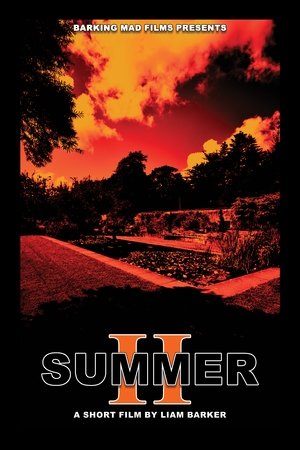
In a follow-up to his 2021 short, SUMMER, Liam once again spends the duration of a summer filming, editing, and releasing a single shot every day. Things have changed or have they?
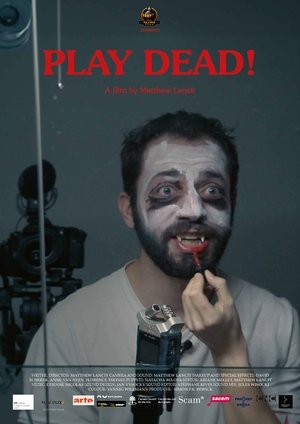
If there is one person Matthew Lancit can’t get out of his mind, it is his uncle Harvey. Dark rings around his eyes, pale, blind, his legs amputated. Like Harvey, the filmmaker also suffers from diabetes. He has the disease under control, but one question is always nagging at him: How much longer? His long-term (self-)observation reliably revolves around fears of infirmity and mutilation. He translates the feared body horror into film, stages himself as a zombie, vampire, a desolate figure. Lancit playfully anticipates his potential decline, serving up a whole arsenal of effects which – as video recordings prove – go back to his youth. It is not for nothing that the “dead” in the title is also reminiscent of “dad.” Because “Play Dead!” also negotiates his own role as a father.
Made over six years in the hotels of six different countries, Hotel Diaries charts the 'War on Terror' era of Bush and Blair through a seven-part series of video recordings that relate personal experiences to the ongoing conflicts in Afghanistan, Iraq and Israel/Palestine. In these works, which play upon chance and coincidence, hotel rooms are employed as 'found' film sets, where architecture, furnishing and decoration become the means by which the filmmaker’s small adventures are linked to major world events.
In this film we join Alice as she meets committed naturists, newcomers to naturism, and discovers a kaleidoscope of naturist opportunities including Pevors Farm and the Merryhill Music Festival.
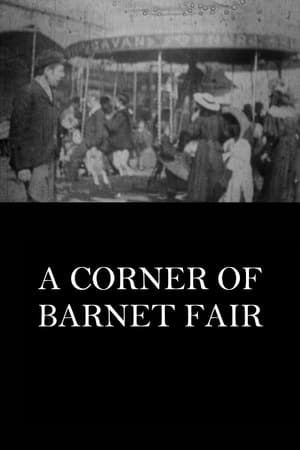
From the BFI Collection, this film is actually two films spliced together into one. The first is Birt Acres' work 'A Corner of Barnet Fair' which is the first film seen . This shows a merry-go-round and some people sitting in a doorway while street traffic goes by. The second film is a fragment of unknown origin of a street outside a very large building of what looks like a possible theatre, with a large Victorian awning. the shop next door appears to be selling wines and spirits. A horse drawn charabanc goes past, followed by a male bicyclist. This is closely followed by a male and female couple in an open carriage and two carts with workmen staring at the camera as they pass. Both films are believed to be from Barnet, given they have been spliced together. The film is in a deteriorated state with some rippling.
An experimental music ensemble is recording an album. They want a very specific sound: the sound of thick air. The sound engineer struggles to understand and to find that sound. A tale of sleepless nights and loud music, a noise-injected collage composed of diaristic footage, a found narrative (memories of a popular 60s band), original music and field recordings.
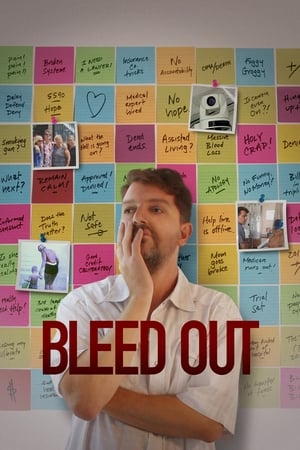
After a routine partial hip replacement operation leaves his mother in a coma with permanent brain damage, what starts as a son's video diary becomes a citizen's investigation into the future of American health care.
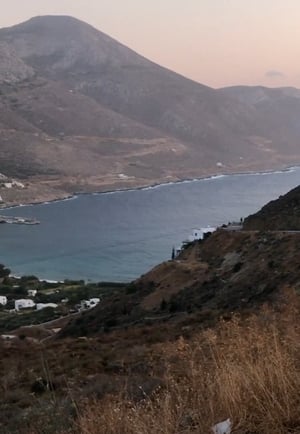
On the island of Amorgos, during summer. Small monuments were erected at the scene of a fatal accident: a photograph, a few words, flowers, religious or pagan objects. The deceased "stayed there": dead in transit, on a road, frozen forever.
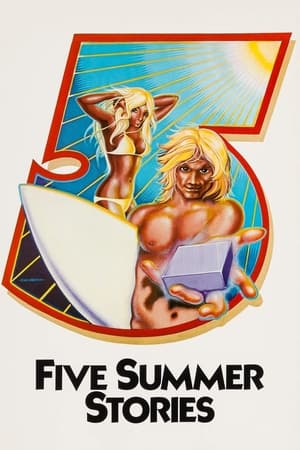
The culmination of a ten year celebration in celluloid, Greg MacGillivray and Jim Freeman give us five-plus exciting, controversial and beautiful stories about surfing. A perspective that warns of the future while it warms the present.
A cinematic time capsule with over 1,400 hours of submitted material from all regions of Switzerland gives unknown insights about the life of Swiss people in the politically and socially turbulent summer of 2019.
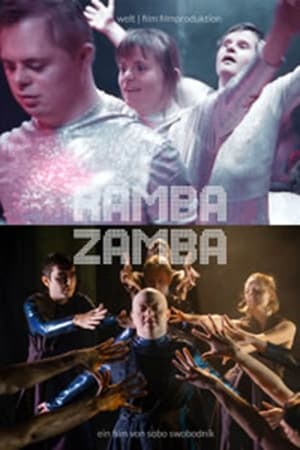
Ramba Zamba: a theater with handicapped and non-handicapped people/actresses and actors, which has been living and working on inclusive integrative togetherness impressively every day for thirty years now. The film accompanies the mentally and physically impaired actresses and actors for six months through the theatrical production of the play GOLEM, from the beginning of rehearsals to the premiere. In doing so, the film is also partly influenced by the portrayed persons themselves, quasi inclusively co-determined, by them capturing their own view and perception, their view of reality itself on film.
Raphael, Yervant Gianikian's father, survived the Armenian genocide in 1915 in Eastern Turkey. In April 1988, while living in Venice, he sat for his son's camera and read an excerpt from his memoirs, translated from Armenian into Italian.
Follows Japanese director Naomi Kawase as she directs the official film of the Tokyo 2020 Olympic Games, giving a message that goes beyond the physical exploit to mark souls, with her style and all her subtlety.
The hottest summer on record left Austin ablaze and terrified, a city where heat hits hardest in at-risk neighborhoods and communities of color. In the aftermath, the Castañón family walks into the woods, asking: What is heat? At a city-run heat-mapping event, they trace invisible threats and exercise small acts of agency, exploring how conversation—at home, with neighbors, with scientists and policy-makers—shapes the way we live in a world remade by heat.