Documentary depicts what happened in Rio de Janeiro on June 12th 2000, when bus 174 was taken by an armed young man, threatening to shoot all the passengers. Transmitted live on all Brazilian TV networks, this shocking and tragic-ending event became one of violence's most shocking portraits, and one of the scariest examples of police incompetence and abuse in recent years.
The film shows the lives of four foreign musicians from different backgrounds and musical genres that after visiting the City of Rio de Janeiro, ended up falling in love with the city, choosing it to live in and becoming typical cariocas.
Eldorado SP
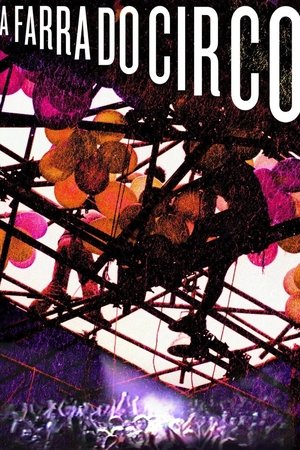
This documentary highlights the evolution of Brazil's Circo Voador venue from homespun artists' performance space to national cultural institution.
A record of what entertains the residents of Gardênia Azul, a neighborhood in the West Zone of Rio de Janeiro. On street corners, leisure activities in the community also reveal talents.
Cata
"The End of Bolsonaro" follows the historic trial at the Supreme Federal Court (STF) that led to the conviction of Jair Bolsonaro for attempted coup d'état, portraying the end of an authoritarian era and the victory of Brazilian democracy.
From Italian set designer to Brazilian stage director, Gianni Ratto, born in Italy in 1916 and based in Brazil since 1954, retraces the geographical path of his life, accompanied by his daughter, passing through Genoa, Milan, Florence, São Paulo, and Rio de Janeiro, visiting places and people who marked his journey. At each encounter, Gianni speaks of his work and reveals the ideas of someone who not only executes but also thinks about theater from a humanist perspective.
Sepetiba | Um Mar de Lembranças
The film documents the old Rio de Janeiro and its great focus of diseases. Stresses the decisive importance of Oswaldo Cruz who creates Experimental Medicine in Brazil, believing that without sanitation, no undertaking could succeed. Rodrigues Alves then started the urbanization of Rio, against great interests.
The short documentary traces the fading light of Belém’s silver screens through the eyes of a young filmmaker and aspiring historian. With camera in hand, he sets out to preserve the stories of the three movie theaters that once defined the city’s cultural pulse
The Mangueira slum is the scenario where Tantinho and the old samba composers remember stories about the slums and samba.
Legendary rock band Rush plays the Maracana Stadium in Rio de Janeiro, Brazil, on the final night of the band's 2002 Vapor Trails tour, in front of 40,000 fans.
The stories told by those who live from the Rio Potengi reveal the rhythm of the tides, flowing through memories, silences, and the strength of a river that resists between the mangrove, time, and the city.
A documentary about climate change in Brazil, especially at Atafona Beach (in the Campos de Goytacazes region), which is being swallowed up by the sea. Narrated by Sonia Guajajara and Sidarta Ribeiro, the film deals with the genocide of the native people of Goytacazes.
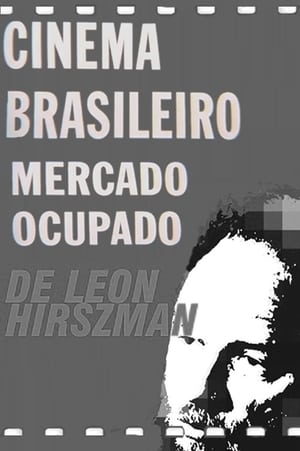
Documentary by Leon Hirszman about the economic conditions of film production in Brazil, produced in 1975 with sponsorship from Embrafilme and kept unreleased since then.
How Do You See Me? is a Brazilian documentary feature that entwines both experienced actors and beginners to explore the hardships and the happiness that are inherent to the job when detached from the glam and glitz of the gossip industry, creating a diverse and comprehensive mosaic of what it means to be an actor in Brazil, a country so full of contradictions. The film brings forward a reality that the masses usually don't get to know: the men and women moved by a deep passion for acting and touching people. With Julio Adrião, Matheus Nachtergaele, José Celso Martinez, Cássia Kis, Nanda Costa, Babu Santana, Luciano Vidigal and Letícia Sabatella, among others.
Tradição e Herança Ancestral - A história dos Mestres de Folias de Reis de Nova Iguaçu
Rap de Saia is a documentary that reports, through the voices and rhymes of the protagonists themselves, part of the historical trajectory of Female Rap in the State of Rio de Janeiro. In addition to its historical trajectory, Rap de Saia brings a collection of themes that leads us to reflect on women in today's society.
From the 60's, the neighborhood of Pedra de Guaratiba, in Rio de Janeiro, was invaded by a varied artistic community.