Going to see Nutcracker with the whole family has been a tradition in other countries for many years. Now it is a tradition in the Netherlands as well. It became apparent that the Netherlands had also adopted this tradition in 1996, when the Dutch National Ballet presented its own version of the famous fairytale ballet. It is a magical production that has won the hearts of more than 250,000 people to date. Choreographers Toer van Schayk and Wayne Eagling created a Nutcracker for the children and adults of today. It is more dynamic and exciting, and less sweet than usual. They also chose to give a Dutch twist to their interpretation of the story, with skaters on the canals and a living room that transforms into a snowy forest. Unlike the original story, the production by Eagling and Van Schayk (who also designed the delightful sets and costumes) does not take place on Christmas Eve in a German town, but during St. Nicholas celebrations in Amsterdam, around 1810.
A one-hour version of Tchaikovsky's classic ballet, with a somewhat revised storyline reminiscent of "The Wizard of Oz".
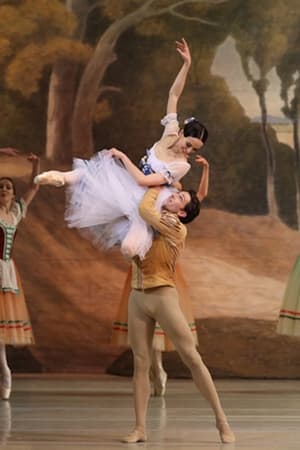
The ultimate romantic ballet, performed by former Bolshoi Ballet principals Olga Smirnova and Jacopo Tissi, who fled Russia and joined the Dutch National Ballet, where this production is filmed. The young peasant girl Giselle falls in love with Albrecht, a nobleman already betrothed who hides his true identity from her. When she learns the truth, she becomes mad and dies. Against her own will, Giselle joins the Wilis: vengeful spirits of jilted brides who condemn Albrecht to dance until he dies of exhaustion.
George Balanchine's jewel-themed triptych, strikingly choreographed to the music of Faure, Stravinsky and Tchaikovsky. This three act masterpiece is renowned as the world's first full-length abstract ballet. The Russian-born co-founder of the New York City Ballet, Balanchine was inspired by the artistry of jewellery designer Claude Arpels to create a trio of distinct movements revealing the essence of each precious stone. Each part also evokes three different cities: Paris, New York and St. Petersburg. 'Emeralds' was conceived as a tribute to the French romantic school, with music by Gabriel Faure. The fiery and energetic 'Rubies' taps into the rich tradition of Broadway musicals, with music by Stravinsky. 'Diamonds' honours the grandeur of Imperial Russia and the Maryinsky Theater, choreographed to the music of Tchaikovsky. With its jewel-like costumes, this is a celebration of the influences on the choreographer who was described as the father of American ballet.
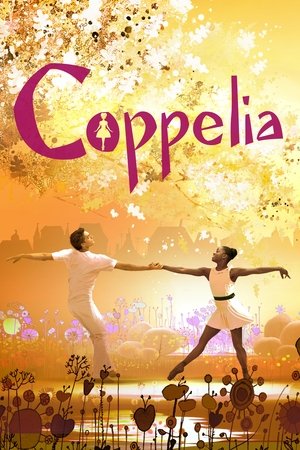
When everyone in town falls under the spell of charismatic cosmetic surgeon Doctor Coppelius, feisty Swan must act to save her sweetheart Franz, before his heart is used to spark life into Coppelia – the ‘perfect’ robot-woman the Doctor has created.
A pair of short ballets, written for the screen, filmed and performed by artists of the Georgian SSR. In color, with narration.
Olympic gold medalist Peggy Fleming and six-time U.S. national champion Todd Eldredge star in this performance of the Tchaikovsky Christmas classic.
Pechorin, a young officer, embarks on a journey across the majestic mountains of the Caucasus, on a path set by his passionate encounters. Disillusioned and careless, he inflicts pain upon himself and the women around him… The story, based on the larger-than-life hero Pechorin, is adapted from Mikhail Lermontov’s literary masterpiece in three separate stories recounting his heartbreaking betrayals. Is Pechorin a real hero? Or is he a man like any other? This brand new production by choreographer Yuri Possokhov is a tragic poetic journey that can only be seen at the Bolshoi. Filmed live on April 9th 2017.
For one evening, the Bolshoi takes on a new challenge with audacity in The Cage by Jerome Robbins, Harald Lander’s Études and Alexei Ratmansky’s Russian Seasons.
The first revival of Wayne McGregor’s critically acclaimed ballet triptych to music by Max Richter, inspired by the works of Virginia Woolf.
The Sleeping Beauty holds a special place in The Royal Ballet’s repertory. It was the ballet with which the Company reopened the Royal Opera House in 1946 after World War II, its first production at its new home in Covent Garden. Margot Fonteyn danced the role of the beautiful Princess Aurora in the first performance, with Robert Helpmann as Prince Florimund. Sixty years later, in 2006, the original 1946 staging was revived by then Director of The Royal Ballet Monica Mason and Christopher Newton, returning Oliver Messel’s wonderful designs and glittering costumes to the stage.
Now celebrating its 50th year, George Balanchine’s sparkling ballet still shines with all the brilliance of the gemstones that inspired it.
Mauro Bigonzetti's ballet based on Franz Kafka, performed by the National Theatre Ballet. Choreographer Mauro Bigonzetti, fascinated by the irresistible language of Prague native Franz Kafka and the enduring relevance of his novel "The Trial," was drawn into the dark world of Josef K and created a modern dance production depicting the world of the protagonist and his hopeless struggle with a cold and heartless modern society. Bigonzatti used music by a number of composers from different historical periods, from D. Buxtehude to H. Górecki, C. Monteverdi, and M. P. Mussorgsky. This selection is remarkably balanced and surprisingly contemporary.
This delightful ballet tells the story of Dr Coppelius, an eccentric toymaker, who attempts to bring life to his beautiful doll Coppélia. He is foiled by the mischevious Swanilda, who masquerades as Coppélia and saves her love, Franz, from the Doctor's magic. Recorded live at the Sydney Opera House, this acclaimed production by Dame Peggy van Praagh, the founding Artistic Director of the Australian Ballet, is a triumph.
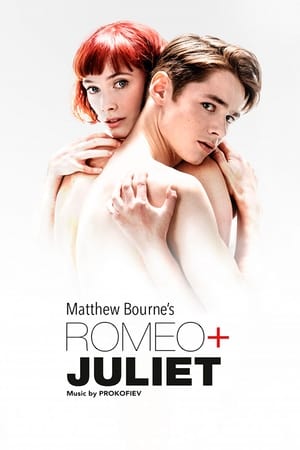
As members of the feuding Capulet and Montague families, Romeo and Juliet should be sworn enemies, but they fall deeply in love and marry in secret. That very day, disastrous circumstances lead Romeo to fight and kill Juliet’s cousin Tybalt, setting off a chain of events that culminate in tragedy.
Swan Lake, a screen adaptation of the ballet of the same name by Pyotr Tchaikovsky. Performed by Kirov Ballet, starring Yelena Yevteyeva as Odette and directed for film by Appolinariy Dudko and Konstantin Sergeyev. Produced by Lenfilm studios in 1968. Orchestra of the S.M. Kirov Leningrad Academic Opera and Ballet Theater, conductor Victor Fedotov. Ballet dancers of the Leningrad State Academic Theater of Opera and Ballet named after S.M. Kirov and students of the Leningrad Choreographic School M. Agrippina Vaganova took part in the film. Golden Orchid Prize - Grand Prix at the VIFF of ballet films in Genoa, Italy (1969).
Tita, who lives on a ranch in Mexico, falls in love with a boy, Pedro, who lives nearby; but when they want to get married, Tita's family prevents it, because she must remain single to take care of her mother.
In 1920s Vienna, a young girl receives a magical doll on Christmas Eve.
Sergei Prokofiev's eighth and last ballet, written between 1948 and 1953. It is based on the Russian Ural folk tale The Stone Flower by Pavel Bazhov and is also the last of the trilogy of ballets Prokofiev wrote in the Russian ballet tradition. It was premiered posthumously in 1954, conducted by Yuri Fayer.
Dance film inspired by the life and work of the artists Camille Claudel and Auguste Rodin.