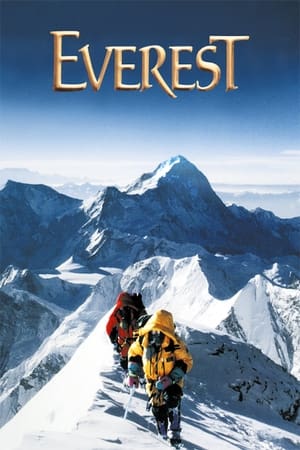
In 1953, Sir Edmund Hillary & Tenzing Norgay made history as the first people to reach the top of Everest. Now, 50 years later, three sons of Everest's most celebrated climbers return to the mountain to challenge it again. Join their journey as they brave the elements and face death to climb 29,000 feet of wind-blasted rock and ice. And, relive the dramatic history of Everest from great triumphs to deadly tragedies, enduring rivalries and the unsung role of the Sherpa people—as National Geographic exposes the untold stories that lurk in the mountain's epic shadow and takes you on the ultimate Everest experience.
A journey at high altitude seen through the eyes of three mysteriously connected hikers. After their coincidental meeting we follow these three on their personal odysseys. The levels of concentration they exhibit in trying to avoid mistakes makes their experience of the overwhelming landscape even more intense.
Behind the Curtain of High Mountains
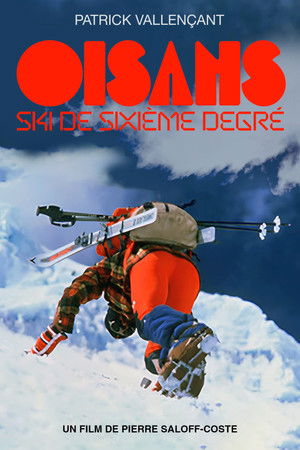
An adventure of extreme skiing in the Mont Blanc area
Avid for steep slopes, Marco Siffredi (1979-2002) obeys only one rule: not to fall. This gifted kid with hair sometimes blond peroxidized, green or blue clashed in his valley: Chamonix, mecca of mountaineering. His thing was to go up and down on a snowboard. . 90 minutes September 8, 2002, altitude 8848 meters, rare oxygen, his head already brushing the sky and his snowboard running, Marco Siffredi, 23, rushes from the summit of Everest in the Horbein corridor and its slopes at 50 degrees . A year earlier, he had already made the first descent of the mountain on a snowboard. But there remains another corridor… more direct. It's not a challenge, just a reason to be... However, that day, at the top of the roof of the world, his trace is lost...
Six blind Tibetan teenagers climb the Lhakpa-Ri peak of Mount Everest, led by seven-summit blind mountain-climber Erik Weihenmayer.
The true story of Joe Simpson and Simon Yates' disastrous and nearly-fatal mountain climb of 6,344m Siula Grande in the Cordillera Huayhuash in the Peruvian Andes in 1985.
Patrick Berhault - Il Gesto e La Grazia
In October 1984, Pierre Béghin, an engineer from Grenoble, and Jean-Noël Roche, a high-mountain guide, completed the Himalayan ascent of Dhaulagiri (8,172 m). The expedition's context: seven people crossed Nepal to Muri, collected accounts from trekkers—including that of the author Robert Rieffel—and attended Sherpa prayers at base camp. Then, the two of them embarked on a rocky and snowy route without supplemental oxygen. At over 5,000 meters, on the mountain of winds, Jean-Noël Roche made a paragliding flight. The climbers brought back footage with their Super 8 camera from 6,500 meters, but only photographs have been able to confirm their presence on the summit ridge of the seventh highest peak in the world.
When Tenzing Norgay, a Sherpa, joined Edmund Hillary as the first men to summit Mount Everest in 1953, it alerted the world to the indispensable role of the Sherpas on any Himalayan expeditions. By 1954 the Himalayan Mountaineering Institute (HMI) was founded to marry the high-altitude strengths of the Sherpa with technical climbing skills. The HMI’s arduous training program has been developing mountaineers who play crucial roles in the success of Himalayan ascents. In 1967, HMI’s field director Nawang Gombu, a Sherpa and the first man to summit Everest twice, was charged with training women as well. In Sherpa: the Proving Grounds we follow a team of intrepid young women as they attack the grueling 28-day course.
On April 29, 1983, three French alpinists reached the summit of Jannu, having climbed its 7,710 meters via the very steep southwest spur. The success of Luc Jourjon, Jean-Noël Roche, and Roger Fillon echoed that of the 1962 national expedition, which had been celebrated by Lionel Terray alongside the leading climbers of the time, Desmaison, Paragot, Magnone… But in 1983, the goal was no longer simply to wave a French flag on a virgin summit. The focus was already on a more "alpine" style, and there was even the idea of descending from the top… by air!
“Roche” from father to son… Bertrand Roche, nicknamed Zébulon, the spring-loaded character from The Magic Roundabout, comes from his inability to stay still. At 11, he reached the summit of Mont Blanc, which he has since climbed more than fifteen times. At 12, he took up paragliding and, in the United States, climbed the famous Nose face of El Capitan in Yosemite with his father, Jean-Noël Roche, known as Pap’s, a renowned Himalayan mountaineer and paraglider. He was filmed during this journey by Philippe Lallet and became the central figure in the documentary film Pap’s and Zébulon, as well as in the book written by Jean-Noël Roche and Claude Roche: Pap’s and Zébulon, or, The Extraordinary Adventures of a 12-Year-Old Mountaineer.
Trapped near the summit of K2, the world's second-highest mountain, Annie Garrett radios to base camp for help. Brother Peter hears Annie's message and assembles a team to save her and her group before they succumb to K2's unforgiving elements. But, as Annie lays injured in an icy cavern, the rescuers face several terrifying events that could end the rescue attempt -- and their lives.
This film follows the legendary climbing photographer and Stone Master, Dean Fidelman. Fidelman was at the forefront of the free climbing revolution in Yosemite Valley and Joshua Tree during the 1970s, making photographs with John Bachar, Lynn Hill, Ron Kauk, John Long, and many other talented climbers. This documentary takes a look at Fidelman's impact and influence as a photographer and climber.
A "team of savages," as their boat captain Bob Shepton calls them, comprised of Sean Villanueva O'Driscoll, Olivier Favresse, Nicolas Favresse, and Ben Ditto, set off for Greenland to attempt a first big wall climb. Arriving in Asia by plane, they prepare the sailboat for two months of self-sufficiency. Accompanied by whales, seagulls, and icebergs, they train on various rock faces before beginning their ascent of the seemingly impossible wall. It takes them 11 days to complete the climb, braving bad weather, the rock itself, the wilderness, and three different bivouac sites—all accompanied by music, of course! The return journey is not without its challenges, as they must avoid a cyclone and cross the Atlantic to reach Oben in Scotland.
Fred Beckey is the legendary American "Dirtbag" mountaineer whose name is spoken in hushed tones around campfires. This rebel climber's pioneering ascents and lifestyle form an iconic legacy that continues to inspire generations.
Zinal
Alex Txikon, internationally renowned mountaineer, is launching a new winter expedition in 2021 to Manaslu (Nepal). It is the first non-polluting ascent, powered by solar panels. With this sustainable system, which reduces the energy footprint in accordance with the Paris Agreements, the EKI Foundation is beginning its work of solidarity. Alex is going to learn about the work developed by the Foundation in Sierra Leone, where they provide solar energy systems that enable energy autonomy in schools and hospitals. Txikon proposes to replicate this idea in a very special school in the Diamer Valley in Pakistan, the Günter Mountain School, uniting two different but at the same time equal cultures.
North Face tells the story of two German climbers Toni Kurz and Andreas Hinterstoisser and their attempt to scale the deadly North Face of the Eiger.
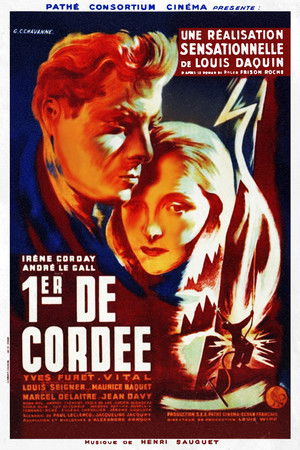
A screen adaptation of the well-known novel by Roger Frison-Roche about the harsh lives of mountain guides and their families in the French Alps, near Chamonix and the French/Swiss/Italian borders... Like his father, Zian Servettaz is a dedicated mountain man. His Italian-born wife Bianca does not adjust well to his mountain village in France, and to the ever life-threatening dangers presented by his mountain guiding and climbing. She briefly returns to Italy and to her family. However, after Zian's insistence and trip to Italy, she returns to mountain life in the French Alps. Once back there, events will unfold, changing their lives as well as those of other mountain people forever.