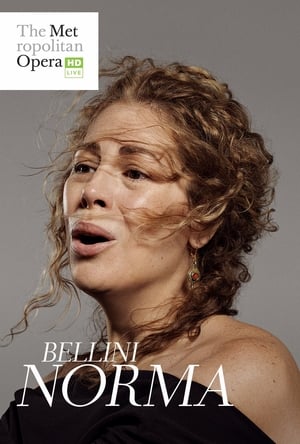
Deep in a forest where druids and warriors seek revenge against the conquering Romans, Norma is scorned by the Roman proconsul Pollione, with whom she has two children. Her kindness turns to fury when she discovers that Pollione has taken Adalgisa, a novice priestess, as his new lover. When Pollione loses his high rank in the army and is offered as a sacrifice, Norma promises him freedom under one condition.
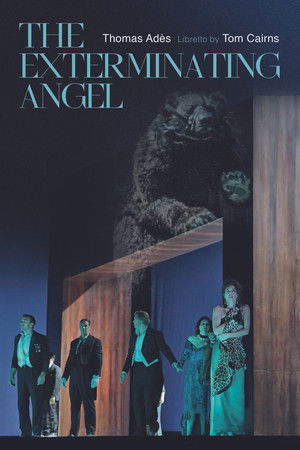
After the acclaimed Met premiere of Thomas Adès's "The Tempest" in 2012, the composer returned with another masterpiece, this time inspired by filmmaker Luis Buñuel's seminal surrealist classic "El Ángel Exterminador", during the 2017–18 season. As the opera opens, a group of elegant socialites gather for a lavish dinner party, but when it is time to leave for the night, no one is able to escape. Soon, their behavior becomes increasingly erratic and savage. The large ensemble cast tackles both the vocal and dramatic demands of Adès's opera with one riveting performance after another. Tom Cairns, who also penned the work's libretto, directs an engrossing and inventive production, using a towering wooden archway to trap the characters onstage. And Adès himself takes the podium to conduct the frenzied score, which features a host of unconventional instruments, including the eerie electronic ondes Martenot.
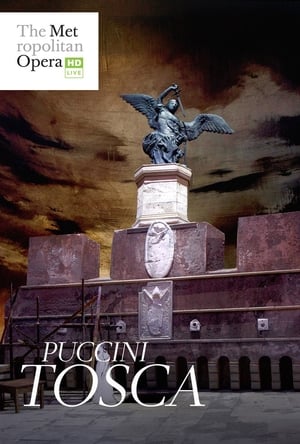
Sir David McVicar’s bold new staging of Tosca, Puccini’s operatic thriller of Napoleonic Rome, thrilled Met audiences when it rang in the New Year in 2018. Only weeks later, the production was seen by opera lovers worldwide as part of the Met’s Live in HD series of cinema presentations. In this performance, Bulgarian soprano Sonya Yoncheva is the passionate title diva, opposite charismatic tenor Vittorio Grigolo as her lover, the idealistic painter Mario Cavaradossi. Baritone Željko Lučić is the menacing Baron Scarpia, the evil chief of police who employs brutal tactics to ensnare both criminals and sexual conquests. On the podium, Emmanuel Villaume conducts the electrifying score, which features some of Puccini’s most memorable melodies.
Premiered immediately before the enduring masterpieces Rigoletto, Il Trovatore, and La Traviata, Luisa Miller incorporates the youthful vitality that had made Verdi an international sensation while also looking forward to the dramaturgical discipline and sophistication of those later works. In this Live in HD performance, soprano Sonya Yoncheva takes on the riveting title role, capping off a season in which she starred in three cinema transmissions. As her father, Miller, the legendary Plácido Domingo adds another baritone role to his extensive repertoire. Tenor Piotr Beczała as Rodolfo, Alexander Vinogradov as Count Walter, and Dmitry Belosselskiy as Wurm round out the illustrious cast, and Bertrand de Billy conducts.
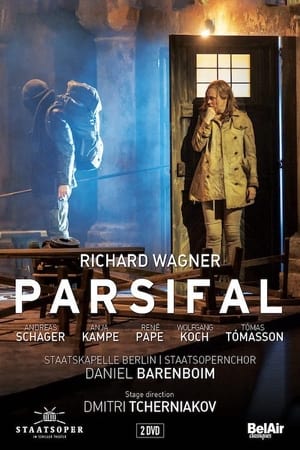
Wagner’s mystic masterpiece Parsifal at the Staatsoper Berlin, staged by Dmitri Tcherniakov and conducted by Daniel Barenboim. Wagner’s last opera, Parsifal is a medieval epic story marked by Christian, Buddhist and esoteric references. It is about redemption and renewal, but this new production by Russian director Dmitri Tcherniakov adds a jarring note : revenge. This “Festival Play for the Consecration of the Stage” is similar to a Medieval epic, a blend of metaphysical dreams and esoteric battles with constant spiritual references. This new production is directed by Dmitri Tcherniakov, conducted by Daniel Barenboim and sung by an international cast of excellent singers: Andreas Schager, Anja Kampe, Wolfgang Koch, René Pape, Tomas Tómasson and Matthias Hölle.
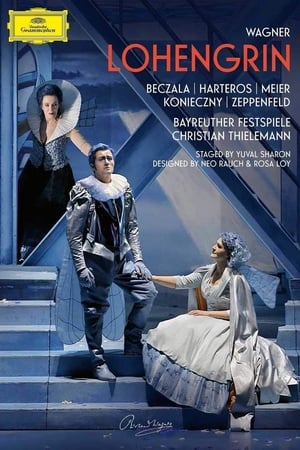
After Tristan und Isolde (2016), Parsifal (2017) and Die Meistersinger von Nürnberg (2018) this is the fourth installment of the exclusive, multiyear partnership between Deutsche Grammophon and the Bayreuth Festival, in which the Yellow Label is the exclusive audiovisual partner of the mythical Wagner festival, releasing each edition's new production on Blu-ray. This year, we are proud to release on Blu-ray the celebrated production of Lohengrin which was premiered on 25 July 2018, featuring an illustrious cast including Piotr Beczala and Anja Harteros in their house debuts, as well as the acclaimed return of Waltraud Meier to the Bayreuth Festival. The New York Times praised Piotr Beczala’s Lohengrin as “outstanding”, Anja Harteros [making] her impressive Bayreuth debut” as Elsa, and Ortrud “played with dominant presence by the incomparable Waltraud Meier”.
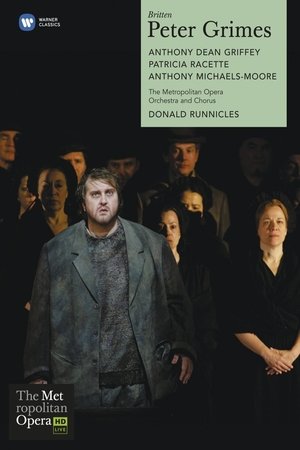
Anthony Dean Griffey creates a haunting portrait of the outcast fisherman who struggles under the burden of presumed guilt. This chilling production by Tony Award-winning director John Doyle also features the superb Patricia Racette as the sympathetic Ellen Orford and the Met chorus in a truly hair-raising performance as the oppressively judgmental fishing village.
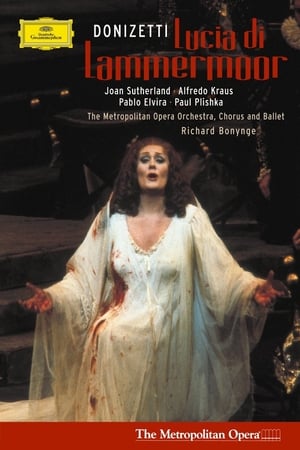
This telecast offers a rare opportunity to see the legendary Joan Sutherland in the role that first catapulted her to international stardom. She drove audiences wild by the way her opulent voice caressed the music’s long phrases and sprinted effortlessly through the fiendish runs, trills, embellishments and stratospheric high notes. One of the glories of the operatic world, her portrayal of Donizetti’s hapless heroine is a multifaceted and moving characterization. The incomparable tenor Alfredo Kraus is Edgardo, the man Lucia loves but cannot have. (Performance taped November 13, 1982. Broadcasted September 28, 1983.)
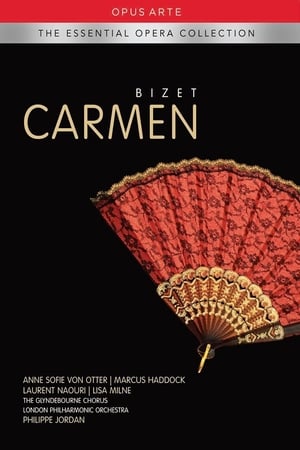
David McVicar's exhilarating new production, with Anne Sofie von Otter in the title role, restores the Opera Comique to Bizet's masterpiece. Philippe Jordan, in his Glyndebourne debut, conducts the London Philharmonic Orchestra, the Glyndebourne Chorus, and a cast which includes Marcus Haddock, Laurent Naouri, and Lisa Milne.
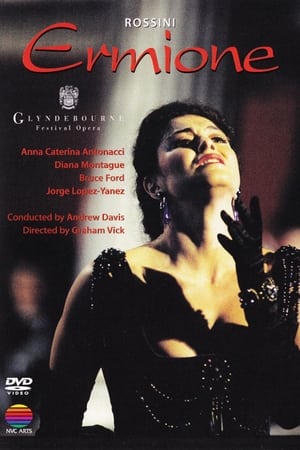
Recorded at the Glyndebourne Festival Opera in 1995, this acclaimed presentation of composer Gioachino Rossini's epic opus ERMIONE is based on Jean Racine's play "Andromache." Set in Troy after the city fell to the Greeks, the production recounts the rancorous battle between widow Andromache and Helen of Troy's green-eyed daughter, Ermione for the love of Pyrrhus
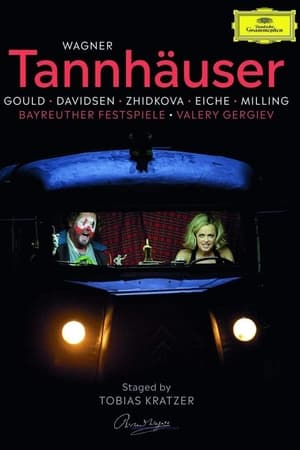
Anew production of Tannhäuser, which was premiered on 26 July 2019 and presented the Bayreuth debut of conductor Valery Gergiev, as well as the house debut of young soprano star Lise Davidsen. Tobias Kratzer’s staging presented Tannhäuser as a wildly contemporary parable of art and freedom which was praised as “novel” and “wrenching” (New York Times) and received exceptional press acclaim. hey were joined by mezzo soprano Elena Zhidkova’s Venus (“scene stealing”, according to Opera Today), baritone Markus Eiche’s Wolfram and Stephen Milling’s Landgraf.
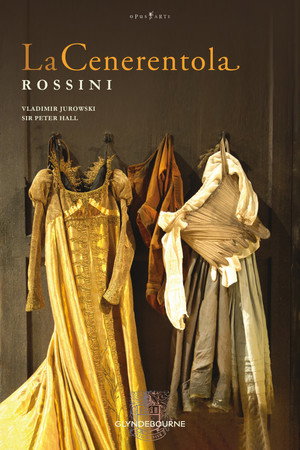
In late 18th-century Italy, in the mansion of Don Magnifico, the young and pretty Angelina works as a maid. Teased by her two frivolous half-sisters, Clorinda and Tisby, Angelina believes she is in love with a young valet and goes to the ball. Dressed in her finest finery, she meets the man who is in fact the Prince and flees from him after giving him a bracelet that will allow him to recognise her a little later. The masks come off, and kindness and love triumph! ‘La Cenerentola’ is the last opera buffa composed by Gioachino Rossini for an Italian audience. A dramma giocoso in two acts, with a libretto by Jacopo Ferretti, freely adapted from Charles Perrault’s fairy tale ‘Cinderella’ (1697), omitting the magic in favour of a realism tinged with humour and social criticism. Premiered for the Rome Carnival at the Teatro Valle in Rome on 28 January 1817. Recorded live at Glyndebourne Opera, Lewes, East Sussex, on 2 and 4 June 2005.
The writer Dario Fo applies his inventive genius to Rossini's comic opera in its premiere DVD release. Recorded in 2005 under the musical direction of Maurizio Barbacini, Fo's production brings fresh vitality and colour to the story of Lisetta, and of her father Don Pomponio's increasingly ridiculous attempts to find a husband for her through an advertisement in the newspaper LA GAZZETTA. Filmed using high definition cameras with multitrack sound.
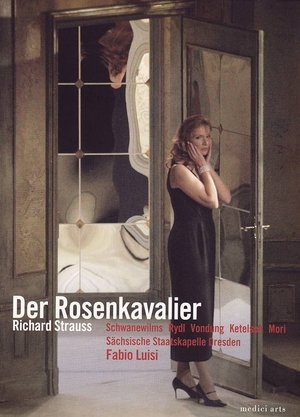
The Semperoper caused a sensation in November 2007 when it visited Japan for the first time in twenty-six years. The demand for tickets and the audience's enthusiasm were unprecedented, not least because the company was staging a piece that is performed more authentically in Dresden than anywhere else in the world: Richard Strauss' Der Rosenkavalier, which received its first performance in Dresden in 1911. Leading the ensemble was the radiant-voiced and profoundly thoughtful Marschallin of Anne Schwanewilms.
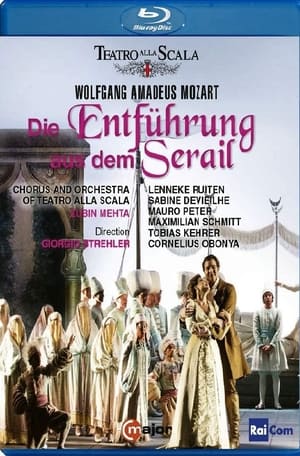
A Mozart opera at La Scala in Milan.
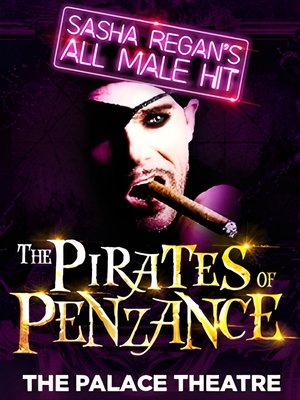
Sasha Regan’s award-winning All-male Company are set to lift everyone’s spirits with a treat in their new West End pirate’s cove. The swashbuckling pirates and their winsome lasses sail into the Palace Theatre with their inventive new take on W. S. Gilbert & Arthur Sullivan’s classic operetta THE PIRATES OF PENZANCE. Featuring a dazzling cast singing songs including: “I am a Pirate King”; “Oh, happy day, with joyous glee” and “A rollicking band of pirates we”, they are sure to raise the roof off the Palace Theatre!
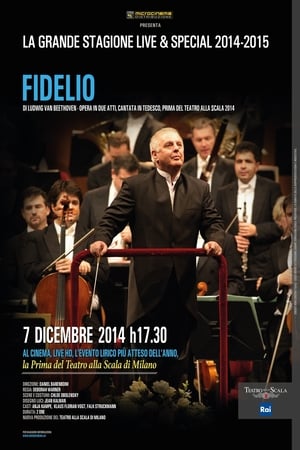
A tribute to marriage coming from a bachelor is a tad suspicious. But for Beethoven the idealization of the woman-bride was heartfelt and sincere. It has always been a unique opera starring a courageous wife who wows audiences. Fidelio is a moral title, associated with the ideals of liberty of the French Enlightenment. Nobility and commoners are united in their thirst for justice against the oppression of power. For once the faithful consort of a desaparecido wins her battle against a treacherous tyrant, and the collective joy truly is “nameless”, as is sung on the stage. Especially because the “our heroes to the rescue” finale is recounted by the triumphant symphonic flair of the quintessential musician. Beethoven really does bring the world to collapse at the conclusion of this opera, which begins like a delightful little comedy, but which scales and transcends all the summits of the dramatic-musical art.
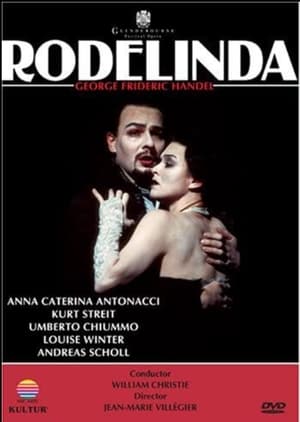
Jean-Marie Villegier's modern interpretation of Handel's "Rodelinda" – filmed live at the world-renowned Glyndebourne Opera House in the United Kingdom, sets the timeless tale of jealousy and treachery in the black-and-white world of the silent-movie era. Soprano Anna Caterina Antonacci sings the title role of Rodelinda, with tenor Kurt Streit and bass Umberto Chiummo performing the parts of Grimoaldo and Garibaldo, respectively.
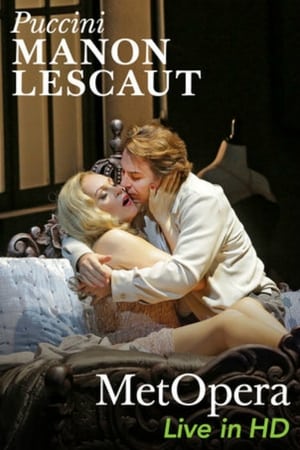
Kristine Opolais is the young woman whose conflicting desires for love and luxury lead to her tragic end, and Roberto Alagna plays the man who falls for her in Puccini’s early hit. Richard Eyre’s elegant production, which sets the action in 1940s occupied France, was one of the highlights of the Met’s 2015–16 season. Massimo Cavalletti as Manon’s brother and Brindley Sherratt as her aging admirer co-star, and Principal Conductor Fabio Luisi is on the podium.
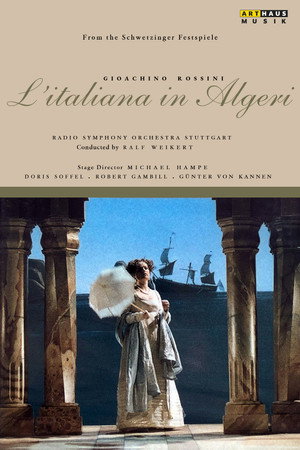
Live performance from the Schwetzinger Festspiele, 1987. At the age of 21, Italian composer Giacchino Rossini penned the masterful comic opera “L’Italiana in Algeri” (“The Italian Girl in Algiers”) in less than a month. The composer’s youthful exuberance comes across in this infectious 1987 performance. Though she’s known mainly for her Wagner roles, acclaimed German mezzo-soprano Doris Soffel shines in the title role of Isabella. Ralf Weikert conducts, and Mauro Pagano oversees sets and costumes.