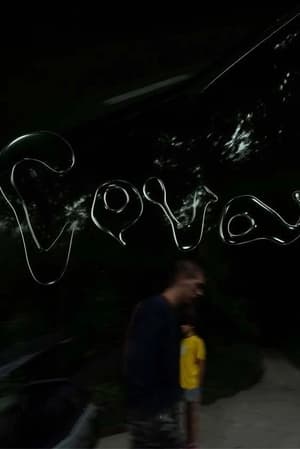
A short documentary that celebrates Dene cultural reclamation and revitalization, in which a father passes on traditional knowledge to his child through the teachings of a caribou drum.
Doting parents teach their young daughter the family Halloween tradition.
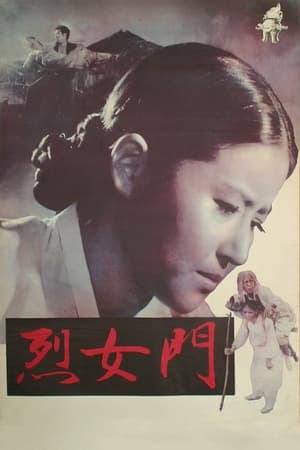
The widow of a nobleman bears a son after having an affair with her servant. The servant and the baby are driven from the home by the woman's irate in-laws when the truth is discovered. Even after the child is grown, no contact is allowed between he and his mother who now denies the events of her past.
For generations, two rival French villages, Longueverne and Velrans, have been at war. But this is no ordinary conflict, for the on-going hostilities are between two armies of young schoolboys. When he is beaten by his father for having lost his buttons, the leader of the Longueverne army, Lebrac, has an idea which will give his side the advantage: next time, he and his brave soldiers will go in battle without their clothes...
Hallstätter Ballade refers to a celebrated 1961 Austrian documentary short film directed by István Szőts. The film is best known for poetically capturing the unique, centuries-old Alpine tradition of skull painting (Totenkult) in the village of Hallstatt.
In 1971 Salford fish-and-chip shop owner George Khan expects his family to follow his strict Pakistani Muslim ways. But his children, with an English mother and having been born and brought up in Britain, increasingly see themselves as British and start to reject their father's rules on dress, food, religion, and living in general.
In the mountains of Montenegro people have lived by strict and Draconian laws for centuries, almost untouched by modern civilization. However, a young couple are going to seek their fortune on the more liberal coast and there they find jobs in the nudist colony. Hundreds of naked bodies and atmosphere of joie d'vivre make the husband and wife question their rigid way of life.
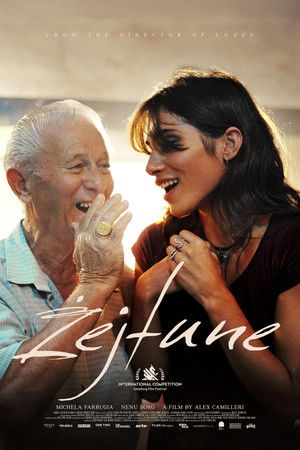
A newly-wed man discovers that his wife is in love with another man and decides to unite them. Ignoring the ridicule he might have to face for this, he takes his wife to Italy in search of her love.
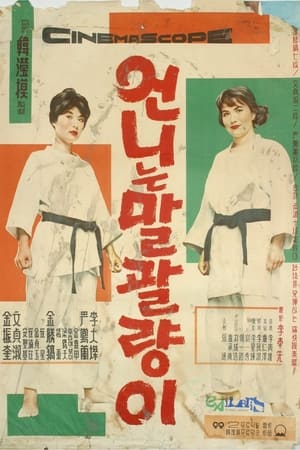
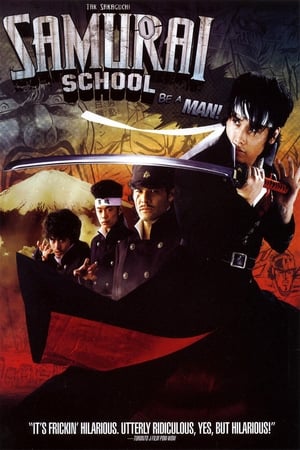
The master of a Judo dojo turns his daughter into a master of the martial art as she is growing up. But now that she has reached marrying age, he finds it difficult to find her a husband that can accept her tomboy ways.
What is tradition? This is the question posed by yodeller and food researcher Meinrad Koch from Canton Appenzell. In search of an answer, he embarks on a journey.
The enigma of the personality cult is revealed in the grand spectacle of Stalin’s funeral. The film is based on unique archive footage, shot in the USSR on March 5 - 9, 1953, when the country mourned and buried Joseph Stalin.
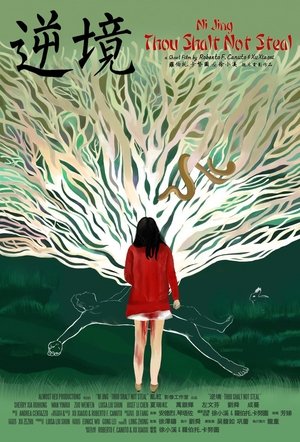
In a recording studio, five mothers read the testimonies of other anonymous mothers and open up, laying bare their regret about motherhood. On an imagined island, these five mothers are locked away in an open-air prison. They are under surveillance and forced into hard labor.
Lost in Galicia
Mirah, a woman shunned by her village after the mysterious deaths of men connected to her, seeks refuge in a Padang restaurant owned by Bana, who falls in love with her. As more men die, Mirah discovers she’s cursed by her stepsister Puti with the deadly “Bahu Laweyan” curse, which kills any man who becomes intimately involved with her. Fueled by revenge, Mirah plans to destroy Puti’s happiness by targeting her husband. Despite the deadly curse, Mirah and Bana craft their own tragic love story, choosing to be together no matter the consequences.
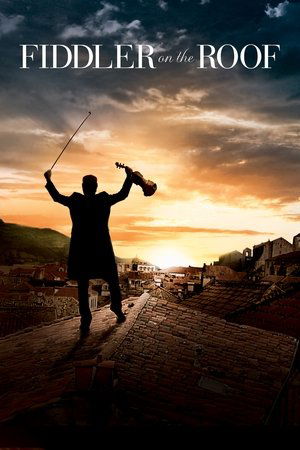
A young Jewish man is torn between tradition and individuality when his old-fashioned family objects to his career as a jazz singer.
The horses in Denys Colomb Daunant’s dream poem are the white beasts of the marshlands of the Camargue in South West France. Daunant was haunted by these creatures. His obsession was first visualized when he wrote the autobiographical script for Albert Lamorisse’s award-winning 1953 film White Mane. In this short the beauty of the horses is captured with a variety of film techniques and by Jacques Lasry’s beautiful electronic score.
The Kuwaiti short film العاصفة (The Storm) explores Kuwait's social and economic shifts before and after the discovery of oil. Through the perspectives of an older father and his modernized son, it delves into the challenges of tradition versus rapid modernization.
The Shipibo-Konibo people of Peruvian Amazon decorate their pottery, jewelry, textiles, and body art with complex geometric patterns called kené. These patterns also have corresponding songs, called icaros, which are integral to the Shipibo way of life. This documentary explores these unique art forms, and one Shipibo family's efforts to safeguard the tradition.
Film describes the miserable existence of a charcoal-burner who is barely able to feed his family. His search for work in town ends in failure and he is forced to return to his village.
An American-born Jewish adolescent, Hannah Stern, is uninterested in the culture, faith and customs of her relatives. However, she begins to revaluate her heritage when she has a supernatural experience that transports her back to a Nazi death camp in 1941. There she meets a young girl named Rivkah, a fellow captive in the camp. As Rivkah and Hannah struggle to survive in the face of daily atrocities, they form an unbreakable bond.